No Language Is Being Imposed In The New National Education Policy: K Kasturirangan
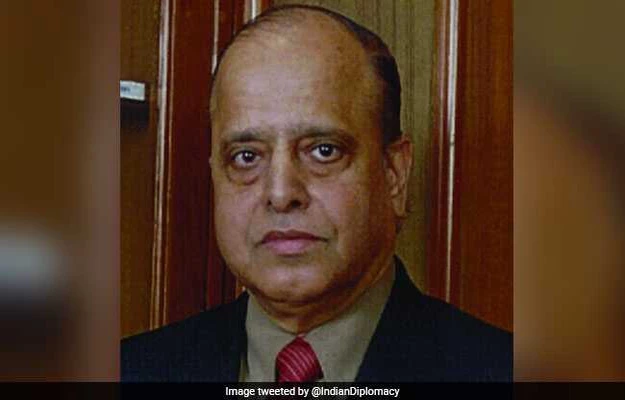
New Delhi: No language is being imposed in the new National Education Policy and a flexible approach has been proposed with the three language formula, according to the policy drafting panel chief K Kasturirangan.
The former ISRO Chief who was tasked with drafting the new policy, says "adopting local languages as the medium of instruction till Class 5 is important in the early phase of education because the child's strengths in understanding the principles and in displaying creativity manifests better in the mother tongue as well in the local language".
The policy was approved by the Union Cabinet on Wednesday.
As per the policy, the medium of instruction until at least class 5, but preferably till class 8 and beyond, will be the home language, mother tongue, local language and regional language.
"Children have a great ability to pick up multiple languages in early age. The policy talks about a flexible approach in three-language formula. How it will be implemented in states its their decision. No language is being imposed in the policy," he said.
"We have suggested that the mother tongue or the local language or regional language, one of them could be the choice for medium of instruction. Experts have found when a child is born he starts learning in his home language. It is not just in our country, in countries like France and Germany and even Nobel laureates have admitted that their knowledge of science or any other subject has been better when they studied it in their language," he added.
Teaching up to class 5 in mother tongue or regional language, lowering the stakes of board exams, a single regulator for higher education institutions except for law and medical colleges and common entrance tests for universities are part of the sweeping reforms in the new National Education Policy (NEP) unveiled on Wednesday.
Replacing the 10+2 structure of school curricula with a 5+3+3+4 curricular structure corresponding to age groups 3-8, 8-11, 11-14 and 14-18 years respectively, scrapping M.Phil programmes and implementing common norms for private and public higher education institutions are among other salient features of the new policy.
The NEP approved by the Union Cabinet at a meeting presided by Prime Minister Narendra Modi replaces the 34-year-old National Policy on Education framed in 1986 and is aimed at paving the way for transformational reforms in school and higher education systems to make India a global knowledge superpower.
"The policy has been prepared after widespread consultations and concerns arising due to economic as well as demographical disparities have also been addressed," he added.
In May 2016, a ‘Committee for Evolution of the New Education Policy'' under the chairmanship of TSR Subramanian, former cabinet secretary, submitted its report. Based on this, the Ministry prepared a document called ‘Some Inputs for the Draft National Education Policy, 2016''.
Then, a panel led by Kasturirangan had submitted the draft of the new NEP to Union Human Resource Development Minister Ramesh Pokhriyal 'Nishank' when he took charge last year.
The draft was then put in the public domain to seek feedback from various stakeholders and over two lakh suggestions were received by the HRD Ministry about the same.
Let the Truth be known. If you read VB and like VB, please be a VB Supporter and Help us deliver the Truth to one and all.
4 held for sexually assaulting woman, girl on moving bus after social media alert in UP's Agra

Agra (UP) (PTI): Four people were arrested, after a prompt response by police following a social media alert, for allegedly sexually assaulting a woman and a girl inside a moving bus here, officials said on Tuesday.
According to an official police statement, at 12:27 am on April 27, information was received on the social media platform X about an incident of sexual assault on a bus travelling from Kanpur to Ahmedabad, which was approaching Namner crossing in Agra.
Acting under the direction of Police Commissioner Deepak Kumar, the Agra Police social media team immediately alerted the Rakabganj police station within minutes and coordinated with the victims to confirm the incident and obtain the exact location, it stated.
Police teams launched intensive checking at Namner crossing and intercepted the bus as it reached the spot. The four accused involved in the incident were apprehended on the spot, and legal action was initiated against them, the statement said.
The police said the swift response and coordination between the social media team and field units ensured timely action, bringing relief to the victims and other passengers, who expressed gratitude towards the police, it added.