No Pak soldier or citizen died in Balakot air strike: Sushma Swaraj
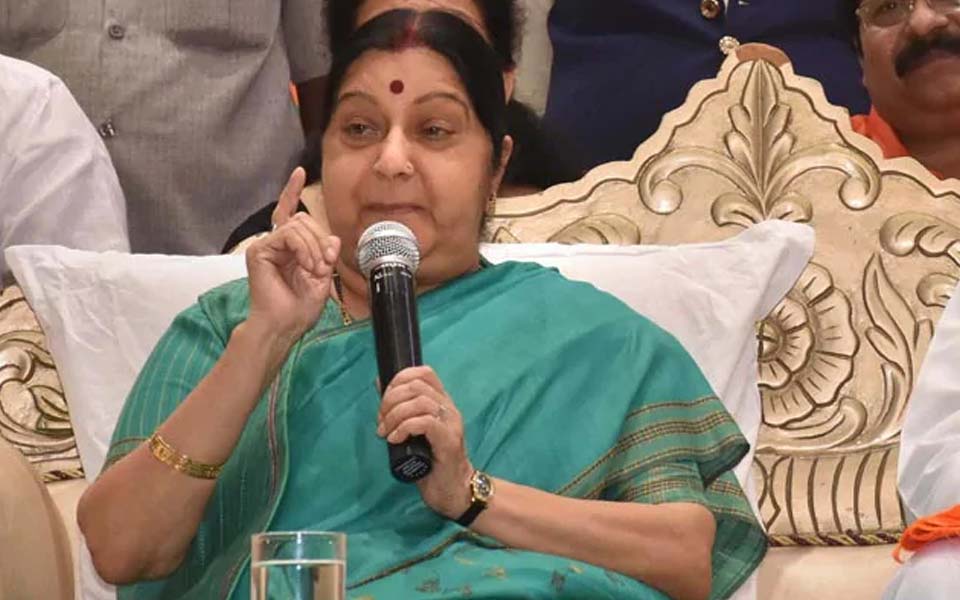
Ahmedabad, Apr 18: External Affairs Minister and BJP leader Sushma Swaraj Thursday said no Pakistani soldier or citizen died in the air strike carried out by the Indian Air Force across the border in response to the Pulwama terror attack in February.
Addressing women party workers here, she stressed on a 2014-like full majority BJP-led government this time also, saying former Prime Minister Atal Bihari Vajpayee could not do everything which he wanted to because he was heading a coalition administration.
The IAF had struck a Jaish-e-Mohammad terrorist training camp in Pakistan's Balakot area on February 26, in response to the February 14 Pulwama terror attack in which 40 CRPF personnel were killed.
Swaraj said the air strike was carried out in self- defence.
"When we carried out air strike across the border after the Pulwama terror attack, we had told the international community that we took that step in self-defence only.
"We had told the international community that the armed forces were instructed not to harm any Pakistani citizen or its soldier during the strike," she said.
"The Army was told to target only the terror camps of the Jaish-e-Mohammad, which had taken the responsibility for the Pulwama attack.
"And, our Army did the same without harming any Pakistani citizen or soldier," said Swaraj.
The foreign minister said the entire international community supported had India over the air strike.
Praising Prime Minister Narendra Modi, she said he has emerged as a top international leader who sets the agenda for the world.
Referring to the 2008 Mumbai terror attack, Swaraj said the then Congress-led UPA government had failed to take along other countries to isolate Pakistan in the world despite the fact that 40 foreign citizens belonging to 14 countries had also died in the strike.
The External Affairs Minister said Pakistan had raised objection to the invitation extended to India for a meet of the Organisation of Islamic Cooperation (OIC) in Abu Dhabi last month, but the host country UAE snubbed Islamabad.
Stressing on a full majority government led by the BJP this time also, Swaraj said Vajpayee could not do all the things he wanted because he was heading a coalition government (1998-2004).
Swaraj, who was a minister in the Vajpayee Cabinet also, said coalition governments face pressure.
"You must be wondering how Modiji could do so many things in these five years. He could do it because he was heading a full majority government.
"If he was running a coalition government, then he might have been in some pressure," she said.
"I have seen it. I was a minister in the Vajpayee government. Atalji wanted to do so many things.
"But, since he was heading a coalition government, he could not do all those things. Modiji could do it because people gave us a full majority," said Swaraj.
Let the Truth be known. If you read VB and like VB, please be a VB Supporter and Help us deliver the Truth to one and all.
Himanta resigns as Assam CM, paving way for formation of new govt
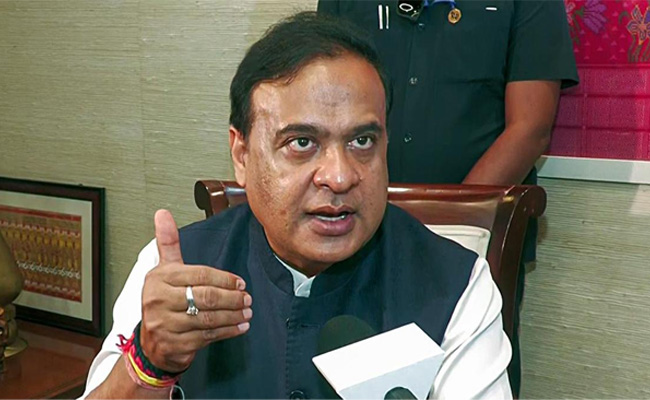
Guwahati (PTI): Assam Chief Minister Himanta Biswa Sarma on Wednesday resigned along with his cabinet colleagues, paving the way for formation of a new government led by the BJP, officials said.
The BJP-led NDA bagged 102 seats in the 126-member assembly. The assembly elections were held in a single phase on April 9, and counting of votes took place on May 4.
"Following the formal notification of the results of #AssamElections2026 and to enable the formation of the new government, Dr @himantabiswa tendered his resignation as Chief Minister along with that of the council of Ministers to Hon'ble Governor Shri @Laxmanacharya54 today at Lok Bhawan," the Chief Minister's Office said in a post on X.
ALSO READ: 11-year-old dies by suicide after sexual assault in Bareilly; accused arrested
The Governor has accepted the resignation, and requested Sarma to continue as the caretaker CM till the new government assumes office, it said.
Later, speaking to reporters outside the Lok Bhawan, Sarma said the oath-taking ceremony is likely to take place after May 11.
“As it was a historic win, we have invited Prime Minister Narendra Modi to grace the occasion," he said.
The new Assam chief minister will be selected at a meeting of the BJP legislature party in presence of central observers, Sarma said.