No penal provision to make political parties liable for non-fulfilment of promises: High Court
Allahabad(PTI): The Allahabad High Court has observed that there is no penal provision to hold political parties accountable if they fail to fulfil promises made in their election manifestoes.
The court clarified that a political party as a whole can't be made liable under the Representation of Peoples Act, 1951 for adopting corrupt practices of the election.
Justice Dinesh Pathak observed it on March 2 while hearing a petition filed by Khurshidurehman S Rehman, who had sought the registration of a criminal case, contending that the BJP "failed" to fulfil the promises made in the 2014 General Election.
The court said, "The election manifesto promulgated by any political party is a statement of their policy, view, promises and vow during the elections, which is not the binding force and the same cannot be implemented through the courts of law."
"Even there is no penal provision under any statute to bring the political parties within the clutches of enforcement authorities in case they fail to fulfil their promises as made in the election manifesto," the court observed in its judgement.
Earlier, lower courts had rejected the petition, after which the petitioner approached the High Court.
The court said, "After perusal of the judgement passed by the courts below, it cannot be said that they have decided the matter in a cursory manner without applying their judicial mind. Non-occurrence of any cognizable offence is also one of the paramount conditions which averted the courts below from issuing a direction for investigation in exercise of powers under Sections 156 (3) CrPC."
Let the Truth be known. If you read VB and like VB, please be a VB Supporter and Help us deliver the Truth to one and all.
Saffron shawls not allowed in schools in K'taka, clarifies CM Siddaramaiah
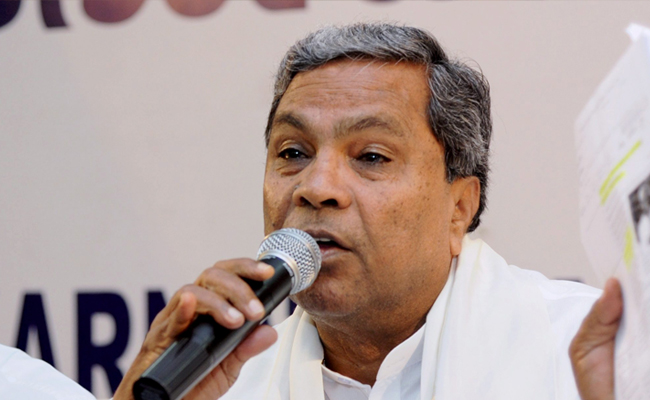
Mysuru (Karnataka) (PTI): Karnataka Chief Minister Siddaramaiah on Thursday clarified that saffron shawls would not be allowed in educational institutions under the state government’s order on religious symbols, while practices already in existence such as hijab, turbans, rudraksha beads and sacred threads (Janeu) would continue to be permitted.
Speaking to reporters in Mysuru, the Chief Minister clarified that those religious attire which are in practice will be allowed.
The Karnataka government on Wednesday passed an order allowing students to wear Hijab, sacred thread, Shivadhara, Rudraksha in schools. The order scrapped the BJP government’s 2022 order, banning Hijab in government schools following the Hijab versus saffron shawl controversy.
The opposition flayed the move and termed it "appeasement politics".
ALSO READ: Chennithala leaves residence after Satheesan named Kerala Chief Minister
A section of Hindu right wing organisations even threatened to wear saffron shawls in the schools.
Now the Chief Minister has clarified that saffron shawls will not be permitted.
“Saffron shawls are not allowed. Those shawls cannot be worn. Turbans, sacred thread, Shiva dhara, rudraksha, and hijab can also be worn,” Siddaramaiah told reporters.
“See, it is not just the hijab. People can also wear sacred threads, Shivadhara rudraksha beads — everyone can wear things according to their beliefs. This is allowed up to Class 12, whether it is high school, college or primary school. It applies to all.”
Asked whether saffron turbans representing saffron identity would be permitted, the Chief Minister said only practices already in existence would be allowed and no new practices could be introduced.
“When we say turbans, we mean practices that already exist. Nothing new can be introduced. Only those practices and beliefs that already exist till now are allowed,” he said.
Responding to questions on Prime Minister Narendra Modi reducing his convoy to conserve diesel, Siddaramaiah said such measures would only have a temporary effect. “What the Prime Minister has said is not the right step. Instead, it would be better to speak with other countries and bring awareness and consciousness among them,” he said.
Replying to questions on the controversy surrounding the NEET examination, Siddaramaiah criticised the conduct of the exam and said students should not suffer because of lapses in the system. “Look, we conducted CET, and they introduced NEET. If they fail to conduct it properly, what will happen to the students who studied hard and wrote the exam? What about their future?” he asked.