No pressure on India to buy F-16 fighter jets from US: Envoy
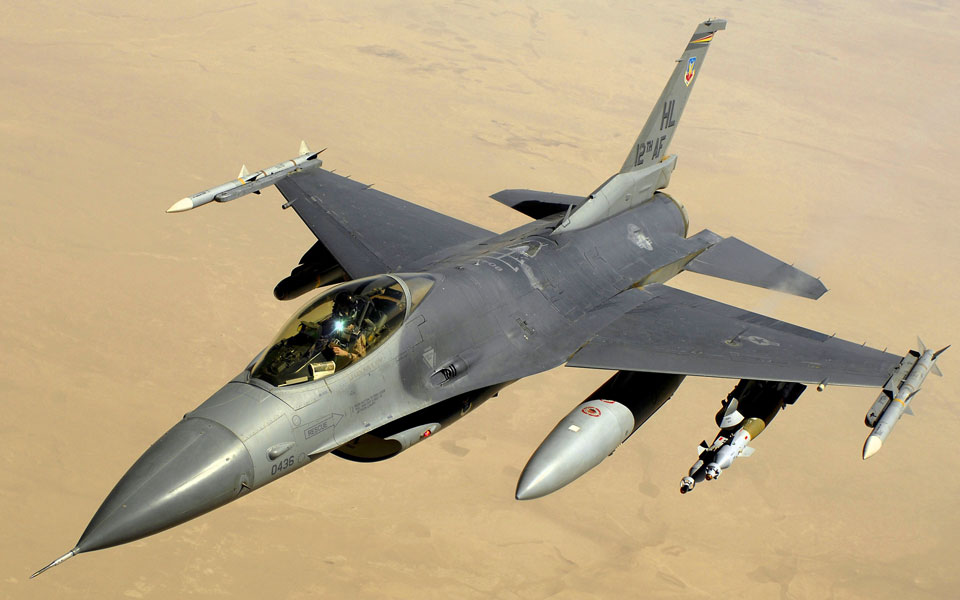
Mumbai, Oct 28 : The United States is not going to put pressure on India to buy F-16 fighter jets or any other defence system, a senior US diplomat has said here.
United States Consul General in Mumbai Edgard Kagan said India has purchased more than USD 15 billion worth of American defence materials and the US is "very proud" of the expanding defence ties between the two countries.
Asked if there was a threat of the US imposing trade sanctions on India after its multi-billion deal with Russia for the S-400 air-defence system, he did not give a direct answer.
"The idea that the US is going to pressure India to buy the F-16 or any other system is not true. We believe that American military systems bring tremendous capability to India or any other country which buys that.
"But we recognise that India makes its decisions on its own grounds," he told PTI in an interview here.
Kagan said it was important to recognise that decisions have consequences and India was very well aware where the US stands on a variety of issues.There are also matters that both countries can work closely to resolve, he said.
India recently concluded a USD 5 billion deal to buy the S-400 air defence missile system from Russia which could attract US sanctions under the Countering America's Adversaries Through Sanctions Act (CAATSA) instituted by the US Congress on arms purchases from Moscow.
American lawmakers, however, have allowed the possibility of a presidential waiver. Kagan said the US is "very proud" of the expanding defence partnership with India.
"The fact is that India has purchased over USD 15 billion worth of American defence materials and there hasn't been one hint of a scandal.
"There hasn't been one suggestion of any impropriety and that's very significant.The American defence procurement are transparent... All details are published on the US site," he said.
This gives certainty to the people buying American products, the US consul general said.
"When you compare the track record of the C-17 purchases for instance, or C-130 purchases, which were all done on budget, on time and in a very transparent way without a single hint of impropriety with many other defence procurement, the difference is quite striking," he said.
The C-17 and the C-130 are US-made cargo aircraft.
Asked about the Indian government directing social media platforms to take concrete steps to check spread of rumours and messages inciting unrest, cyber crimes and other activities that could jeopardise national security, he said putting restrictions is no solution.
"I would be very concerned trying to restrict speech either on social media or anywhere else. The challenge is only to make sure that you understand the consequences of their actions.
"The solution to me can't be to control social media because inevitably the speech that we don't like also means trying to prevent the speech that brings change," he said.
Kagan said India has done very well since independence in terms of ensuring freedom of speech, and having a free and vibrant press.
"If we start restricting people from social media its a very short stand. The important thing is to recognise people, need to take responsibility for what they do, to recognise the dangers and the risks of the abuse of this and we all have to recognise social media is like a knife we use," he said.
Kagan said if tools like social media are created to power our lives, inevitably the risk of cutting ourselves is higher.
"But I don't think it means we want a blunt knife or no knife at all," he said.
Let the Truth be known. If you read VB and like VB, please be a VB Supporter and Help us deliver the Truth to one and all.
Akeal Hosein bosses powerplay overs with 'skill and mental fortitude'
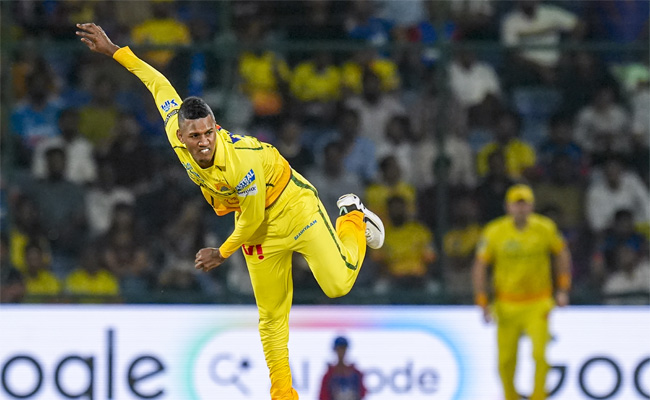
New Delhi (PTI): For a spinner who bowls majority of his overs in the powerplay, Chennai Super Kings' West Indian import Akeal Hosein relies as much on mental fortitude as his skills to excel in the most unforgiving phase of the game.
With just two fielders in the deep in the first six overs, the margin for error is miniscule and the pressure is sky high.
However, Hosein thrives in that tense environment. The left-arm spinner returned with frugal figures of 3-0-15-1 in the powerplay to play a crucial role in his team's eight-wicket win over Delhi Capitals in an IPL match here on Tuesday.
"You need both of them (skill and mental toughness). Especially when you come upon pitches that aren't conducive to spin and it's just about being disciplined as well," he said.
"Having two fielders out in the power play. It's not a job that you can go searching for wickets or you can be too greedy. It's just about sticking to the plan," he explained.
Hosein got the all-important wicket of an in-form K L Rahul, who was foxed by the West Indian as he stepped out to smash him for an inside out six.
Hosein's inclusion in the playing eleven after not being picked in the initial phase of the tournament has allowed CSK to win more games. On Tuesday, the pitch offered him a bit of help and he ended up dominating the batters.
After the win over DC, Hosein was asked about his recipe for success in the powerplay.
"...it's a bit scripted because you only have two guys out so it's just about being disciplined and trying to do the job for the team. At the end of the day if you don't get wickets and you bowl economically in the power play, that's a damn good job you've done for the team," said Hosein.
He has taken seven wickets in five games at an impressive economy rate of 7.25.
Fully aware that the batter is a mere couple of hits away from putting the pressure back on him, Hosein says practising for high-pressure situations helps him stay in the present.
"I think homework is very important. You want to have that head-start when you come up against whichever batter you're going to face. And like I say it's just about making assessments as quickly as possible.
"You might come up on a pitch that is spinning. You might come up against one that isn't spinning. Thankfully I can spin the ball. So it's just about picking which deliveries will give you the most success on a particular day and against a particular batter," said Hosein.
He got rid of Rahul first ball from the other end, something that was decided by captain Ruturaj Gaikwad. Post powerplay, Noor Ahmad took over the mantle from Hosein and maintained the pressure on DC batters.
"Getting the opportunity to bowl first for me is just about again making that assessment as quickly as possible and then passing on that information to Noor or even to the seamers as well if it was a bit of spin or if it's gripping or whatever the case is.
"So conversations with myself and Noor have been fantastic. Really happy for him that he's getting some success," he added.