No reports of ceasefire violation by Pak along LoC since Saturday night: Officials
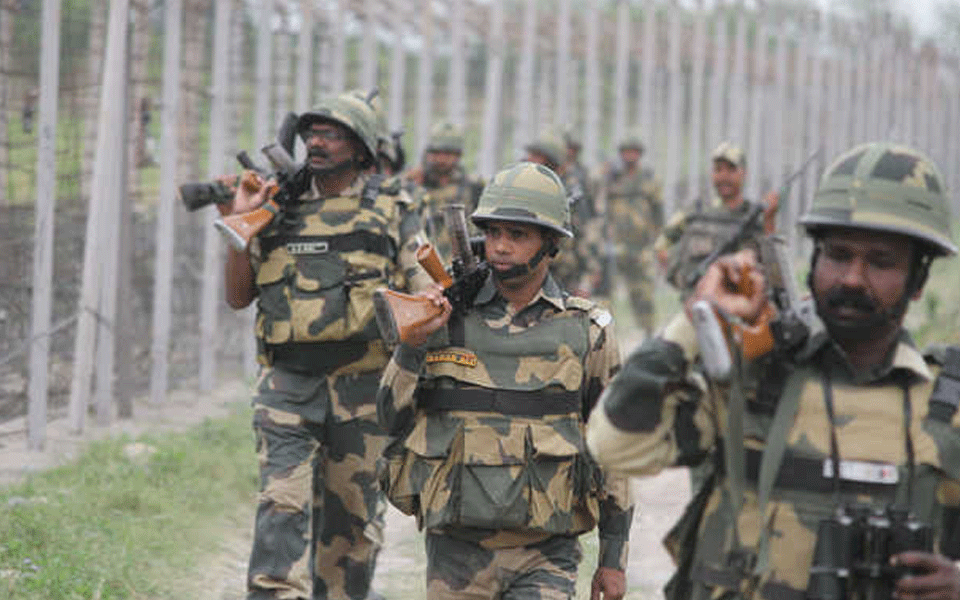
Jammu, Mar 3: There were no reports of ceasefire violation by Pakistan along the Line of Control in Jammu and Kashmir's Poonch and Rajouri districts since Saturday night, even as the army was on high alert and maintained a tight vigil, officials said.
Barring ceasefire violation in Nowshera sector of Rajouri district from 12.30 pm to 2.30 pm on Saturday, there were no reports of firing in the rest of the sectors since 11 pm Friday, they said.
"There is no report of firing and shelling by Pakistan along the LoC overnight...the army is on high alert and maintaining tight vigil," a defence spokesperson said.
The cross-border shelling witnessed a spurt after India's air strike at a Jaish-e-Mohammed terror camp in Balakot in Pakistan's Khyber Pakhtunkhwa province on Tuesday, 12 days after the terror outfit claimed responsibility for a suicide attack on a CRPF convoy in Kashmir, killing 40 soldiers.
More than 80 forward villages were targeted by Pakistan in over 50 ceasefire violations in Rajouri and Poonch districts alone since Tuesday last, which left four civilians, including three members of a family, dead and several others injured.
The lull in the cross-border firing came as a major relief to the border residents, who faced intense shelling by Pakistan, forcing many families to move to safer places.
Amid heightened Indo-Pak tension, Army chief Gen Bipin Rawat visited the Jammu-based White Knight Corps on Saturday to review the operational preparedness and exhorted all the soldiers to remain vigilant.
Let the Truth be known. If you read VB and like VB, please be a VB Supporter and Help us deliver the Truth to one and all.
Tribals, Scheduled Castes preserved India's identity and soul despite foreign invasions: Bhagwat
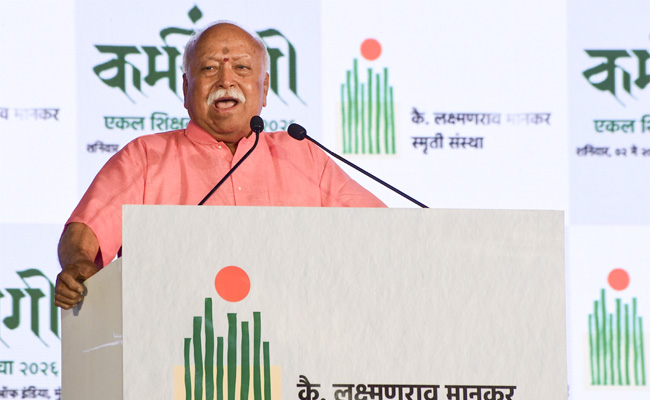
Mumbai (PTI): RSS chief Mohan Bhagwat has said that despite foreign invasions and hardships, tribal communities and Scheduled Castes preserved the country's identity and soul, stressing the need to integrate them into the mainstream development process.
He was speaking on Saturday at the Karmayogi awards ceremony in Mumbai, where Union Road Transport and Highways Minister Nitin Gadkari was also present.
"Human life is defined by giving back to the world, as we are all part of one great family. A person works and spends for the betterment of society, not as a favour, but out of duty. In serving others, we foster our own development. By helping others to thrive, we elevate ourselves and grow as human beings. This principle is the core value of this Indian land, commonly known as a Hindu society," Bhagwat said.
"This is the society's enduring ethos, which has survived for thousands of years. For various reasons, partly because of our indifference and partly because of foreign invasion, those who preserved this ethos paid a heavy price," he said.
The foreign invaders found that this ethos, this value system of the society is its soul and the key to keeping it alive. So they ensured that those who tried to preserve this soul would be uprooted and face extreme hardships, the Rashtriya Swayamsevak Sangh (RSS) chief noted.
But despite foreign invasions and hardships, tribal communities and Scheduled Castes preserved the country's identity and its soul, he said.
"Despite such adversities, the country's core identity remained intact among tribal communities and those belonging to SC and ST groups," he said, emphasising the need to integrate them into the mainstream development process while ensuring they receive equal access to services and facilities.
Referring to global developments, Bhagwat said the present world is "stumbling forward" and struggling to maintain balance, and asserted that India could emerge as a stabilising force.
The country must not only safeguard its own interests but also extend support to the world, he said.
"The world should get to see that the country is not only solving its own misery and sorrow but also helping the world to address similar issues," he said.
The RSS chief stressed that service to society is not a favour but a duty that contributes to one's own development.
Helping others grow also elevates individuals and strengthens the collective fabric of society, he said.
The so-called educated and developed sections have, over time, distanced themselves from these communities, Bhagwat pointed out, and called for the need to bridge this gap.
The identities preserved by these communities represent the true identity of Indian society, he said and underlined that without identity, existence itself is at risk.