No rule to restrict entry in exam for wearing hijab, Goa govt after woman denied entry
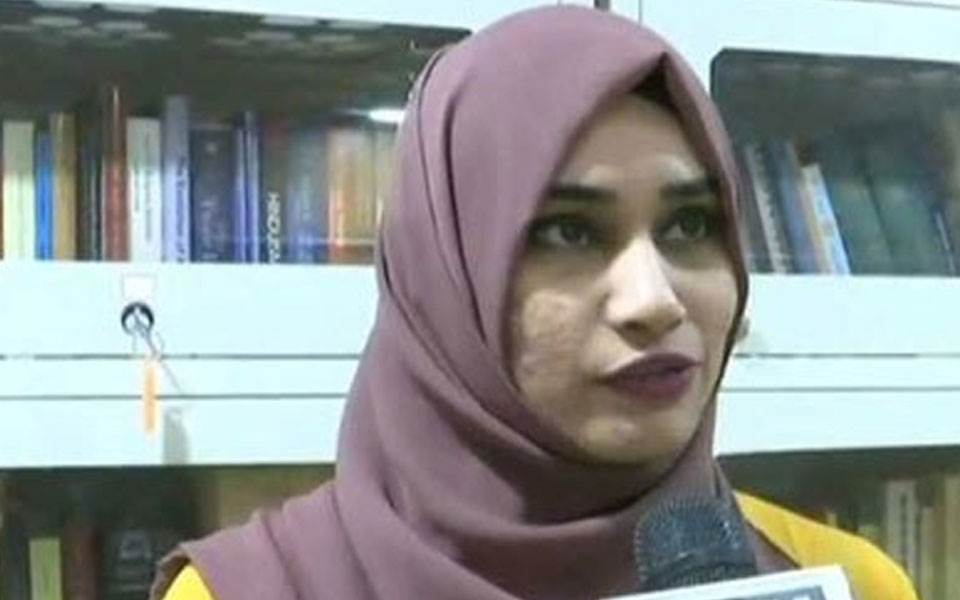
Panaji, Jan 08: Against the backdrop of a woman alleging that she was not allowed to appear for the National Eligibility Test (NET) in Goa after she refused to take off her 'hijab', a state government official has clarified that there are no rules specifying dress code for the exam.
Last month, Safina Khan Soudagar, 24, had said she was asked by the supervisor at the examination centre in Panaji to remove her hijab (head scarf) and when she refused to do so, she was not allowed to take the exam.
"The woman should have been allowed to appear in the examination," Goa's higher education director Prasad Lolienkar said in a letter to the National Testing Agency of the Union Human Resource Development Ministry.
Prime facie, it appears there are no rules specified on the website (concerned) or elsewhere pertaining to exams, specially about restrictions on hijab or a particular dress code, Lolienkar said in the letter written on January 1.
"If, for any reason, hijab is not allowed, then it should be clearly mentioned in the instructions," he said, adding that examiners and supervisors should be sensitive towards personal liberties and religious sentiments of the candidates.
He said clear instructions needed to be specified on the website concerned or admit card of an exam so that candidates are well aware of the terms and conditions about the dress code, "specially keeping in mind all faiths".
Soudagar had earlier moved the Goa State Human Rights Commission after not being allowed to appear for the NET, conducted by the University Grants Commission (UGC) to determine eligibility for college and university level lectureship and for the award of junior research fellowship.
She had also sent an e-mail to Lolienkar, giving details about the incident which had happened on December 18, 2018 in Panaji.
Let the Truth be known. If you read VB and like VB, please be a VB Supporter and Help us deliver the Truth to one and all.
Rickelton's ton in vain as SRH beat MI by 6 wickets
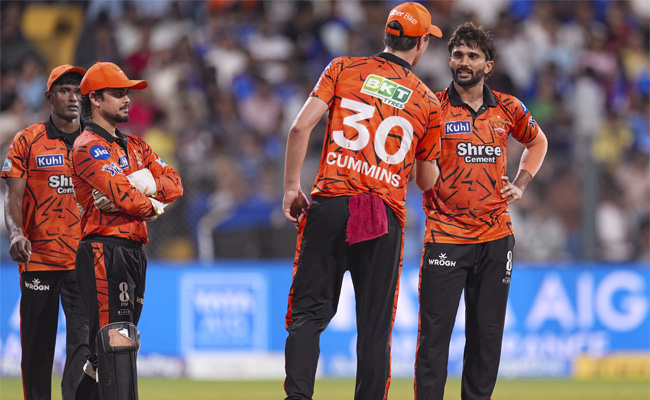
Mumbai (PTI): Ryan Rickelton's whirlwind unbeaten ton was overshadowed by Heinrich Klaasen's unbeaten 65 as Sunrisers Hyderabad defeated Mumbai Indians by six wickets in an IPL match here on Wednesday.
Chasing an imposing 244-run target, Travis Head (76 off 30) and Abhishek Sharma (45 off 24) shared 129 runs for the opening wicket to set the platform for SRH.
Klaasen (65 not out off 30 balls) then displayed his all-round hitting abilities to guide SRH home with the help of Nitish Kumar Reddy (21) and Salil Arora (30 not out off 10) in 18.4 overs.
Earlier, Rickelton's knock powered MI to 243 for five.
MI rode on a 93-run stand between Rickelton (123 not out off 55 balls) and Will Jacks (46 off 22) in 7.1 overs for the opening stand to power the side.
MI skipper Hardik Pandya scored a valuable 31 off 15 balls before being dismissed.
Praful Hinge (2/54), Eshan Malinga (1/29), Sakib Hasan (1/39) and Nitish Kumar Reddy (1/31) were the wicket-takers for SRH.
Brief Scores:
Mumbai Indian: 243 for 5 in 20 overs (Ryan Rickelton 123 not out; Praful Hinge 2/54).
Sunrisers Hyderabad: 249 for 4 in 18.4 overs (Travis Head 76, Heinrich Klaasen 65 not out; AM Ghazanfar 2/51).