Noida techie death: Developer accused of negligence arrested
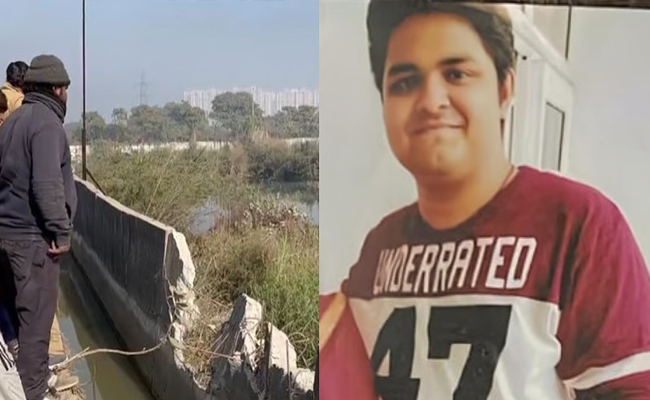
Noida (PTI): Police on Tuesday arrested the director of a real estate group in connection with the death of a 27-year-old software engineer, whose car had plunged into a water-filled pit at a construction site in Noida's Sector 150, officials said.
"Abhay Kumar, director of MZ Wiztown Planners and one of the accused in the case, has been arrested from Sector 150," Additional Commissioner of Police (Greater Noida) Hemant Upadhyay said.
Yuvraj Mehta was killed in the early hours of Saturday after his car skidded in dense fog, broke a drain boundary and fell into a deep, waterlogged pit, dug for the basement of an under-construction commercial complex near a drain.
The police had filed an FIR against two real estate developers -- MZ Wiztown Planners and Lotus Greens -- on a complaint by the victim's father, Raj Kumar Mehta, who alleged negligence by local authorities and sought accountability.
While Kumar of Wiztown Planners has been arrested, there was no official update as of Tuesday afternoon from the police on action against the other accused firm.
The arrest came on a day a Special Investigation Team (SIT) headed by the Additional Director General (ADG), Meerut Zone, Bhanu Bhaskar visited the accident site to examine the circumstances leading to the incident.
Uttar Pradesh Chief Minister Yogi Adityanath had on Monday evening ordered the constitution of the three-member SIT to probe the case, amid public outrage and allegations of negligence by officials and developers.
The state government also removed senior IAS officer Lokesh M as the Noida Authority CEO on Monday, putting him on "waitlist".
The FIR has been lodged under Sections 105 (culpable homicide not amounting to murder), 106 (causing death by negligence) and 125 (act endangering life or personal safety of others) and other relevant provisions of the Bharatiya Nyaya Sanhita, the police said.
Investigations are continuing, the police added.
The incident has sparked allegations of negligence, inadequate safety arrangements and delays in rescue efforts, with the victim's father saying he had reached the spot along with police and other rescue personnel were also there but could not save him.
"If expert divers could have gone in, then maybe my son would have been saved. Yuvraj kept crying for help as the car drowned," he told reporters.
Let the Truth be known. If you read VB and like VB, please be a VB Supporter and Help us deliver the Truth to one and all.
Man arrested with Rs 2.54-crore heroin in Mumbai

Mumbai (PTI): Police have arrested a man and seized over 500 grams of heroin worth Rs 2.54 crore in the illicit market from him in Mumbai, officials said on Friday.
The police's Anti-Narcotics Cell (ANC) made the drug seizure in Santacruz in the western suburbs. The operation was conducted by the Kandivali unit of the ANC on Thursday as part of a special crackdown against drug trafficking in the area, they said.
Acting on specific inputs, an ANC team conducted a raid in Santacruz (East) and intercepted a man. During a search, the team recovered 508 grams of high-grade heroin from his possession, an official said.
The seized contraband, a highly addictive, opioid drug derived from morphine, is estimated to be worth Rs 2.54 crore in the international market, he informed.
Following the seizure, a case was registered against the man under relevant sections of the Narcotic Drugs and Psychotropic Substances (NDPS) Act, 1985, and he was formally placed under arrest in the early hours of Friday.
The police are currently investigating the source of the drug and trying to identify the intended recipients of the consignment, he said.