Normal life remains hit in Kashmir for 83rd day
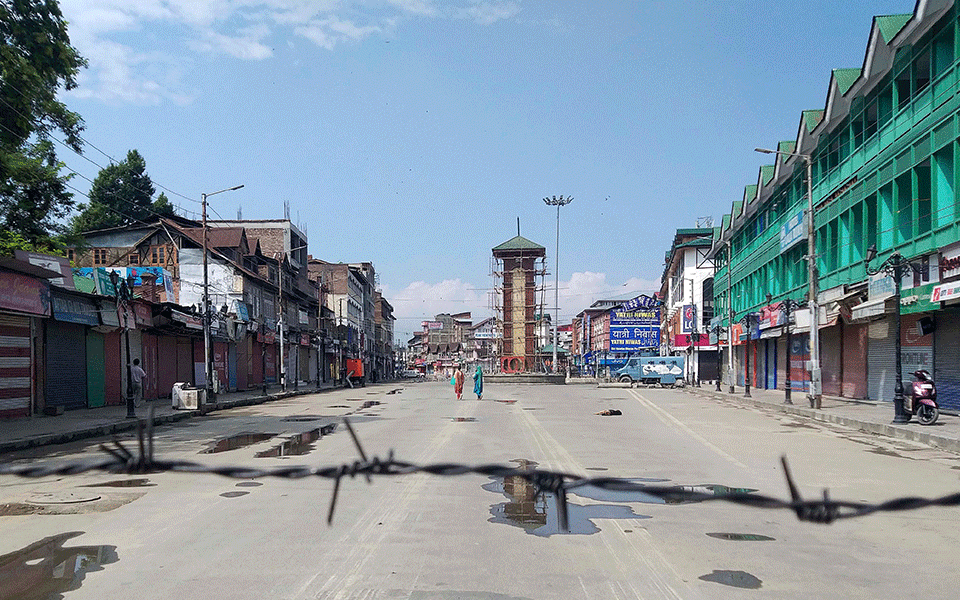
Srinagar: Normal life remained affected in Kashmir for the 83rd consecutive day on Saturday as the main markets were shut and public transport was off the roads, officials said.
Some shops opened for a few hours early in the morning in some areas, including in the commercial hub of Lal Chowk in the city here, but downed their shutters around 11 am, they added.
These shops witnessed a huge rush of customers and the increased number of private vehicles led to traffic snarls at several places in the city centre and the adjoining areas, the officials said.
However, the main markets and other business establishments remained shut across the valley, they added. Autorickshaws and a few inter-district cabs were plying in a few areas of the valley, but other modes of public transport were off the roads, the officials said.
Internet services -- across all platforms -- continued to be snapped across the valley since the night of 4 August -- hours before the Centre announced its decision to abrogate Article 370 of the Constitution, which gave a special status to Jammu and Kashmir, and bifurcate the state into two Union territories.
The internet services were snapped, along with mobile and landline telephone services. While landline services were restored gradually first, postpaid mobile services were restored only last week. Pre-paid services continue to remain barred.
Most of the top-level and second-rung separatist politicians have been taken into preventive custody, while mainstream leaders, including two former chief ministers -- Omar Abdullah and Mehbooba Mufti -- have either been detained or placed under house arrest.
Another former chief minister and the Lok Sabha MP from Srinagar, Farooq Abdullah, has been arrested under the controversial Public Safety Act, a law enacted by his father and National Conference (NC) founder Sheikh Mohammad Abdullah in 1978 when he was the chief minister of Jammu and Kashmir.
Let the Truth be known. If you read VB and like VB, please be a VB Supporter and Help us deliver the Truth to one and all.
Emotional tributes paid to cops killed in blast at gunpowder dump of Maoists in Chhattisgarh
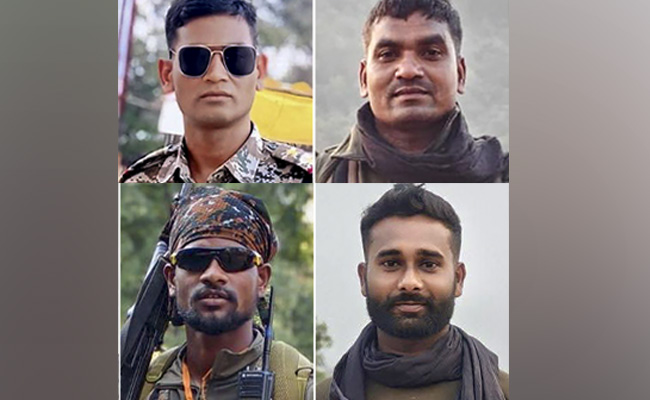
Narayanpur (Chhattisgarh) (PTI): Emotional scenes were witnessed on Sunday as wreaths were laid on the mortal remains of three of the four police personnel killed in an explosion in a gunpowder dump of Maoists in Chhattisgarh's Kanker district.
The grieving family members were inconsolable, while security personnel tried to comfort them.
Amid chants of "Bharat Mata ki Jai" and "Vande Mataram," public representatives, along with senior police and administrative officials, paid tributes to the deceased personnel.
The wreath-laying ceremony to pay homage to Inspector Sukhram Vatti (40), constables Krishna Komra (35) and Sanjay Gadhpale (29), killed in the explosion on Saturday, was held at the Police Lines in Narayanpur district, neighbouring Kanker.
The mortal remains of constable Parmanand Komra (29), who succumbed to injuries during treatment in Raipur, will be shifted to Kanker, where a separate wreath-laying ceremony will be held, police said.
Inspector General of Police, Bastar Range, Sundarraj Pattilingam, after paying homage, told reporters that the four police personnel made the supreme sacrifice while protecting the region.
"I pay my homage to them," he added.
The four personnel were killed while they were attempting to dispose of a gunpowder dump hidden earlier by Maoists in a forest near Aadnar village under Chhotebethiya police station limits in Kanker district, according to police.
It was the first explosion linked to Naxalites in the state since it was declared free from armed Maoists on March 31, and also the first instance this year in which security personnel engaged in anti-Naxal operations lost their lives.
District Reserve Guard (DRG) official Vatti, who was leading the team, hailed from Bijapur district. Constable Krishna Komra of the district force and constables Gadhpale and Parmanand Komra of the Bastar Fighters were residents of different villages in Kanker.