“Not at all interested in watching it” state BJP Chief Rajeev Chandrasekhar distances himself from ‘
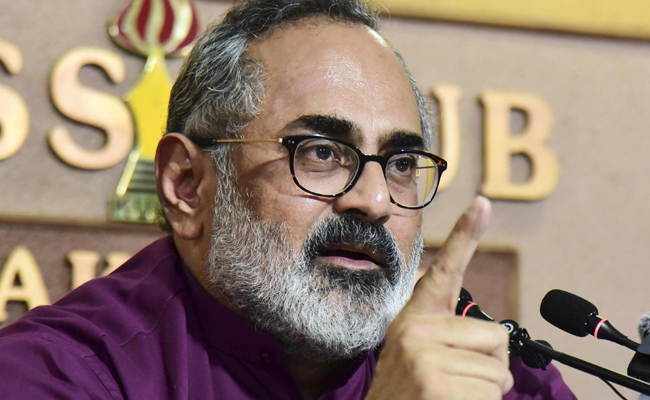
Thiruvanthapuram: Kerala BJP president Rajeev Chandrasekhar on Monday, February 23, said he does not intend to watch the upcoming controversial Hindi film ‘The Kerala Story 2: Goes Beyond.’
He was addressing media persons after inaugurating the National Democratic Alliance (NDA) zonal office at Thrikkakara in Kochi.
According to a report by The Hindu, Chandrasekhar’s remarks come amid the films trailer attracting sharp criticism from several sections of the state. Many have also alleged that the movie showcases Kerala in a negative manner.
Speaking to presspersons he clearly stated, “I am not at all interested in watching it.” He added that those who wish to see the film may do so, and those who are not interested need not watch it.
Referring to freedom of speech and expression under the Constitution, the BJP leader said that it is for the courts to decide whether there is anything unlawful in a film.
“Everyone has the right to make a film. If there is anything illegal in it, the court of law will strike it down,” he was quoted as saying by The Hindu.
Responding to media when asked about if the state BJP chief had any objection to the content shown in the trailer of The Kerala Story 2, Chandrasekhar did not directly comment on the film’s content.
However he repeated that he was not going to watch it.
Meanwhile, Chandrashekar stated that he liked watching Dhurandhar and had watched it twice.
Directed by Aditya Dhar, the spy thriller had also sparked debate over claims that it supported the BJP’s political narrative.
Chandrashekar also pointed out that he had taken a similar stand during the row over Mohanlal starrer Empuraan.
Empuraan had faced criticism from right-wing supporters over its alleged depiction of the Godhra riots and later underwent re-censoring.
Let the Truth be known. If you read VB and like VB, please be a VB Supporter and Help us deliver the Truth to one and all.
Yogish Gowda murder case: HC issues notice to CBI after hearing Kulkarni’s plea
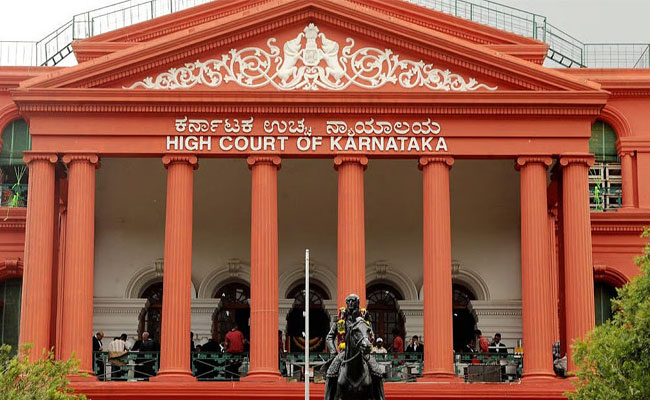
Bengaluru: Karnataka High Court has issued a notice to the Central Bureau of Investigation (CBI) following the filing of application by Congress MLA Vinay Kulkarni and Chandrashekhar Indi challenging the life imprisonment awarded to them by the Special Court for murder of BJP Dharwad leader Yogish Gowda.
The divisional bench comprising Justices Muhammad Nawaz and T Venkatesh Naik heard the pleas filed by Kulkarni on April 15 and Chandrashekhar Indi also called Chandu Mama on April 16.
The bench has now issued a notice to the CBI and also directed the HC Registry to obtain the trial court documents before adjourning the hearing.