Notes in circulation go up on account of precautionary holding of cash amid pandemic: RBI
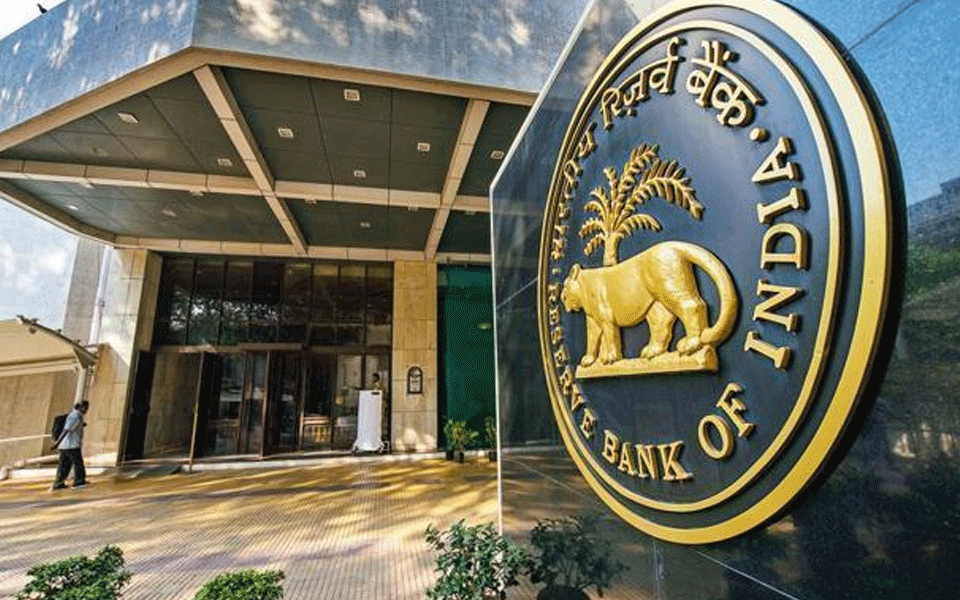
Mumbai: The Reserve Bank of India on Thursday said banknotes in circulation witnessed higher than average increase during 2020-21, on account of precautionary holding of cash by people due to the COVID-19 pandemic, and its prolonged continuance.
The value and volume of banknotes in circulation increased by 16.8 per cent and 7.2 per cent, respectively, during 2020-21, as against an increase of 14.7 per cent and 6.6 per cent, respectively, witnessed during 2019-20, said the RBI annual report.
In value terms, the share of Rs 500 and Rs 2,000 banknotes together accounted for 85.7 per cent of the total value of banknotes in circulation as on March 31, 2021, as against 83.4 per cent as on March 31, 2020.
"The year (2020-21) witnessed a higher than average increase in banknotes in circulation primarily due to precautionary holding of cash by the public induced by the COVID-19 pandemic, and its prolonged continuance," the RBI' its Annual Report for 2020-21 said.
The Reserve Bank of India (RBI) said when the precautionary demand for cash surged in the economy with the onset of the COVID-19 pandemic, it endeavoured to meet the increased demand for banknotes.
"Concerted efforts were made to ensure that Currency Chests (CCs) remain adequately stocked with all denominations of banknotes in order to maintain timely supply of fresh banknotes across the country," it said.
Currency in Circulation (CiC) includes banknotes and coins.
Presently, the Reserve Bank issues notes in denominations of Rs 2, Rs 5, Rs 10, Rs 20, Rs 50, Rs 100, Rs 200, Rs 500 and Rs 2,000. Coins in circulation comprise 50 paise and Rs 1, Rs 2, Rs 5, Rs 10 and Rs 20 denominations.
"In value terms, the share of Rs 500 and Rs 2,000 banknotes together accounted for 85.7 per cent of the total value of banknotes in circulation as on March 31, 2021, as against 83.4 per cent as on March 31, 2020," the report said.
In volume terms, Rs 500 denomination constituted the highest share at 31.1 per cent, followed by Rs 10 denomination banknotes which constituted 23.6 per cent of the total banknotes in circulation as on March 31, 2021.
The report said the indent of banknotes was lower by 9.7 per cent in 2020-21 than that of a year ago. The supply of banknotes was also marginally lower by 0.3 per cent during 2020-21 than in the previous year.
As per the report, the total expenditure incurred on security printing during July 1, 2020 to March 31, 2021 was Rs 4,012.1 crore, as against Rs 4,377.8 crore in the previous year (July 2019 to June 2020).
On counterfeit banknotes, it said that during 2020-21, out of the total Fake Indian Currency Notes (FICNs) detected in the banking sector, 3.9 per cent were detected at the Reserve Bank and 96.1 per cent by other banks.
A total of 2,08,625 pieces of counterfeit notes were detected during 2020-21, as compared to 2,96,695 pieces during 2019-20, and 3,17,384 during 20218-19.
In order to upgrade the infrastructure and processes for currency management, the RBI said it is in the process of engaging a consultant to get the technical assistance required for inducting modern technology and automating the processes of banknote handling, in a green-field facility on a pilot basis.
This, it said, is expected to automate receipt, storage, processing and destruction of banknotes; foster economies of scale; make the currency management function more efficient; and also fulfil the objective of clean note policy.
It is to be noted here that the banknotes in circulation have been growing along with the rise in digital payments. The volume of banknotes in circulation has doubled in the last decade, from 5,654.9 crore pieces in 2009-10 to 11,597.7 crore pieces in 2019-20, and reached 12,436.7 crore pieces as on March 31, 2021.
Further, with the increase in banknotes in circulation commensurate increase in the requirement for soiled notes processing is anticipated, RBI said.
"This has necessitated a relook at the present system of cash management and a need is felt to automate the handling of banknotes by adopting modern technology, which is in line with the leading global practices," it said.
The report stressed that automation can generate economies of scale, make the currency management function more efficient and enhance the objective of the clean note policy of the Reserve Bank for the benefit of the public.
The RBI's Annual Report for 2020-21, a statutory report of its Central Board of Directors, covers the working and functions of the Reserve Bank for the transition period of nine months (July 2020 - March 2021) following the decision to change its accounting year from July-June to April-March.
Let the Truth be known. If you read VB and like VB, please be a VB Supporter and Help us deliver the Truth to one and all.
Sujit Nair raises concerns over speculation of DMK-AIADMK understanding to block TVK
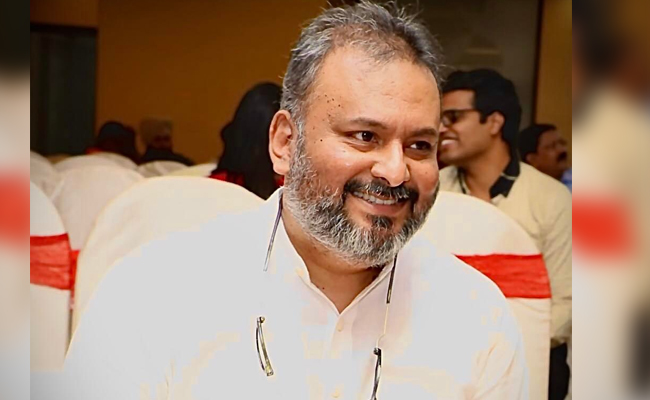
Chennai: Journalist and political commentator Sujit Nair has expressed concern over speculation that the Dravida Munnetra Kazhagam and the All India Anna Dravida Munnetra Kazhagam could explore a post-poll understanding to prevent Vijay-led Tamilaga Vettri Kazhagam from forming the government in Tamil Nadu.
In a social media post, Sujit Nair said the election verdict in Tamil Nadu reflected a clear public demand for political change and argued that the mandate should be respected irrespective of political preferences.
Referring to reports and political discussions surrounding a possible understanding between the DMK and AIADMK, he said he hoped such developments remained only speculative conversations and did not turn into reality.
Nair stated that if such an alliance were to take shape, it would raise serious questions about ideological politics in the country. He said TVK had emerged through a democratic electoral process and that the legitimacy to govern in a parliamentary democracy comes from the people’s verdict.
According to him, attempts to prevent an electoral winner from forming the government through unexpected political arrangements may be constitutionally valid, but many people could view them as politically opportunistic.
He further said that such a move could particularly affect the political image of the DMK, which has historically projected itself around ideology, social justice and opposition politics. Nair said that in ideological terms, the DMK appeared closer to TVK than to the AIADMK, and joining hands with its long-time political rival only to remain in power could weaken its broader political narrative.
He added that the same questions would apply to the AIADMK as well, as the party had spent decades positioning itself against the DMK and such an arrangement could create discomfort among its cadre and supporters.
Drawing a comparison with Maharashtra politics in 2019, Nair said he had expressed similar views when the Shiv Sena formed an alliance with the Indian National Congress and the Nationalist Congress Party after the Assembly elections.
He said post-poll alliances between long-standing political rivals often create a public perception that ideology and electoral mandates become secondary when political power equations come into play.
Nair also said such developments increase public cynicism towards politics and reinforce the belief among voters that ideology is often sidelined after elections.
He maintained that the Tamil Nadu verdict was emphatic and said respecting both the spirit and substance of the mandate was important for the credibility of democratic politics.