NRC applicants' biometric data locked: Assam pursuing matter with Centre
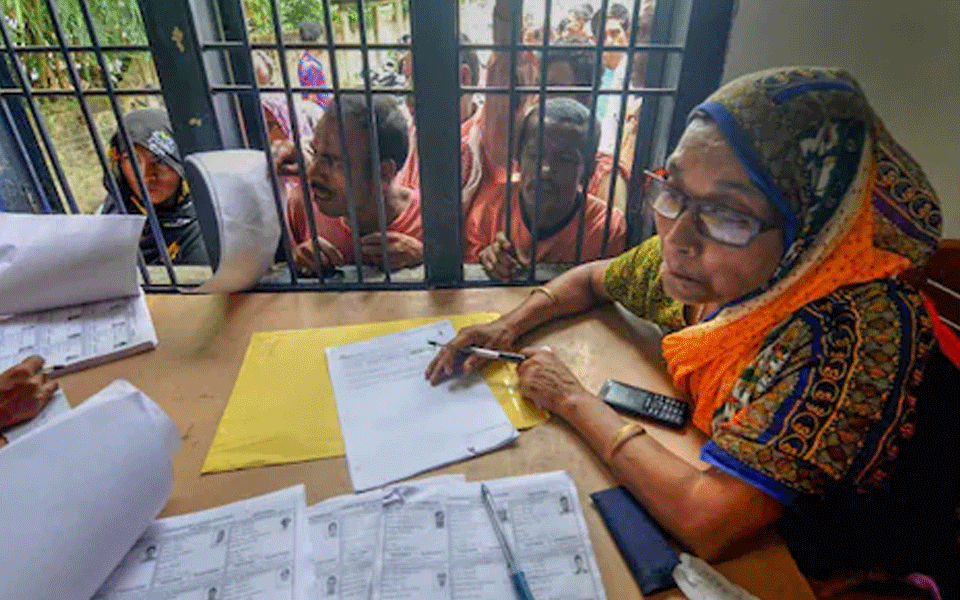
Guwahati: The matter of NRC applicants whose biometric details were locked during the claims and objections phase of the citizenship document update process, and thus making them unable to get their Aadhaar enrolment done has been raised by the Assam government with the appropriate authorities, the state assembly was informed on Monday.
No eligible beneficiary under Prime Minister Pradhan Mantri Gramin Awaas Yojana-Gramin (PMAY-G) scheme or the National Food Security Act (NFSA) in the state was being deprived due to the absence of their Aadhaar cards, Chief Minister Himanta Biswa Sarma said in a written reply to a query.
The biometric details of over 27 lakh NRC applicants were collected during the claims and objections phase while updating the National Register of Citizens, prior to the publishing of the document's final draft on August 31, 2019. However, it is yet to be notified by the Registrar General of India (RGI).
This data has since been frozen pending completion of the NRC, leaving these people unable to generate their Aadhaar numbers, which has also reportedly led to problems in availing benefits under various government schemes.
Responding to a question by ruling BJP MLA Kaushik Rai, Sarma informed the House that the state government has raised the issue of a section of the people failing to get their Aadhaar number as their biometric details have been locked with the RGI and the Union home secretary.
The Supreme Court has directed that an appropriate regime be enacted for NRC data on lines similar to the security regime provided for Aadhaar data. Subsequently, the RGI has sanctioned requisite funds for it, with the NRC State Coordinator taking up the project and C-DAC the implementing agency, he added.
The reply was laid in the House in the name of the chief minister in his capacity as the home minister though he was not present.
His reply further said linking of Aadhaar details of the beneficiaries under the PMAY-G scheme is not mandatory for Assam yet.
However, there is a directive from the Ministry of Rural Development to capture and upload Aadhaar details of beneficiaries for the preparation of PMAY-G additional list (Awaas+).
In case any person is left out of Awaas+ due to non-generation of Aadhaar number, the beneficiary will be included in the eligible list once Aadhaar-like security regime for NRC data is available, according to the reply.
Similarly, all beneficiaries under NFSA are getting food grains by showing their ration cards and no one is being deprived of their monthly entitled quota due to lack of Aadhaar card, it added.
Let the Truth be known. If you read VB and like VB, please be a VB Supporter and Help us deliver the Truth to one and all.
Trump says EU has until July 4 to approve last year's trade deal or it will face higher tariffs
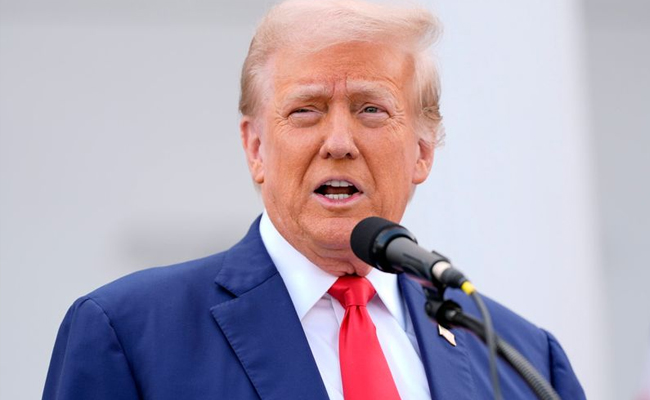
Washington (AP): President Donald Trump has said in a social media post that goods from the European Union would face higher tariff rates if the 27-member bloc fails to approve last year's trade framework by July 4.
The announcement on Thursday appeared to be a deadline extension after the president said last Friday that EU autos would face a higher 25 per cent tariff starting this week. Trump made the updated announcement after what he described as a "great call" with European Commission President Ursula von der Leyen.
Still, the US president was displeased that the European Parliament had yet to finalize the trade arrangement reached last year, which was further complicated in February by the US Supreme Court ruling that Trump lacked the legal authority to declare an economic emergency to impose the initial tariffs used to pressure the EU into talks.
"A promise was made that the EU would deliver their side of the Deal and, as per Agreement, cut their Tariffs to ZERO!" Trump posted. "I agreed to give her until our Country's 250th Birthday or, unfortunately, their Tariffs would immediately jump to much higher levels."
It was unclear from the post whether Trump was implying that the tariff rates would jump on all EU goods or the increase would only apply to autos.
His latest statement indicates he might be backing away from his earlier threat on EU autos by giving the European Parliament several more weeks to approve the agreement.
Under the original terms of the framework, the US would charge a 15 per cent tax on most goods imported from the EU.
But since the Supreme Court ruling, the administration has levied a 10 per cent tariff while investigating trade imbalances and national security issues, aiming to put in new tariffs to make up for lost revenues.