Odisha caste row ends; children return to anganwadi centre, consume food cooked by Dalit helper
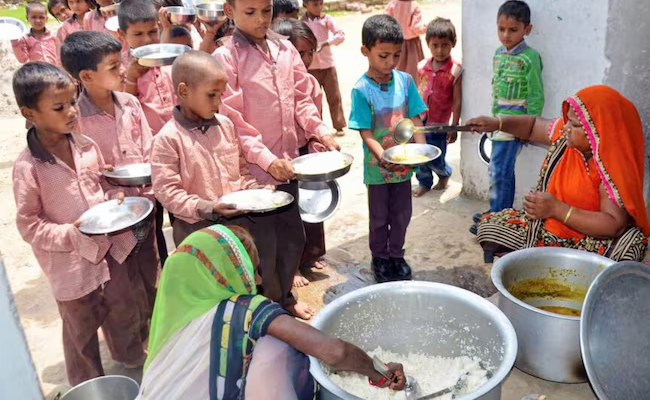
Kendrapara (Odisha) (PTI): A three-month-long caste row at an anganwadi centre in a village in Odisha's Kendrapara district ended on Monday as upper caste children returned to the facility and consumed food cooked by a Dalit woman helper.
Of the 20 children on the roll, 16 came to the anganwadi centre in Nuagaon village under Ghalimala gram panchayat with their parents and accepted the food cooked by the helper, with the absentees reporting ill.
The anganwadi centre remained shut since November 21 last year, following the appointment of Sharmistha Sethy, a Dalit woman, as a helper, with several upper caste families refusing to send their wards to the facility or even accept nutritious food items supplied by the government for pregnant women and lactating mothers.
ALSO READ: Australia add Steve Smith as replacement for Hazlewood in T20 World Cup squad
The caste row triggered nationwide outrage, and the matter was even raised in Parliament, with Congress president and Leader of the Opposition in Rajya Sabha, Mallikarjun Kharge, voicing concern over caste discrimination in the workplace.
On Monday, Kendrapara Child Development Project Officer (CDPO) Dipali Mishra and Rajnagar MLA Dhruba Charan Sahoo were present at the anganwadi centre to welcome the children.
"I served ragi ladoos to the children. Later, I cooked rice and 'dalma' (vegetable curry) and served the children. Seeing them eat the meals made me overjoyed. They also played with toys, bringing back life to the centre, which was left deserted for around three months," Sethy said.
"I hope caste discrimination will not lurk its ugly head in the village anymore," she added.
CDPO Mishra said the children, flanked by their guardians, had joyous moments at the centre.
"The centre functioned sans the children for almost three months due to some villagers' disagreement over the appointment of Sharmistha Sethy as the anganwadi centre helper. Now, the vibrancy is back," Mishra said.
On the absentees, the CDPO said they could not join as they are not well.
"We hope the absentee children will come to the centre on Tuesday as the dispute has been resolved. People have decided to relegate the differences to the background. This is heartening," she added.
Rajnagar MLA Dhurba Charan Sahoo said, "The issue is now a thing of the past. I hope the camaraderie among the villagers will remain intact."
Taking to X, Kendrapara MP and BJP national vice president Baijayant Panda said, "Delighted at children having a nutritious meal today at the Nuagaon anganwadi which I had reviewed yesterday and had a wonderful lunch along with local leaders and villagers. It was heartening to see the community coming together to ensure great beginnings for their children."
Panda, who hails from the Brahmin community, and other upper caste villagers joined a feast where Sethy served food to the guests on Sunday.
State Commission for Protection of Child Rights (SCPCR) member Sujata Nayak hailed the children's return to the centre and said the commission will launch an awareness drive aimed at safeguarding the rights of the children.
Kendrapara district sub-collector Arun Nayak had earlier said the matter was resolved in the presence of stakeholders, including members of the SCPCR and Odisha State Commission for Women, as the officials sensitised villagers on the matter.
Let the Truth be known. If you read VB and like VB, please be a VB Supporter and Help us deliver the Truth to one and all.
Mizoram class 12 results out, pass percentage at 87.67
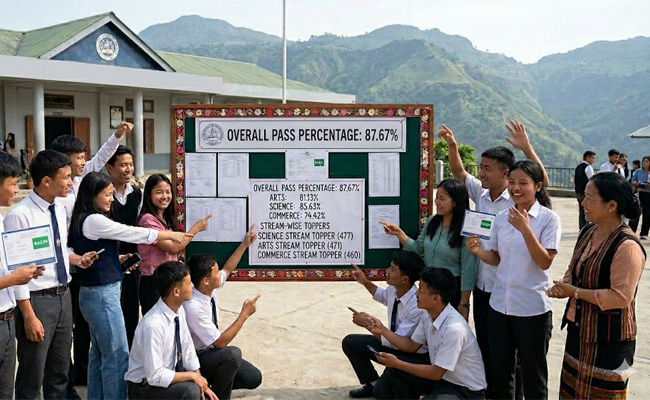
Aizawl (PTI): Mizoram recorded a pass percentage of 87.67 in the class 12 board examinations on Wednesday, with boys scoring marginally higher than girls,
Across the Arts, Science, and Commerce streams, boys secured an 87.7 per cent success rate, while girls followed closely at 87.66 per cent, according to the results published by the Mizoram Board of School Education (MBSE).
Of the 12,243 students who sat for the examinations held between February and March, 10,734 passed, 1,394 could not, and 115 qualified for compartmental examinations.
Academic performance was strongest in the Commerce stream, which saw a 90.51 per cent success rate among 759 candidates.
The Science stream followed with 89.24 per cent pass rate out of 2,770 students who appeared for the exam, while the Arts stream, with 87,14 students, recorded a pass percentage of 86.93.
In terms of institutional performance, the results revealed that deficit schools, which receive regular government grants, maintained their status as top performers with an average 93.80 per cent pass rate across all streams, followed by private schools at 91.55 per cent, while state-run schools recorded a success rate 83.13 per cent.