Odisha plans roadshows abroad to attract investments
Bhubaneswar, June 30: The Odisha government has planned to organise roadshows in Italy, Germany and Saudi Arabia to attract investments ahead of the Make in Odisha Conclave, a minister said on Saturday.
A 13-member team is scheduled to visit different countries to meet and woo investors for the Make in Odisha Conclave, which is to be held in Bhubaneswar from November 11 to November 15.
Industries Minister Ananta Das said in the first phase, the team will visit three countries, Italy, Germany and Saudi Arabia.
The tour is scheduled from July 1 to July 10, he added.
The team will be led by Odisha Industries Minister Ananta Das and department secretary Sanjeev Chopra.
The team would showcase its investment potential and the slew of measures taken for ease of doing business to the foreign companies during the tour.
In the second phase, the team will be visiting China, South Korea and Japan during the first or second week of August, informed the Minister.
Notably, the state government has partnered with the Federation of Indian Chambers of Commerce and Industry (FICCI) for the second Make in Odisha conclave after the Confederation of Indian Industry's (CII) withdrawal from the conclave.
At the inaugural edition of Make in Odisha in December 2016, Odisha drew investment intents valued at Rs 2.03 trillion at the event.
Sixty per cent of those investments are now in various stages of approval or implementation, said the minister.
Let the Truth be known. If you read VB and like VB, please be a VB Supporter and Help us deliver the Truth to one and all.
Unidentified men set fire to TVK campaign office near Srirangam
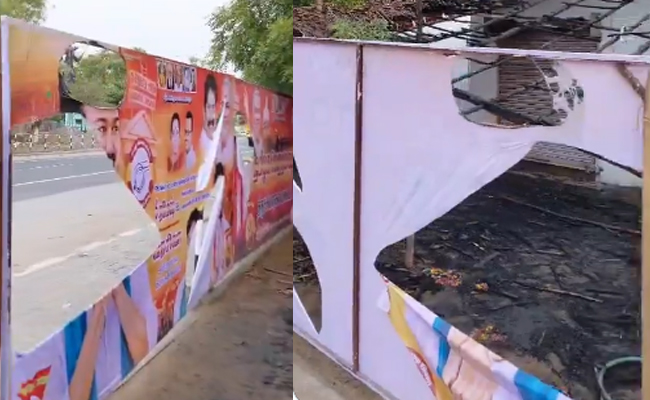
Tiruchirapalli (PTI): A campaign office of the actor Vijay-led TVK was allegedly torched by unidentified miscreants in Kamanayakkanpalayam village near Srirangam in the early hours of Friday, police said.
According to the police, the damage is minimal. Fire had engulfed the thatched roof providing shade at the entrance of the building that served as the party’s election office for the Srirangam constituency.
While on social media, a CCTV footage of two unidentified men fleeing on motorbike is being circulated as the culprits, police said the video footage is yet to be verified.
Based on a complaint lodged by TVK, the Pettaivaithalai Police have registered a case and initiated a search for the perpetrators.
திருவரங்கம் தொகுதியில் த.வெ.க வேட்பாளரின் தேர்தல் அலுவலகம் மர்ம நபர்களால் தீவைக்கப்பட்டு சேதப்படுத்தப்பட்டுள்ளது. @TNelectionsCEO @ECISVEEP#TVKVijay #தமிழகவெற்றிக்கழகம் pic.twitter.com/ImDZfTkuAq
— Thanjavur_District_Head (TVK) (@TVK_Thanjai) May 1, 2026