Of 20 who prepared Union Budget 2024, only two belonged to minorities, OBCs: Rahul Gandhi
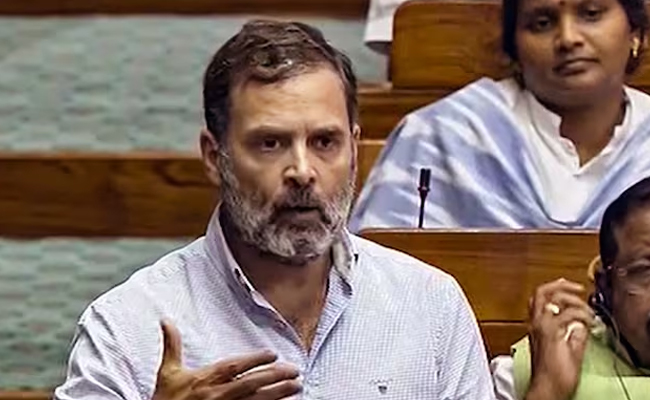
New Delhi: In a fiery speech in the Lok Sabha, Leader of the Opposition Rahul Gandhi criticized the Union Budget 2024, highlighting the lack of representation of minorties, Dalits, OBCs, and tribal officers in its preparation and addressing various policy failures.
During his address, Gandhi displayed a poster of the traditional Halwa ceremony held at the Ministry of Finance before the Budget session. However, Speaker Om Birla declined his request to show the picture. Gandhi then explained, "In this photo, 'Budget ka halwa' is being distributed. Out of the 20 officers who prepared the Union Budget 2024, only two belonged to minority communities or OBCs, and they were not even present in the picture. The nation's benefits are being shared, but 73% of the population is missing. Twenty officers prepared the Budget of India, and not one in the photo represents these communities."
Gandhi continued his critique, accusing the government of trapping soldiers in an "Agniveer Chakravyuh" and failing to address youth unemployment and paper leaks. "During Covid, you helped large businesses and destroyed smaller ones, leaving youth without employment. The Finance Minister included an internship program in the Budget for 500 large companies, which won't benefit 99% of the youth. The main issue for the youth is paper leaks; there have been 70 instances in 10 years, yet the Finance Minister did not mention it. Instead, the education budget was reduced to 2.5% of the total budget."
Gandhi also condemned the government's handling of the Agniveer scheme and the plight of farmers. "For the first time, you trapped soldiers in an Agniveer Chakravyuh, with no mention of Agniveer pensions in the budget. Farmers seeking legally guaranteed MSP were stopped at borders. They came to meet me, but you did not allow them," he stated.
Addressing the farmers directly, Gandhi pledged, "I want to tell the farmers of the country that we will do what they (NDA) have not done. We will pass (the bill for) guaranteed legal MSP in this House.”
Let the Truth be known. If you read VB and like VB, please be a VB Supporter and Help us deliver the Truth to one and all.
Centre launches national childhood diabetes screening, treatment framework

New Delhi (PTI): The Union Health Ministry on Sunday released a guidance document providing a framework for screening, diagnosis, treatment and long-term management of childhood diabetes.
According to the ministry, the document, for the first time, establishes a structured and standardised national framework, positioning India among a select group of countries that have integrated childhood diabetes care into the public health system.
The "Guidance Document on Diabetes Mellitus in Children" was released at the National Summit on Best Practices in Public Healthcare Service Delivery, concluded on May 1-2.
According to a statement by the ministry, the framework aims to ensure universal screening of all children from birth to 18 years through community and school-based platforms for early identification of diabetes.
Suspected cases will undergo immediate blood glucose testing and be referred to district-level health facilities for confirmatory diagnosis and treatment, it said.
A key feature of the initiative is the provision of a comprehensive free-of-cost care package at public health facilities, including screening, diagnostic services, lifelong insulin therapy, glucometers, test strips and regular follow-up care.
The initiative seeks to reduce the financial burden on families and ensure uninterrupted treatment for children diagnosed with diabetes.
The document also lays down an integrated continuum of care linking community-level screening with district hospital-based management and advanced care at medical colleges to ensure seamless follow-up and treatment.
To strengthen early detection, the guidance promotes the "4Ts" awareness framework -- Toilet, Thirsty, Tired and Thinner -- to help parents, teachers and caregivers recognise early warning signs of type 1 Diabetes.
Besides clinical protocols, the document focuses on family and caregiver empowerment through structured training on insulin administration, blood glucose monitoring, emergency response and daily disease management.
The statement stated the initiative is expected to reduce mortality through early detection, prevent complications and improve the quality of life of affected children while strengthening the public health system's capacity to manage non-communicable diseases among children.