Old video of PM Modi claiming to have scaled 23,000 ft of Mt Everest resurfaces, netizens say ‘Feku’
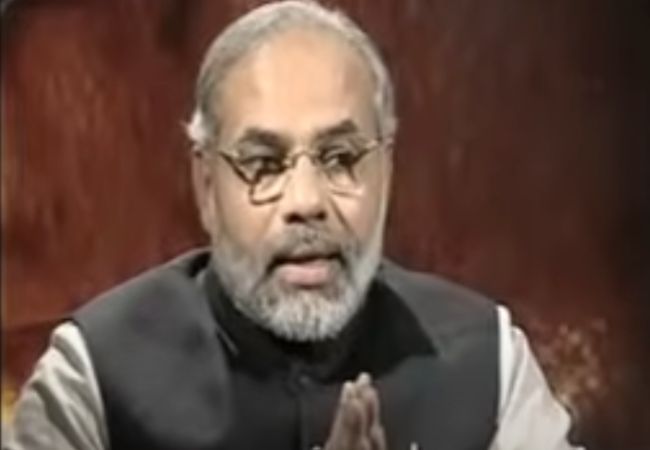
New Delhi: An old video of Prime Minister Narendra Modi from 1998 has resurfaced on social media, prompting a wave of mockery and criticism from users who are calling him “Feku” a slang term used online to describe exaggerated claims.
The video, originally part of journalist Rajeev Shukla’s popular television program Ru-Ba-Ru, features Modi in his earlier political days when he served as a general secretary of the Bharatiya Janata Party (BJP). In the interview, Modi discusses his hobbies, saying he enjoys horse riding, trekking, and exploring information technology, including computers and the internet which, at the time, was a relatively new medium in India.
What has particularly drawn the attention of social media users is Modi’s claim during the same conversation that he had scaled Mount Everest up to a height of 23,000 feet. “Mount Everest ki oonchai 29,000 ft hai, main 23,000 ft tak ho aaya hoon (The height of Mount Everest is 29,000 ft; I’ve been up to 23,000 ft),” Modi says in the video clip.
The resurfaced footage has gone viral, with users on X (formerly Twitter) and other platforms questioning the veracity of the statement and mocking the Prime Minister for allegedly making exaggerated personal claims.
One user posted, “Where was this gem till now? Mt Everest is 29,000 ft, and he says he went up to 23,000 ft — unbelievable!” Another wrote, “This man has always been a perpetual liar… a very sick condition of his brain,” while others shared memes referring to Modi as a “chronic liar” about his personal achievements.
The video clip, available on YouTube, was part of Shukla’s Ru-Ba-Ru series. There is also no official record or evidence to substantiate Modi’s claim of having reached 23,000 feet on Mount Everest or of undertaking any Everest expedition.
“Mt Everest ki oonchayi 29000 ft hai, main 23000 ft tak ho aaya hun” - Modi
— MrsG (@Marvellous_MrsG) October 4, 2025
Where was this gem till now😨 🤣🤣 pic.twitter.com/ClI2Ay2Zan
Let the Truth be known. If you read VB and like VB, please be a VB Supporter and Help us deliver the Truth to one and all.
NIA registers case to probe recovery of 79 crude bombs in poll-bound West Bengal
New Delhi (PTI): The National Investigation Agency (NIA) on Sunday registered a case to probe recovery of 79 crude bombs in poll-bound West Bengal, officials said.
The move came following a directive by the Union Home Ministry in this regard, they said.
In pursuance to the home ministry's order, the anti-terror agency on Sunday registered a case, which was originally filed at Uttar Kashi police station, Bhangar division, Kolkata on Saturday, and took up the investigation, an NIA spokesperson said in a late night statement.
"The case pertains to recovery of 79 crude bombs and other incriminating materials by Kolkata police, which were being stored at a spot, thereby endangering human life and property," the spokesperson said.
Earlier in the day, the Election Commission had directed the West Bengal Police to launch a special drive to arrest those involved in illegal manufacturing of crude bombs in the poll-bound state, an official said.
It asserted that all cases related to the making of any such explosive would be probed by the National Investigation Agency, the official said.
The directive came after the police recovered a large number of crude bombs from the house of a person, allegedly a TMC worker, at Bhangar in South 24 Parganas district, days ahead of the second and final phase of the assembly polls in the state.
The explosives were recovered during a search at the residence of Rafikul Islam following specific inputs, the official said.
The poll panel also issued a warning to senior police officers across the state over any lapse in maintaining law and order before the April 29 polling.
The first phase of the assembly elections in West Bengal was held on April 23, while the second phase will take place on April 29. Votes will be counted on May 4.
A record 93.19 per cent turnout has been recorded in the first round of polling. Bhangar will vote in the second phase.