Once a Waqf, always a Waqf
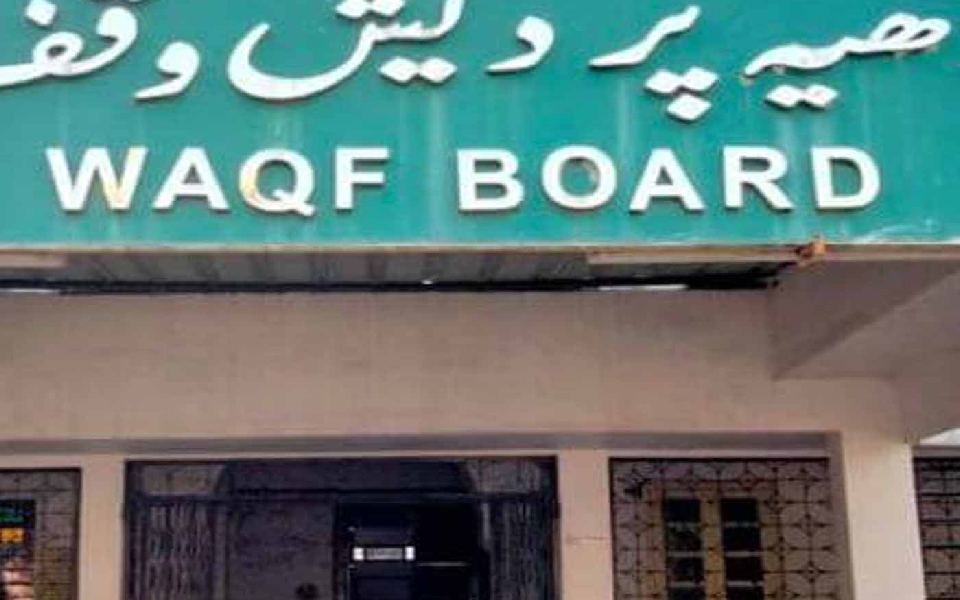
Waqf, a pious endowment in Islamic law is rooted in the teachings of Prophet Muhammad (PBUH). A companion Abubakr Siddiq (RA) purchased and assigned the land for construction of mosque of Prophet in Madina. The Quranic revelation “You will not attain unto piety until you spend of that which you love”.
The messenger of Allah said, “when a human being dies his deeds end except for three: ongoing charity, beneficial knowledge or a righteous child who prays for him”. It has encouraged Muslims to dedicate wealth for good cause like Waqf.
Concept of Waqf
The concept of waqf in Muslim law is a permanent dedication of properties for religious, charitable and pious purposes. The word waqf comes from the Arabic word which means to tie up, stoppage or detain. The movable and immovable assets are dedicated unconditionally to divine and must be irrevocable. The donor is called a Waqif the Waqif appoints a Muthavalli or trustee to manage the property. The usufruct of property is utilised for the specific purpose for which it is dedicated or for the benefit of the destitutes. Once an asset is dedicated to the divine it cannot be sold transferred hypothecated or given as a gift.
Auqaf in India
The idea of waqf dates back to the Delhi sultanate when Sultan Muizuddin Sam Ghour dedicated two villages in favour of Jamia Masjid Multan. In Mughal rule there was no centralised management of waqfs. They are managed by individually appointed trustees under the supervision of local Imams. He was accountable to regional khazi. The law of waqf was codified under British rule. “Musalman Waqf Validating Act 1913”, “Musalman Waqf Act 1923” were passed. The “Shariat Application Act 1937” notified that waqf properties comes under Muslim personal law. After independence Waqf Act 1954 was enacted for the entire country except the state of Jammu and Kashmir. Further a comprehensive Act was brought in force in the year 1995. Adjudication of waqf litigations by the waqf Tribunals was introduced. There after it was further amended during 2013 providing representation to women in the waqf board, multi member waqf Tribunals and the alienation of waqf properties is considered as non bailable and cognizable offence with up to 2 years rigorous imprisonment.
Management of Auqaf in Karnataka
During Vijayanagar, Bahamani, Adil Shahi, Tippu and Wodeyar's rule, numerous charities and endowments were made to Hindus and Muslims. The religious endowments of Hindus and Muslims were managed as per the provisions of The Mysuru Muzrai Manual 1934. During 1974 the state government decided to transfer these waqf properties to the waqf Board for their management under Waqf Act 1954.
Abolition of Zamindari System
Consequent to the abolition of Zamindari system Karnataka Inam Abolition Act 1955, Karnataka certain Inams Abolition Act 1977 were passed. Consequent to the 73rd amendment to the constitution Karnataka Land Reforms Act 1974 was enacted. Due to these enactments more than 79,000 acres of notified waqf properties were granted to the Inamdars and tenants out of 1.7 lakh acres in the state.
Waqf is always a Waqf
Honourable supreme court of India in Syed Ali and Others V/S Andhra Pradesh Waqf Board ordered on 18/01/1998 that “Waqf is always a Waqf” and the grant of Patta in favour of Mokhasadar under the Inam Act does not in any matter, nullify the earlier dedication made of the property constituting the same as waqf.
The Karnataka State Board of Auqaf sought clarification from the state government regarding applicability of Karnataka Religious and Charitable Inam Act, Karnataka Certain Inams Abolition Act 1977 and Karnataka Land Reforms Act 1974 to the waqf properties in view of the aforesaid Supreme Court judgement. The then Secretary to government Minority Welfare Department in his letter dated 27/07/2017 sought the opinion of the Law Justice and Human Rights Department. The said department clarified that the properties which the State Government claims to have vested in the government by virtue of Inam Abolition Laws or Land Reforms Act have no juridical significance. In view of the interpretation of waqf made by Honourable Supreme Court of India in its judgement reported in AIR1998 SC 972, Law department is of the opinion that once a property held to be Waqf property, in such an event there is no scope for application of either Inam abolition Laws or land reforms Act.
The State Government in its letter no MWD118WES2017 dated 19/12/2017 directed the Karnataka State Board of Auqaf to recover the Waqf lands acquired by individuals as well as the groups and to take legal action as per the provisions of the waqf Act 1995 (Amendment) Act 2013. The Board requested the Regional Commissioners and Deputy Commissioners in the State to restore the waqf properties affected under The Inams and Land Reforms Laws. Accordingly, the Tahsildars initiated to issue notices to such grantees and noted as “Waqf Property” in the record of rights of such properties. Many of such grantees have assailed the mutations effected by the Tahsildars. The Honourable High Court of Karnataka has issued directions to the Tahsildars to issue notices, hear them and then take the decision.
Now the state government has decided not to issue any notices which is obviously against the decision of Honourable Supreme Court of India and the clarification issued by the Law Department. Lest there is serious social, political and legal implications inherent in the implementation of orders of Honourable Supreme Court. Since 1995 to date the Inamdars and tenants have sold the properties, some of the lands are converted to non-agricultural purposes, residential lay outs have come up and commercial buildings are in use. The state government has to ponder over the issue with legal luminaries, Waqf Board authorities, senior bureaucrats and social scientists and come out with an acceptable solution in the interest of lasting peace in the society.
This article is written by Mujibullah Zaffari, Former Chief Executive Officer, Karnataka State Waqf Board.
Let the Truth be known. If you read VB and like VB, please be a VB Supporter and Help us deliver the Truth to one and all.
Sujit Nair raises concerns over speculation of DMK-AIADMK understanding to block TVK

Chennai: Journalist and political commentator Sujit Nair has expressed concern over speculation that the Dravida Munnetra Kazhagam and the All India Anna Dravida Munnetra Kazhagam could explore a post-poll understanding to prevent Vijay-led Tamilaga Vettri Kazhagam from forming the government in Tamil Nadu.
In a social media post, Sujit Nair said the election verdict in Tamil Nadu reflected a clear public demand for political change and argued that the mandate should be respected irrespective of political preferences.
Referring to reports and political discussions surrounding a possible understanding between the DMK and AIADMK, he said he hoped such developments remained only speculative conversations and did not turn into reality.
Nair stated that if such an alliance were to take shape, it would raise serious questions about ideological politics in the country. He said TVK had emerged through a democratic electoral process and that the legitimacy to govern in a parliamentary democracy comes from the people’s verdict.
According to him, attempts to prevent an electoral winner from forming the government through unexpected political arrangements may be constitutionally valid, but many people could view them as politically opportunistic.
He further said that such a move could particularly affect the political image of the DMK, which has historically projected itself around ideology, social justice and opposition politics. Nair said that in ideological terms, the DMK appeared closer to TVK than to the AIADMK, and joining hands with its long-time political rival only to remain in power could weaken its broader political narrative.
He added that the same questions would apply to the AIADMK as well, as the party had spent decades positioning itself against the DMK and such an arrangement could create discomfort among its cadre and supporters.
Drawing a comparison with Maharashtra politics in 2019, Nair said he had expressed similar views when the Shiv Sena formed an alliance with the Indian National Congress and the Nationalist Congress Party after the Assembly elections.
He said post-poll alliances between long-standing political rivals often create a public perception that ideology and electoral mandates become secondary when political power equations come into play.
Nair also said such developments increase public cynicism towards politics and reinforce the belief among voters that ideology is often sidelined after elections.
He maintained that the Tamil Nadu verdict was emphatic and said respecting both the spirit and substance of the mandate was important for the credibility of democratic politics.