One lakh excess premature deaths linked to air pollution in 8 Indian cities: Study
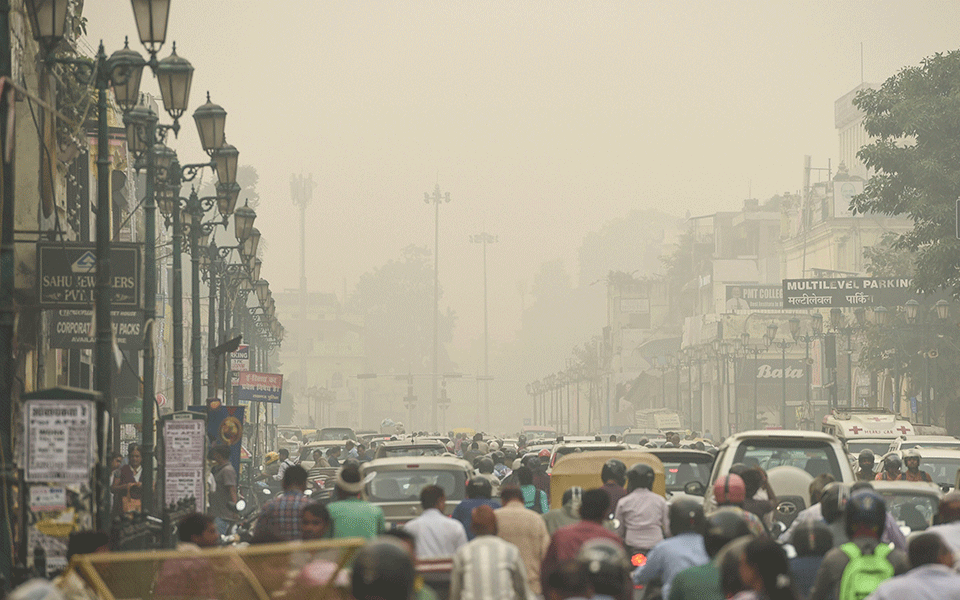
New Delhi (PTI): Exposure to air pollution has been linked to 100,000 excess premature deaths in the Indian cities of Mumbai, Bangalore, Kolkata, Hyderabad, Chennai, Surat, Pune and Ahmedabad between 2005 and 2018, according to a study.
The international team of scientists aimed to address data gaps in air quality for 46 cities in Africa, Asia and the Middle East using space-based observations from instruments onboard NASA and European Space Agency (ESA) satellites for 2005 to 2018.
The study, published last week in the journal Science Advances, shows rapid degradation in air quality and increases in urban exposure to air pollutants which are hazardous to health.
The researchers found significant annual increases in pollutants directly hazardous to health of up to 14 per cent for nitrogen dioxide (NO2) and up to 8 per cent for fine particles (PM2.5).
They also found increase in the level of up to 12 per cent for ammonia and up to 11 per cent for reactive volatile organic compounds.
The team, including researchers from the Harvard University in the US, attributed this rapid degradation in air quality to emerging industries and residential sources like road traffic, waste burning, and widespread use of charcoal and fuelwood.
"Open burning of biomass for land clearance and agricultural waste disposal has in the past overwhelmingly dominated air pollution in the tropics," said study lead author Karn Vohra from University College London (UCL) in the UK.
"Our analysis suggests we are entering a new era of air pollution in these cities, with some experiencing rates of degradation in a year that other cities experience in a decade," said Vohra, who completed the study as a Ph.D. student at the University of Birmingham, UK.
The researchers also found 1.5 to four-fold increases in urban population exposure to air pollution in 40 of the 46 cities for NO2 and 33 of the 46 cities for PM2.5, caused by a combination of population growth and rapid deterioration in air quality.
The study found that the increase in the number of people dying prematurely from exposure to air pollution was highest in cities in South Asia.
Dhaka, Bangladesh, saw a total of 24,000 excess premature deaths, while the Indian cities of Mumbai, Bangalore, Kolkata, Hyderabad, Chennai, Surat, Pune and Ahmedabad had 100,000 excess deaths.
The researchers noted that India has an extensive network of monitors operated and maintained by local and national authorities as well as research institutions.
However, the use of these for informing policies is hindered by data quality issues for the national network and restricted access to data collected by research institutions and state governments, they said.
The number of deaths in tropical cities in Africa are currently lower due to recent improvements in healthcare across the continent resulting in a decline in overall premature mortality, the researchers said.
However, the worst effects of air pollution on health will likely occur in the coming decades, they said.
"We continue to shift air pollution from one region to the next, rather than learning from errors of the past and ensuring rapid industrialisation and economic development don't harm public health," said study co-author Eloise Marais from UCL.
"We hope our results will incentivise preventative action in the tropics," Marais added.
Let the Truth be known. If you read VB and like VB, please be a VB Supporter and Help us deliver the Truth to one and all.
TN seeks duty-free cotton imports to support textile sector: CM Vijay writes to PM
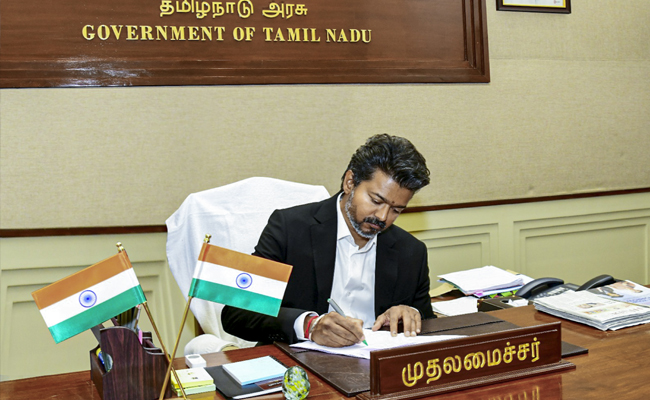
Chennai (PTI): Tamil Nadu Chief Minister C Joseph Vijay on Thursday urged Prime Minister Narendra Modi to remove the import duty on cotton.
In his first letter to Modi after taking over as chief minister of the state, he said Tamil Nadu is the country’s largest textile and apparel exporting state.
Lakhs of people are dependent on this sector for both direct and indirect employment, especially women from rural and semi-urban backgrounds, Vijay pointed out.
Stating that the industry is facing a severe crisis due to an increase in cotton prices and consequently yarn prices, he said, “I understand this is caused primarily due to a shortage in cotton production and increased trading activity in the country.”
Pointing out that the price of cotton has increased from Rs 54,700 to Rs 67,700 per candy—an increase of 25 per cent over the last two months—while yarn prices have increased from Rs 301 to Rs 330 per kg, he said, “In this situation, the continued supply of raw material can be ensured only through imports.”
However, there is an import duty of 11 per cent on cotton, he said, adding that in such a situation, permitting duty-free cotton imports will help the industry meet increasing export commitments and remain globally competitive.
Vijay said that after agriculture, the textile and apparel sector is one of the largest employment-generating sectors.
“There is a significant responsibility on the government to safeguard the employment of lakhs of people and ensure the sustainability of the textile value chain," he said.
“Hence, I request your intervention to remove the import duty on cotton from the existing 11 per cent to 0 per cent to ensure the availability of raw material. This measure will enable the textile and apparel industry to remain globally competitive, enhance exports, and protect jobs,” he added.