'One nation, one election' in national interest, nothing to do with any party: Kovind
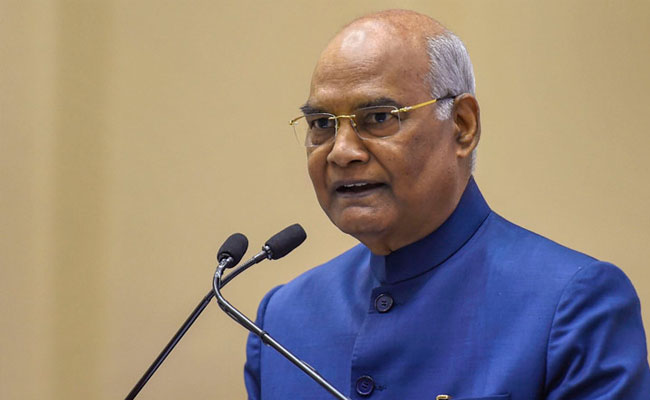
Rae Bareli (PTI): Former president Ram Nath Kovind, who heads the committee to explore the possibility of "one nation, one election", said holding simultaneous polls is in the national interest and has got nothing to do with any particular political party.
"Holding simultaneous elections will be beneficial for the public as the revenue saved will be used for development work," the former president, on a private visit here, told reporters on Monday night.
"I am requesting all the political parties to cooperate as this is in the national interest. No political party has got anything to do with it," he stressed.
The government constituted the high-level eight-member committee, headed by Kovind, earlier this year.
The former president said, "Many committees such as the parliamentary committee, Niti Aayog, Election Commission of India, and others have said that the tradition of 'one nation one election' needs to be revived in the country."
"The government has constituted a committee for the purpose and made me its chairman. We are working with the people and will give suggestions to the government as to how we can implement this tradition again," he said.
"I have also contacted all registered national parties and sought their suggestions. At some point in time, all of them supported it. We request all the political parties to cooperate as this is in the national interest," he said.
Asserting that no particular political party will be benefitting from "one nation, one election", Kovind said, "If implemented, the party which is in power at the Centre will benefit, be it the BJP or the Congress or any other party. There is no discrimination."
The biggest beneficiaries will be the common people as the revenue saved will be utilised for development works, Kovind said.
In the first meeting of the committee in September, the panel outlined the modalities of the committee and decided to invite recognised national parties, parties having government in states, parties having their representatives in Parliament, and other recognised state parties to seek their suggestions/viewpoints on the issue of simultaneous elections in the country.
In addition, it said the Committee will also invite the Law Commission of India to make their suggestions/viewpoints on the issue.
Over the years, Prime Minister Narendra Modi has pushed strongly for the idea of simultaneous Lok Sabha and state assembly polls, and the decision to task Kovind to look into it underscores the government's seriousness as a host of elections approach.
Let the Truth be known. If you read VB and like VB, please be a VB Supporter and Help us deliver the Truth to one and all.
Man kills 12-year-old nephew over property dispute in Karnataka’s Sindhanur
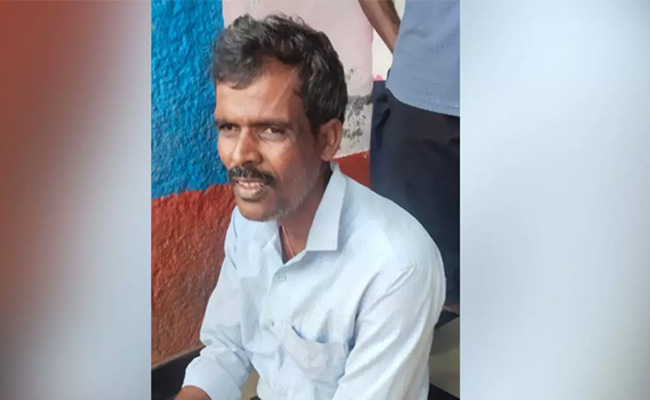
Sindhanur: A 12-year-old boy was killed and his mother seriously injured after a man allegedly attacked his elder brother’s family with a knife over a property dispute in Alabanur village of Sindhanur taluk on Wednesday morning.
The deceased has been identified as Nagaraj Siddappa Alvi (12). Amrutha Siddappa (42) sustained serious injuries in the attack. Police said the accused is Basavaraj Rudrappa Alvi, the younger brother of the victim boy’s father.
According to preliminary information, Basavaraj had arrived in Alabanur village on Tuesday and was staying at his mother’s house.
On Wednesday morning, he allegedly went to the house of his brother Siddappa carrying a knife. At the time, Siddappa’s wife Amrutha and children Nagaraj and Dhanush were present in the house.
Police said the accused allegedly attacked them with the knife. Nagaraj died in the incident, while Amrutha and Dhanush suffered serious injuries.
The injured were shifted to the government hospital in the city for treatment.
Deputy Superintendent of Police G. Chandrashekhar visited the spot and gathered information.
Sources said Chinnamma Rudrappa of Alabanur village has two sons Siddappa, who lives in Alabanur, and Basavaraj, who resides in Alliganur village of Siruguppa taluk.
Police suspect the long-standing property dispute between the two brothers led to the fatal attack.