'One nation, one election' is unconstitutional and impractical: Prashant Bhushan
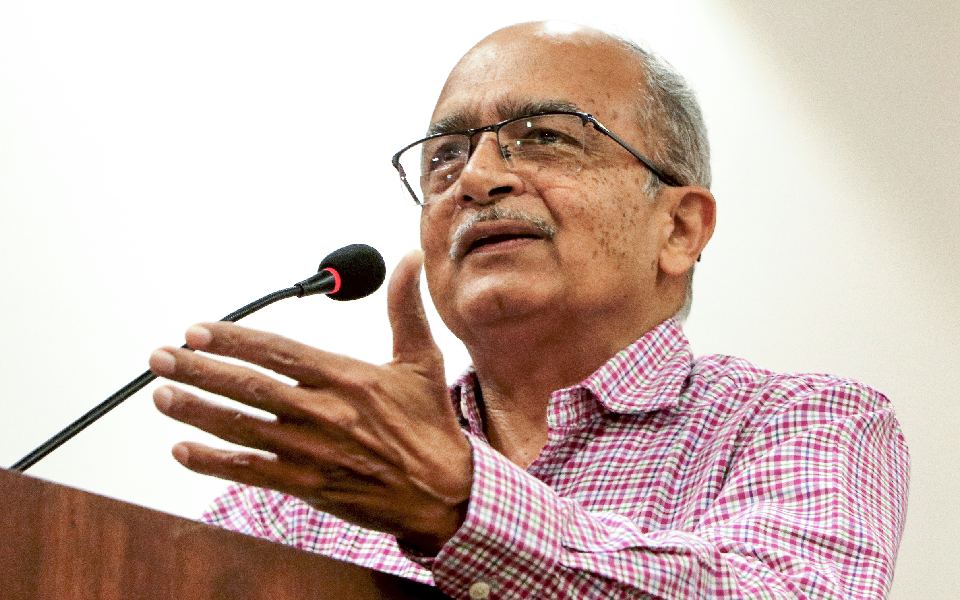
Nagpur, Dec 24: Lawyer-activist Prashant Bhushan on Tuesday strongly opposed the idea of 'one nation, one election', calling it as "ridiculous and unconstitutional", and said holding simultaneous polls was impractical in a parliamentary democracy.
He also hailed the recent apex court judgements that gave a stay on lawsuits about reclaiming religious places, especially mosques, and 'bulldozer justice'.
Bhushan spoke at Parwana Oration 2024 organised here on the topic "Whither economic democracy in India' organised by Comrade H L Parwana Memorial Trust.
Answering reporters' query on 'one nation, one election' after his speech, he said, "It is ridiculous and unconstitutional because one cannot have simultaneous polls in parliamentary democracy for the reason that the government depends on enjoying the confidence of the majority in the House."
Two bills that lay down the mechanism to hold simultaneous elections were introduced in the Lok Sabha after a fiery debate last week.
"If there is a split in the party or if some people defect, then the government can fall and if the government falls and no other government can be formed then what will you do? Either you impose President's rule for the remaining term and if the central government falls, what do you do? You cannot impose President's rule there. Therefore, you will have to have fresh elections otherwise it is against democracy," he noted.
"Now, they are saying that fresh elections will be only for the remainder of the term. So how is that helping? You are now increasing the number of elections because now you are holding elections only for the remaining two years if say two years are left. This is totally bogus...There is no way this is practical and in my view this is totally unconstitutional," he said.
Equating 'bulldozer justice' with a lawless state of affairs where might is right, the Supreme Court last month laid down pan-India guidelines and said no property should be demolished without a prior show cause notice and the affected must be given 15 days to respond.
Recently, the apex court restrained till further directions the courts in the country from entertaining fresh lawsuits and passing any effective interim or final orders in pending ones seeking to reclaim religious places, especially mosques and dargahs (a Muslim shrine).
Speaking about it, he said, "We have seen that a few good things happened in the Supreme Court. One is the stay on all these suits about mosques being taken over for temples or being investigated as to whether there are temples below that or not."
"They (SC) have said that for the time being, these suits will not proceed. This is a very important development that has taken place," he said.
The other important decision is about ' bulldozer justice', he said.
"They have passed a very good judgement effectively putting a stay on it. They have also passed many judgements regarding the misuse of powers of the Enforcement directorate. ED has become the main instrument of harassing opposition leaders or activists, journalists, etc, wherein anything can be said to be money laundering and therefore ED gets into anything, whatsoever," he said.
Fortunately, in the recent last few months, there have been a number of judgements which have put brakes on the power of the ED, he added.
On a query about Finance Minister Nirmala Sitharaman's statement that 18 per cent GST will be imposed on the margin value of used car sales, Bhushan said it should be scrapped.
"I don't know whether she misunderstood what the scheme is and if this is the scheme it will have to go. It will also struck down in the court," he said.
When asked about Maharashtra Chief Minister Devendra Fadnavis' statement that pro-urban Naxal organisations supported the 'Bharat Jodo Yatra' of Rahul Gandhi, Bhushan said, "That is all absolutely bunk. I mean they call any dissenter urban Naxalite..."
Addressing the gathering earlier, Bhushan called for the need to understand the difference between 'economic democracy' and 'political democracy'.
Economic inequality has increased so much that 10 to 20 families of this country own more wealth than the bottom 50 percent people of this country together, he claimed.
"We say that we have political democracy, but is the system in the country is run by the opinion of the people?" he asked.
A lot could have been done to reduce the economic inequality by implementing progressive tax, which means that tax will increase as the income increases. Maximum personal income tax in India is around 35 per cent, which is less than most of the other countries that are regarded as capitalist countries, he said.
Secondly, progressive wealth tax could have been implemented be it one, two or three percent, but we did not apply wealth tax, he said.
Bhushan made a pitch for inheritance tax, and said corporate tax has decreased in the country in the recent past.
The government should ensure that a person lives a dignified life with basic food, education, health care and shelter, he said.
Let the Truth be known. If you read VB and like VB, please be a VB Supporter and Help us deliver the Truth to one and all.
Bengaluru jail introduces biometric tracking system for prisoners
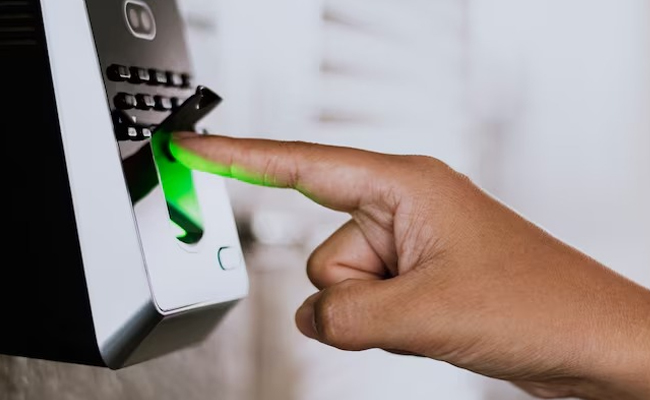
Bengaluru: In a bid to curb misconduct and illegal activities inside Parappana Agrahara Central Prison, prison authorities have introduced a new ‘Prisoners Tracking Movement System’ under which inmates will have to undergo biometric verification while entering every barrack.
According to jail officials, biometric systems have been installed across all major sections of the prison, including barracks, visitor rooms, hospital, canteen, kitchen, library, playground, handicraft units and bakery sections. Staff members have also been deployed at these locations.
Officials said inmates visiting the visitors’ room must now obtain a digital token after biometric verification. Details such as the prisoner’s name, identification number and entry time will be updated in the prison software system. This will help authorities maintain a complete digital record of inmates visiting and returning from meeting rooms.
Similar systems have also been introduced at entry points of the hospital, library and other barracks accessed for work-related purposes. Officials said the system will help identify prisoners involved in suspicious or illegal activities with other inmates and enable authorities to track how much time a prisoner spends at different locations inside the prison.
Authorities stated that AI-powered cameras were already being used inside the prison to monitor inmates as well as prison staff. Along with this, digital tracking of prisoner phone calls and a digital token system for visitor meetings have now been added to strengthen surveillance over inmate movement. Officials said the project has been implemented at a cost of around Rs 2.25 crore.
The prison department has also introduced a canteen usage tracking system to monitor prisoners’ spending patterns. Instead of direct cash payments, inmates can purchase bakery items and snacks using wallets or coupons issued within the prison system.
Officials said the digital system will record details including the buyer’s name, items purchased, quantity, date, time and remaining wallet balance. This will allow prison authorities to maintain complete expenditure records of inmates.