'Only 6 Rohingyas left in the last camp in West Bengal'
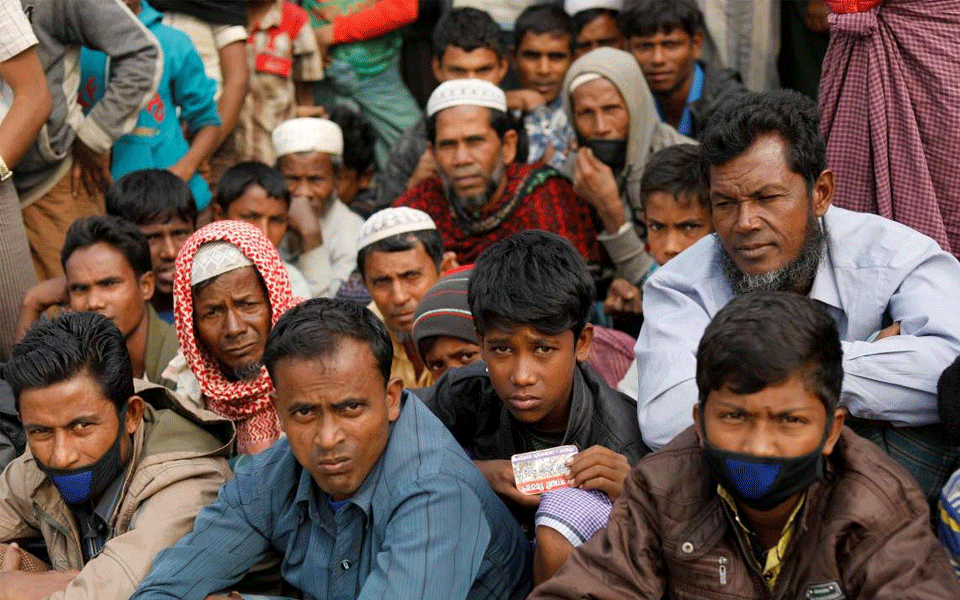
Kolkata/Baruipur, Oct 15: Most of the Rohingya refugees who had taken shelter in West Bengal have left allegedly out of fear of deportation and the only existing camp in South 24 Parganas district has six of its 29 inmates left, a spokesman of the organisation which had arranged their stay said on Monday.
Twenty two Rohingyas left the Hardaha camp in South 24 Parganas district after the October 4 deportation of seven Rohingya immigrants, who had been staying in Assam illegally, to their home country Myanmar, Hussein Gazi, spokesman of the organisation 'Desh Bachao Samajik Committee' told PTI.
Gazi said that the Rohingyas in the camp, besides several other local groups, became scared after hearing reports of the deportation.
He claimed that those deported had told their counterparts in the camps on being contacted that they had been "beaten up after their return to Myanmar."
They had reportedly also said that those in the camps should try to stay on in India and work for their living, he claimed.
"This had created great fear among the camp inmates and they do not want to return to Myanmar," Gazi said.
The organisation had set up camps for 400 Rohingyas at Basanti, Canning, Bhangor, Baruipur and Ghutiari Sharif in South 24 Parganas district.
"They (Rohingyas) were also scared after hearing reports that the Centre has asked states earlier this month to collect biometric details of all illegal migrants," Gazi said.
The Union Home Minister Rajnath Singh had said on October 1 that the state governments have been asked to identify Rohingya refugees in their regions and collect their biometric details.
The Centre will send the biometric reports collected by states to the Myanmar government through diplomatic channel for the resolution of the issue, he had said.
Visits to the Rohingya camps by personnel of the Intelligence Bureau and the district intelligence bureau who inquired about the antecedents of the inmates and asked them to fill up a form had also worried them, Ghazi said.
The six Rohingyas who are still in the Hardaha camp include two women and three children from two families, he said.
Asked where the Rohingyas who left the camp had gone, Gazi said, "We have been told many of them have headed towards Jammu."
Some had said they were going to Hyderabad to find jobs, he said.
The Hardaha camp had come up on Gazi's land on December 2017. One group of Rohingyas started living there in January 2018, while another group arrived in March.
The other camps included rented premises too.
"We had sent a letter to the West Bengal Chief Minister's Office months back for help and security but there was no reply," Gazi said.
He said 56 organisations, including Bandi Mukti Committee, Association for Protection of Democratic Rights, Centre for Protection of Democratic Rights will meet after Durga Puja to chalk out the next course of action to ensure safety of the Rohingyas in the camps.
Let the Truth be known. If you read VB and like VB, please be a VB Supporter and Help us deliver the Truth to one and all.
Sujit Nair raises concerns over speculation of DMK-AIADMK understanding to block TVK
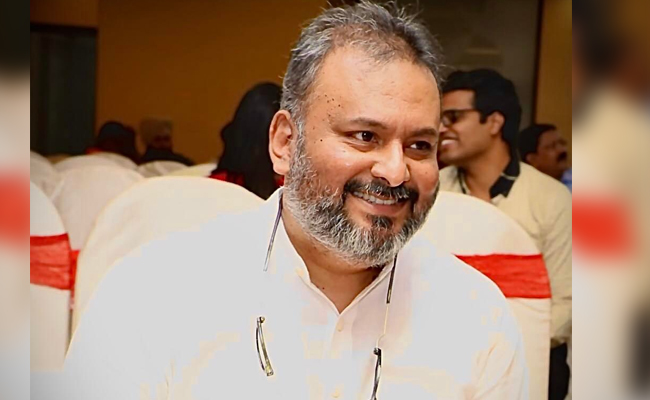
Chennai: Journalist and political commentator Sujit Nair has expressed concern over speculation that the Dravida Munnetra Kazhagam and the All India Anna Dravida Munnetra Kazhagam could explore a post-poll understanding to prevent Vijay-led Tamilaga Vettri Kazhagam from forming the government in Tamil Nadu.
In a social media post, Sujit Nair said the election verdict in Tamil Nadu reflected a clear public demand for political change and argued that the mandate should be respected irrespective of political preferences.
Referring to reports and political discussions surrounding a possible understanding between the DMK and AIADMK, he said he hoped such developments remained only speculative conversations and did not turn into reality.
Nair stated that if such an alliance were to take shape, it would raise serious questions about ideological politics in the country. He said TVK had emerged through a democratic electoral process and that the legitimacy to govern in a parliamentary democracy comes from the people’s verdict.
According to him, attempts to prevent an electoral winner from forming the government through unexpected political arrangements may be constitutionally valid, but many people could view them as politically opportunistic.
He further said that such a move could particularly affect the political image of the DMK, which has historically projected itself around ideology, social justice and opposition politics. Nair said that in ideological terms, the DMK appeared closer to TVK than to the AIADMK, and joining hands with its long-time political rival only to remain in power could weaken its broader political narrative.
He added that the same questions would apply to the AIADMK as well, as the party had spent decades positioning itself against the DMK and such an arrangement could create discomfort among its cadre and supporters.
Drawing a comparison with Maharashtra politics in 2019, Nair said he had expressed similar views when the Shiv Sena formed an alliance with the Indian National Congress and the Nationalist Congress Party after the Assembly elections.
He said post-poll alliances between long-standing political rivals often create a public perception that ideology and electoral mandates become secondary when political power equations come into play.
Nair also said such developments increase public cynicism towards politics and reinforce the belief among voters that ideology is often sidelined after elections.
He maintained that the Tamil Nadu verdict was emphatic and said respecting both the spirit and substance of the mandate was important for the credibility of democratic politics.