Only one of 3 strains of B.1.617 COVID variant first detected in India now a variant of concern: WHO
United Nations, Jun 2: The World Health Organisation (WHO) has said only B.1.617.2, one of the three strains of the B.1.617 COVID-19 variant first detected in India, is a variant of concern now and noted that lower rates of transmission have been observed for the other two lineages.
The B.1.617 variant was first detected in India and was divided in three lineages - B.1.617.1, B.1.617.2 and B.1.617.3.
In the COVID-19 Weekly Epidemiological Update published on Tuesday, WHO said available findings for lineages B.1.617.1 and B.1.617.2 were initially used to designate B.1.617 a global Variant of Concern (VOC) on May 11 this year.
Since then, it has become evident that greater public health risks are currently associated with B.1.617.2, while lower rates of transmission of other lineages have been observed, WHO said.
The UN health agency said that in order to reflect this updated information, B.1.617 has been delineated .
B.1.617.2 remains a VOC and labelled variant Delta we continue to observe significantly increased transmissibility and a growing number of countries reporting outbreaks associated with this variant. Further studies into the impact of this variant remain a high priority for WHO.
The Delta variant has now been reported in 62 countries around the world as of June 1, the update said.
It added that the B.1.617.1 strain has been reclassified to a Variant of Interest (VOI) and labelled variant Kappa . While Kappa is also demonstrating increased transmissibility (in specified locations), global prevalence appears to be declining. This variant will continue to be monitored and reassessed regularly.
The B.1.617.3 lineage is "no longer classified as either a VOI or VOC relatively few reports of this variant have been submitted to date.
On Monday, the WHO announced the new naming system for key COVID19 variants and the labels are based on the Greek alphabet (i.e. Alpha, Beta, Gamma, etc), making them simple, easy to say and remember.
The labels do not replace existing scientific names, which convey important scientific information & will continue to be used in research. The naming system aims to prevent calling #COVID19 variants by the places where they are detected, which is stigmatising & discriminatory, WHO said in a tweet.
WHO said that as the global public health risks posed by specific COVID19 variants becomes better understood and evolves, it will continue to update the list of global VOIs and VOCs.
This is necessary to adjust to the emergence of new variants, their changing epidemiology (e.g., the incidence of some variants is rapidly declining), and our understanding of their phenotypic impacts as new evidence becomes available and is shared.
Variants no longer classified as VOCs or VOIs will continue to be monitored as part of the overall evolution of SARS-CoV-2, and may be reassessed pending new evidence indicating an increased public health risk, WHO said.
The update further said that India reported the highest numbers of new COVID-19 cases in the past week at 1,364,668, a 26 per cent decrease compared to the previous week. Other countries reporting the highest numbers of new cases are Brazil (420,981 new cases; 7 per cent decrease), Argentina (219,910 new cases; 3 per cent increase), the United States of America (153,587 new cases; 18 per cent decrease), and Colombia (150,517 new cases; 40 per cent increase).
The South-East Asia Region reported over 1.5 million new cases and over 29,000 new deaths, a 24 per cent and an 8 per cent decrease respectively compared to the previous week.
Case incidence continued to follow a sharp decline for a third consecutive week, and death incidence decreased for the first time since early March 2021, primarily driven by trends reported in India, the update said.
In the South-East Asia Region, the highest numbers of new deaths were reported from India (26,706 new deaths; 1.9 new deaths per 100,000; an 8 per cent decrease), Indonesia (1057 new deaths; 0.4 new deaths per 100,000; a 15 per cent decrease), and Nepal (1010 new deaths; 3.5 new deaths per 100,000; a 22 per cent decrease).
Globally, the number of new COVID-19 cases and deaths continues to decrease, with over 3.5 million new cases and 78,000 new deaths reported globally in the past week; a 15 per cent and 7 per cent decrease respectively, compared to the previous week, the update said.
The European and South-East Asia Regions reported the largest decline in new cases and deaths in the past week, while case incidence increased in the African and Western Pacific regions. Although the number of global cases and deaths continued to decrease for a fifth and fourth consecutive week respectively, case and death incidences remain at high levels and significant increases have been reported in many countries in all regions, the WHO update said.
Let the Truth be known. If you read VB and like VB, please be a VB Supporter and Help us deliver the Truth to one and all.
Sujit Nair raises concerns over speculation of DMK-AIADMK understanding to block TVK
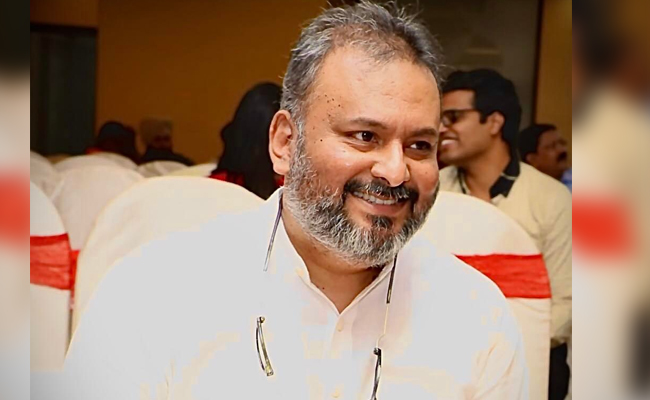
Chennai: Journalist and political commentator Sujit Nair has expressed concern over speculation that the Dravida Munnetra Kazhagam and the All India Anna Dravida Munnetra Kazhagam could explore a post-poll understanding to prevent Vijay-led Tamilaga Vettri Kazhagam from forming the government in Tamil Nadu.
In a social media post, Sujit Nair said the election verdict in Tamil Nadu reflected a clear public demand for political change and argued that the mandate should be respected irrespective of political preferences.
Referring to reports and political discussions surrounding a possible understanding between the DMK and AIADMK, he said he hoped such developments remained only speculative conversations and did not turn into reality.
Nair stated that if such an alliance were to take shape, it would raise serious questions about ideological politics in the country. He said TVK had emerged through a democratic electoral process and that the legitimacy to govern in a parliamentary democracy comes from the people’s verdict.
According to him, attempts to prevent an electoral winner from forming the government through unexpected political arrangements may be constitutionally valid, but many people could view them as politically opportunistic.
He further said that such a move could particularly affect the political image of the DMK, which has historically projected itself around ideology, social justice and opposition politics. Nair said that in ideological terms, the DMK appeared closer to TVK than to the AIADMK, and joining hands with its long-time political rival only to remain in power could weaken its broader political narrative.
He added that the same questions would apply to the AIADMK as well, as the party had spent decades positioning itself against the DMK and such an arrangement could create discomfort among its cadre and supporters.
Drawing a comparison with Maharashtra politics in 2019, Nair said he had expressed similar views when the Shiv Sena formed an alliance with the Indian National Congress and the Nationalist Congress Party after the Assembly elections.
He said post-poll alliances between long-standing political rivals often create a public perception that ideology and electoral mandates become secondary when political power equations come into play.
Nair also said such developments increase public cynicism towards politics and reinforce the belief among voters that ideology is often sidelined after elections.
He maintained that the Tamil Nadu verdict was emphatic and said respecting both the spirit and substance of the mandate was important for the credibility of democratic politics.