Only PM Modi's photo on vaccination certificate, responsibility on states: Priyanka Gandhi
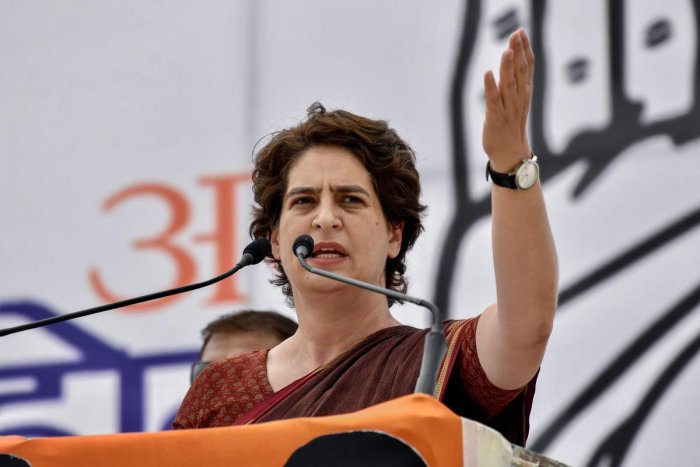
New Delhi, May 26: Congress leader Priyanka Gandhi Vadra on Wednesday held the Centre responsible for the vaccine crisis in the country and alleged that vaccines were a means for Prime Minister Narendra Modi's "personal publicity" rather than a tool to save people's lives.
This was so from the beginning of the pandemic, the Congress general secretary said in posts on Twitter and Facebook.
The central government is responsible for creating a vaccine crisis in the country when experts have repeatedly highlighted the importance of vaccination, she said in a statement later in the day.
"Today, the states are forced to take out a global tender for vaccines and they have been left disappointed by the companies, but the central government is not acting at all," she said.
In her social media posts, Priyanka Gandhi alleged that the Modi government has pushed the country into a "swamp of vaccine shortage" and left India, the world's largest vaccine manufacturer, dependent on vaccine donations from other countries.
Accusing the Centre of shifting the onus of vaccination on to states, she said there is now only Prime Minister Modi's photo on the vaccination certificate while the rest of the responsibility has been put on the states.
"Today, the chief ministers of states are sending messages to the Central government over the lack of vaccines," she said in her post in Hindi.
Her sharp attack on the government on the issue came as part of her 'Zimmedaar Kaun?' (who is responsible) campaign, asking questions of the government on behalf of the people over its handling of the coronavirus pandemic.
On August 15 last year, the prime minister said in a speech from the Red Fort that his government has prepared an entire plan for vaccination, she posted. Given India's history of vaccine production and the vastness of its vaccine programmes, it was easy to believe that the government would do this work in a better way, Priyanka Gandhi added.
"After all, Pandit Jawaharlal Nehru gave flight to India's vaccine programme by setting up a vaccine unit in Chennai in 1948 and the National Institute of Virology, Pune, in 1952. We successfully defeated diseases like smallpox, polio etc. Later, India started exporting vaccines to the world and today it is the largest vaccine producer in the world," she noted.
Knowing these achievements, the country was sure that the people of India would not face problems in vaccination against COVID-19, Priyanka Gandhi said.
"But the bitter truth is that from the beginning of the pandemic, vaccines in India became a tool for the prime minister's personal publicity rather than a tool to save the lives of the common people," the Congress leader alleged.
"As a result, India, the world's largest vaccine producer, has today become dependent on vaccine donations from other countries and has joined the ranks of the world's weakest countries in terms of vaccination."
Why did this happen and who is responsible, she asked.
Accusing the government of maintaining a slow rate of vaccination, Priyanka Gandhi said only 11 per cent of India's 130 crore population has received the first dose of vaccine against Covid and only 3 per cent have been fully vaccinated.
According to her, "vaccination declined by 83 per cent in the last one month after the announcement of Modi's 'Teeka Utsav'."
Priyanka Gandhi said large countries of the world ordered vaccines many times their population last year, but the Modi government placed the first order in January 2021, that too for only 1.6 crore vaccine doses.
Noting that between January-March this year, the Modi government sent 6.5 crore vaccine doses abroad, Priyanka Gandhi said the government also gifted free vaccines to many countries.
At that time, only 3.5 crore people had gotten vaccinated in India, she said.
"From May 1, the government opened the doors to give vaccination to about 60 crore population in the age group of 18-44, but gave orders for only 28 crore vaccine doses, with which it is possible to vaccinate only 14 crore."
She also posed a series of questions for the government, asking why it ordered only 1.6 crore vaccines in January 2021 when, according to the prime minister's statement, his government was ready with the complete plan for vaccination last year.
"Why is India, the world's largest vaccine producer, today in a position that it has to ask for vaccines from other countries, and why is this shameless government trying to present it as an achievement?" she said in another poser.
Questions need to be asked so that the people in power understand their responsibility and accountability towards this country, Priyanka Gandhi had asserted while announcing her 'Zimmedaar Kaun' campaign on Tuesday.
The Congress has been critical of the Centre's handling of the Covid situation in the country, but the government has dismissed the criticism of the Opposition party, accusing it of politicising the pandemic.
वैक्सीन संकट
— Priyanka Gandhi Vadra (@priyankagandhi) May 26, 2021
➢ मोदीजी के बयान के अनुसार उनकी सरकार पिछले साल ही वैक्सीनेशन के पूरे प्लान के साथ तैयार थी, तब जनवरी 2021 में मात्र 1 करोड़ 60 लाख वैक्सीनों का आर्डर क्यों दिया गया?
➢ मोदीजी की सरकार ने भारत के लोगों को कम वैक्सीन लगाकर, ज्यादा वैक्सीन विदेश क्यों भेज दी? pic.twitter.com/SaYyPvOUlj
➢ दुनिया का सबसे बड़ा वैक्सीन उत्पादक भारत, आज दूसरे देशों से वैक्सीन माँगने की स्थिति में क्यों आ गया और वहीँ ये निर्लज्ज सरकर इसे भी उपलब्धि की तरह प्रस्तुत करने की कोशिश क्यों कर रही है?
— Priyanka Gandhi Vadra (@priyankagandhi) May 26, 2021
ज़िम्मेदार कौन?
Let the Truth be known. If you read VB and like VB, please be a VB Supporter and Help us deliver the Truth to one and all.
Sujit Nair raises concerns over speculation of DMK-AIADMK understanding to block TVK
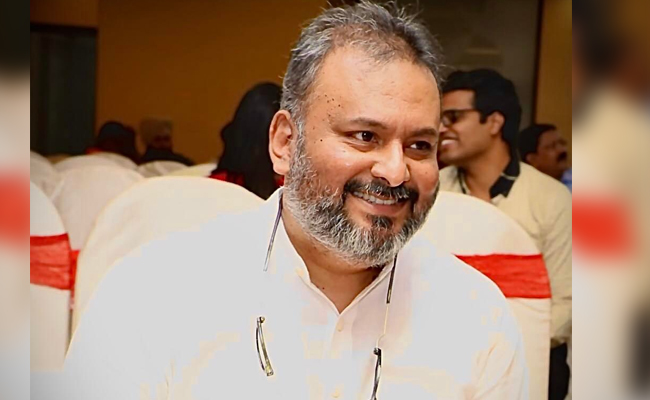
Chennai: Journalist and political commentator Sujit Nair has expressed concern over speculation that the Dravida Munnetra Kazhagam and the All India Anna Dravida Munnetra Kazhagam could explore a post-poll understanding to prevent Vijay-led Tamilaga Vettri Kazhagam from forming the government in Tamil Nadu.
In a social media post, Sujit Nair said the election verdict in Tamil Nadu reflected a clear public demand for political change and argued that the mandate should be respected irrespective of political preferences.
Referring to reports and political discussions surrounding a possible understanding between the DMK and AIADMK, he said he hoped such developments remained only speculative conversations and did not turn into reality.
Nair stated that if such an alliance were to take shape, it would raise serious questions about ideological politics in the country. He said TVK had emerged through a democratic electoral process and that the legitimacy to govern in a parliamentary democracy comes from the people’s verdict.
According to him, attempts to prevent an electoral winner from forming the government through unexpected political arrangements may be constitutionally valid, but many people could view them as politically opportunistic.
He further said that such a move could particularly affect the political image of the DMK, which has historically projected itself around ideology, social justice and opposition politics. Nair said that in ideological terms, the DMK appeared closer to TVK than to the AIADMK, and joining hands with its long-time political rival only to remain in power could weaken its broader political narrative.
He added that the same questions would apply to the AIADMK as well, as the party had spent decades positioning itself against the DMK and such an arrangement could create discomfort among its cadre and supporters.
Drawing a comparison with Maharashtra politics in 2019, Nair said he had expressed similar views when the Shiv Sena formed an alliance with the Indian National Congress and the Nationalist Congress Party after the Assembly elections.
He said post-poll alliances between long-standing political rivals often create a public perception that ideology and electoral mandates become secondary when political power equations come into play.
Nair also said such developments increase public cynicism towards politics and reinforce the belief among voters that ideology is often sidelined after elections.
He maintained that the Tamil Nadu verdict was emphatic and said respecting both the spirit and substance of the mandate was important for the credibility of democratic politics.