Only time will tell how long interest rate will remain high, says RBI Governor Das
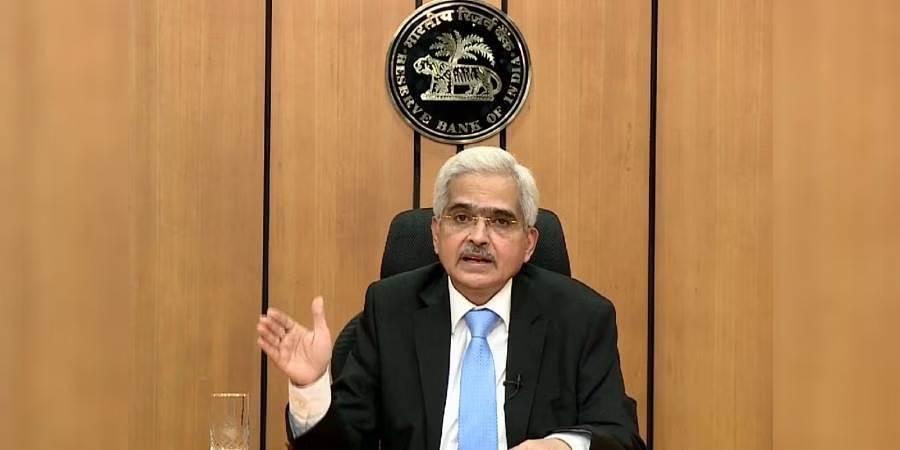
New Delhi(PTI): Interest rate is likely to remain high for the moment, Reserve Bank Governor Shaktikanta Das said, stressing the central bank will remain extra vigilant and keep "Arjun's eye" to ensure a sustained decline in inflation.
The lending rates are ruling high after the RBI cumulatively hiked the key policy rate (repo) by 250 basis points since May 2022 in a bid to tame inflation which touched a high of 7.44 per cent this July.
The consumer price index (CPI) based retail inflation is now declining and fell to 5 per cent in September. The government has mandated the central bank to ensure inflation remains at 4 per cent with a margin of 2 per cent on the either side.
"Interest rate will remain high. How long they will remain high, I think only time and the way the world is evolving will tell," the governor said in response to a query at Kautilya Economic Conclave 2023. On the sidelines of the Conclave, Das said the RBI remains very focused on the inflation dynamics.
"We are extra vigilant and we stand ready to take whatever action that needs to be taken. We need to see sustained decline in inflation...our objective is to reach 4 per cent," he said.
On elevated crude oil prices in the international market, he said, "what matters is the pump prices in India".
The pump prices of petrol and diesel are important as far as inflation in India is concerned, Das added.
Responding to queries on impact of crisis in Middle East, the governor said that in the last fortnight, US bond yields have risen, which has wider implications for other economies.
Crude oil prices have also gone up.
"Some of these uncertainties were there, but they have become more pronounced in some sense. What is different in the context of India, we are impacted by whatever is happening all over, no doubt on that.
"Our macroeconomic fundamentals continue to be sound. Eventually, in these uncertain times, what matters is how strong is your macroeconomic fundamentals, how strong is your financial sector. I think on both these parameters India is well placed," Das said.
He also said the dollar index has become strong and bond yields in the US have reached all-time highs.
"But if you look at the volatility of the Indian rupee, from January 1 till now, the rupee depreciation is 0.6 per cent whereas on the other side, the appreciation of the US dollar for the same period has been 3 per cent. So rupee is stable. We are there in the forex market to prevent excessive volatility," the governor added.
In his address at the Conclave, Das said that in the prevailing global environment of slowing growth and stubborn inflation, especially in the last few miles before reaching the target, economic activity in India exhibits resilience on the back of strong domestic demand.
"Real GDP growth for 2023-24 is projected at 6.5 per cent and India is poised to become the new growth engine of the world," he added.
Das said the RBI remains "extra vigilant" on the evolving inflation dynamics.
In the current situation, monetary policy must remain actively disinflationary to ensure that ongoing disinflation process progresses smoothly, he said.
"In the world we live in today, beyond giving a generalised kind of forward guidance that we will be very alert, we will be extra vigilant, we will monitor the inflation-growth dynamics hawk's eye or Arjuna's eye...we will remain alert and we will be very prompt in our response," said Das.
Let the Truth be known. If you read VB and like VB, please be a VB Supporter and Help us deliver the Truth to one and all.
Bank account in Ramgarh tracked for fraudulent fund transactions across 24 states, 4 arrested

Ramgarh (Jharkhand) (PTI): Jharkhand police on Thursday said it has unearthed a network of interstate cyber frauds and arrested four miscreants for fraudulent transactions through a bank account in Ramgarh district after complaints of 274 suspected transactions in 24 states.
The states where complaints for fraudulent transactions were registered included Maharashtra, Karnataka, West Bengal, Uttar Pradesh, Telangana, Tamil Nadu, Kerala and Andhra Pradesh.
The action followed inputs received through 'Samanvaya portal', a centralised, web-based platform launched by the Union Home Ministry to curb cybercrime.
"We arrested four cyber miscreants after a current account with Kuju (Ramgarh) branch of the State Bank of India was found to have registered suspected financial transactions in 24 states with the help of the Pratibimba portal of the Home Ministry through the Samanvaya portal," Ramgarh Superintendent of Police Mukesh Kumar Lunayat said.
During the probe, police found that the account was opened under the MSME Udyam Registration scheme in the name of Shree Ganesh Enterprises, he said.
The account had been linked to as many as 274 complaints from different states related to cyber fraud and illegal fund transfers.
The registered proprietors of the enterprise were identified as Rahul Gupta (37), Ravi Kumar Verma (34), and Ajay Sharma (33), all residents of Ramgarh district, a statement from the Ramgarh police said.
During interrogation, Rahul Gupta and Ravi Kumar Verma revealed that they had opened multiple current accounts at the behest of Ritesh Agrawal alias Munna (40) and Sonu Kumar Jha (34).
They admitted receiving Rs 1.2 lakh in exchange for facilitating the opening of these accounts.
"The accused further confessed to sharing OTPs, activating mobile banking services, and handing over control of the accounts to the main operators through WhatsApp and Telegram groups. These accounts were then allegedly used to route fraudulent transactions.
Police said mobile data analysis of the accused led to the recovery of crucial digital evidence, including details of SIM cards, bank accounts, passbooks, ATM cards, QR code scanners, Aadhaar cards, and PAN cards shared through messaging platforms.
A total of four accused have been arrested so far and sent to judicial custody.
A case has been registered at the Cyber Crime Police Station under relevant sections of the Bharatiya Nyaya Sanhita (BNS) 2023 and Sections 66C and 66D of the Information Technology Act, 2000.
Further investigation is underway, the police said.