Oppn leaders express outrage over killing of 'OBC' man with brick in Meerut
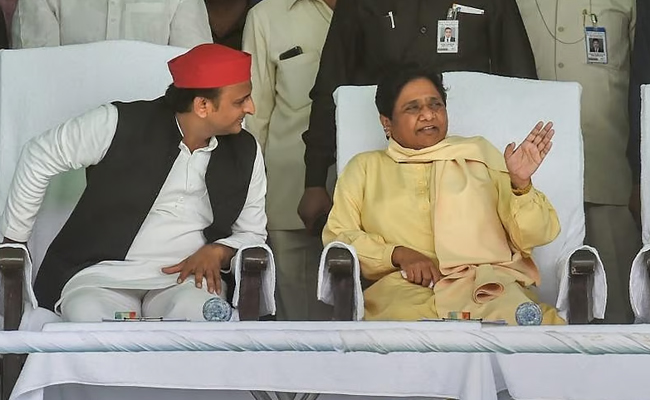
Meerut (UP) (PTI): Samajwadi Party chief Akhilesh Yadav and Bahujan Samaj Party (BSP) president Mayawati have condemned the killing of a backward class youth in the Sardhana area of Meerut.
Both leaders on Sunday urged the government to be vigilant and proactive to prevent such crimes.
In a post on X, Mayawati said that the January 5 killing of a youth belonging to the Kashyap community, categorised under the Other Backward Classes (OBC), deserved the strongest condemnation.
She stressed that anti-social and criminal elements must have fear of the law.
In his post, SP chief said, "We raise our voice on behalf of the entire PDA community against the heinous act committed by goons who burned a young man from the Kashyap community alive in Jwalagarh, in the Sardhana area."
Responding to the posts, the Meerut police said the it was not a recent case and that had registered a murder FIR and solved the crime within 24 hours of the incident.
The accused, they said, is a minor who was produced before the Juvenile Justice Board and sent to a child reform home.
According to the police, the incident took place on January 5 on the Akhepur-Rardhana Road.
The victim was identified as Rohit alias Sonu, 28, a resident of the Kila locality in Muzaffarnagar city.
An investigation revealed that the crime followed an argument over loud music being played in a tempo. The accused, a 16-year-old tempo driver, allegedly assaulted Rohit with a brick, killing him.
Circle Officer (Sardhana) Ashutosh Kumar said the accused first befriended Rohit, made him consume liquor while he himself drank an energy drink and later struck him on the head with a brick.
To conceal his identity, the accused dragged the body about 15 metres to a spot near a school wall and set it on fire using clothes, dry leaves, and oil.
The incident came to light when a school watchman noticed a fire late that night and informed the police. The body was identified the next day.
Family members said Rohit worked as a confectioner in Mumbai and had come to his village to look for a bride.
The police said the accused was identified through a barcode on a liquor pouch recovered from the spot and CCTV footage from a liquor shop.
Let the Truth be known. If you read VB and like VB, please be a VB Supporter and Help us deliver the Truth to one and all.
4 workers die after being buried under coal slurry in Jharkhand's Dhanbad
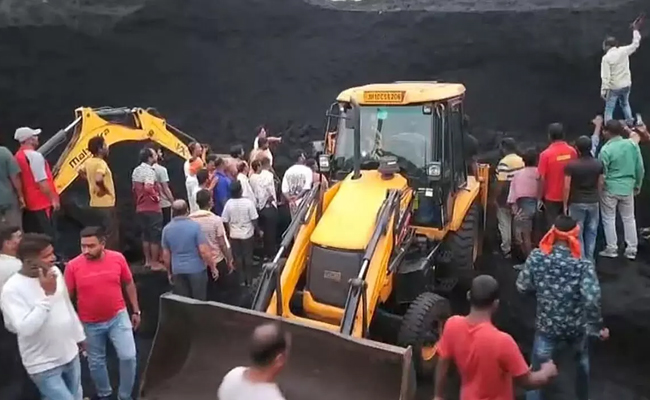
Dhanbad (Jharkhand) (PTI): At least four workers died after being buried under coal slurry in Jharkhand's Dhanbad district on Saturday, a police official said.
The incident took place at Moonidih coal washery in the command area of Bharat Coking Coal Limited (BCCL).
"Bodies of all four workers were dug out of debris during a rescue operation," Putki police station in-charge Waqar Hussain told PTI.
The incident took place when coal slurry was being loaded into trucks by workers, during which a large chunk of slurry fell and trapped several workers underneath, officials said.
The deceased have been identified as Manik Bauri, Dinesh Bauri, Deepak Bauri, and Hemlal Gope.
Meanwhile, the family members of the deceased and local villagers placed the bodies in front of the washery gate and began a protest.
They demanded compensation, jobs for dependents and action against those responsible for the incident.
Police and administration officials are trying to pacify the protesters, an official said.