Oppn members question provisions of Waqf bill as Parliament panel holds first meeting
New Delhi, Aug 22: The Joint Committee of Parliament on the Waqf (Amendment) Bill held its marathon first meeting Thursday amid objections by opposition MPs over a host of provisions as the Union minority affairs ministry made a presentation in the proposed law.
Sources said BJP members in the meeting lauded the proposed amendments, including the provisions which seek to empower women.
There were occasional heated exchanges during the meeting but members from various parties sat for several hours, recording their views on the provisions of the Bill, offering suggestions and seeking clarifications.
As part of the Committee's efforts to elicit wide opinions on the bill from across the country, advertisements will be issued asking people and institution to share their suggestions, sources said.
In his brief comments to reporters, Committee Chairperson Jagdambika Pal described the meeting, which went on for over six hours with a lunch break, as "fruitful".
It was one of the longest meetings held by a parliamentary panel in recent times, a member claimed.
The next meeting will be held on August 30, and the panel is likely to hear views of various state Waqf bodies, sources said.
There was a view among the members across various parties, some of them said, that the minority affairs ministry was not "adequately prepared" to address the queries raised in the meeting, and the presentation made was not up to scratch.
BJP ally Lok Janshakti Party (Ram Vilas) said the Muslim community's concerns should be addressed and called for wider consultations, they said, adding that the Telugu Desam Party (TDP) also pitched for holding broad deliberations.
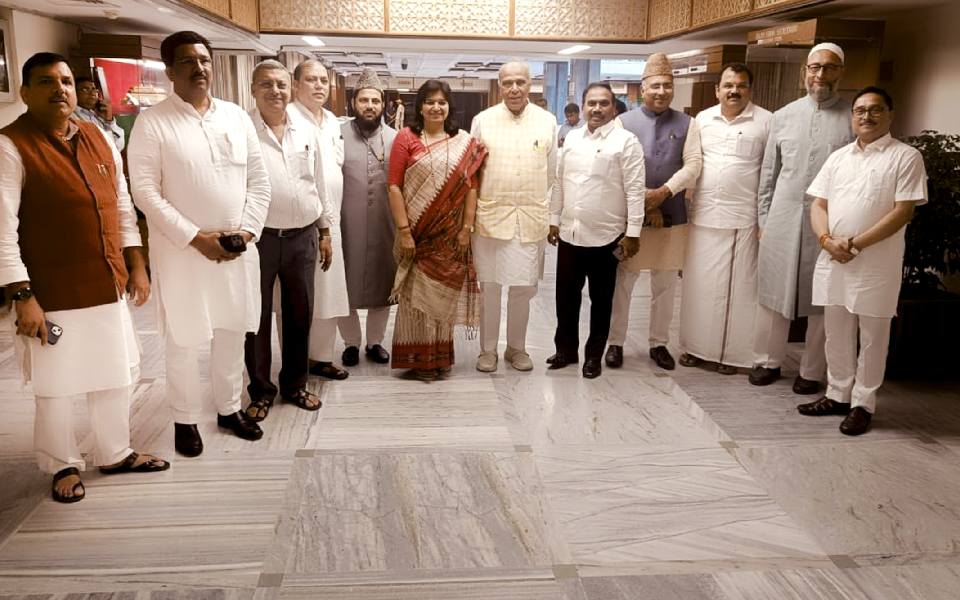
The members who attended the meeting included the BJP's Sanjay Jaiswal, Aparajita Sarangi, Tejasvi Surya, Dilip Saikia and Gulam Ali; Congress party's Gourav Gogoi and Naseer Hussain; TMC's Kalyan Banerjee, YSR Congress' V Vijaysai Reddy, AAP's Sanjay Singh, AIMIM's Asaduddin Owaisi, A Raja of the DMK, LJP's Arun Bharti and TDP's Lavu Srikrishna Devarayalu.
Some opposition members questioned various clauses of the bill and their rationale, including the move to empower district collectors in deciding on the ownership of a disputed property, and to have non-Muslim members on Waqf boards.
Some members, including Reddy, Arvind Swant of the Shiv Sena (UBT) and Mohibbullah of the Samajwadi Party submitted their written views to panel's chairperson criticising the bill.
Later in a post on X, Reddy said he opposed the bill due to concerns expressed by various stakeholders. The bill is not acceptable in its current form, he said, adding that he will submit his "dissenting" note to the committee.
The views of members mostly reflected the lines taken by their respective parties in Lok Sabha when the bill was introduced in Parliament's Monsoon Session.
Owaisi, sources said, launched a searing criticism of the proposed law, claiming that it will create social instability if enacted.
In a post, Gogoi expressed the hope that the committee will consider all points of view and ensure that constitutional values and personal freedom are not encroached on.
The 31-member committee has been tasked by the Lok Sabha to scrutinise the contentious Bill, which has drawn protests from the opposition parties and Muslim organisations.
The committee will discuss the Bill threadbare and also the concerns over it, Pal had said ahead of the meeting, adding that voices of different stakeholders would be heard.
"We will discuss all the 44 amendments and bring a good and comprehensive Bill by the next session," he said.
Pal said the committee would call various Muslim bodies representing the different sects to hear their views.
The Bill is the first major initiative from the BJP-led NDA government aimed at reforming the registration process for Waqf properties through a centralised portal.
It proposes several reforms, including establishing a Central Waqf Council alongside state Waqf boards with representation for Muslim women and non-Muslim representatives.
A contentious provision of the Bill is the proposal to designate the district collector as the primary authority in determining whether a property is classified as Waqf or government land.
The Bill was introduced in the Lok Sabha on August 8 and referred to a Joint Committee of Parliament after a heated debate, with the government asserting that the proposed law did not intend to interfere with the functioning of mosques and the opposition calling it a targeting of Muslims and an attack on the Constitution.
I attended the first meeting of the Joint Parliamentary Committee on the Waqf (Amendment) Bill 2024 in New Delhi today. I hope the committee will consider all view points regarding this Bill and ensure that constitutional values and personal freedom is not encroached upon. pic.twitter.com/Hx8QsF7g4x
— Gaurav Gogoi (@GauravGogoiAsm) August 22, 2024
Let the Truth be known. If you read VB and like VB, please be a VB Supporter and Help us deliver the Truth to one and all.
Maharashtra sets up state vaccination task force to strengthen immunisation programme

Mumbai (PTI): The Maharashtra government has set up a State Vaccination Task Force to strengthen the regular immunisation programme and review the progress of related campaigns, a health department official said on Monday.
The State Vaccination Task Force will comprise at least 29 members and will be headed by the administrative head of the health department, he informed.
The government has also constituted separate district-level and municipal vaccination task forces to improve implementation and address challenges at the grassroots level, he said.
Municipal task forces, chaired by respective civic commissioners, have been constituted in view of the vast urban population in Maharashtra and the role of civic bodies in implementing different health programmes.
The district-level task forces will function under the chairmanship of collectors.
"Complete immunisation of children at the appropriate age is an extremely simple, cost-effective and highly effective measure to reduce child mortality and the prevalence of diseases among kids. Immunisation is a powerful tool for reducing illness in children," maintained the official.
To ensure full vaccination of all children, the state government implements various campaigns from time to time as per the central government guidelines, he pointed out.
"Active participation and cooperation of other relevant government departments are essential (in making these campaigns successful)," according to the official.
The state-level body will review the regular immunisation programme, associated campaigns and vaccine-preventable diseases in detail. It will also conduct focused assessments of high-risk districts and municipal corporations, including vacancies at district, municipal and sub-district levels, availability of cold chain equipment, resource gaps and training requirements, he noted.
The state task force will review allocation and utilisation of funds for immunisation and ensure timely action by officers concerned based on reports from district and municipal task forces and state-level monitoring mechanisms, the official said.
It will also ensure active coordination and participation of other government departments in immunisation drives, while district and municipal task forces will carry out similar functions at their respective levels, the official added.