Oppn MPs indicate move to disassociate from Parliament panel on Waqf Bill
unhappy over Chair's functioning
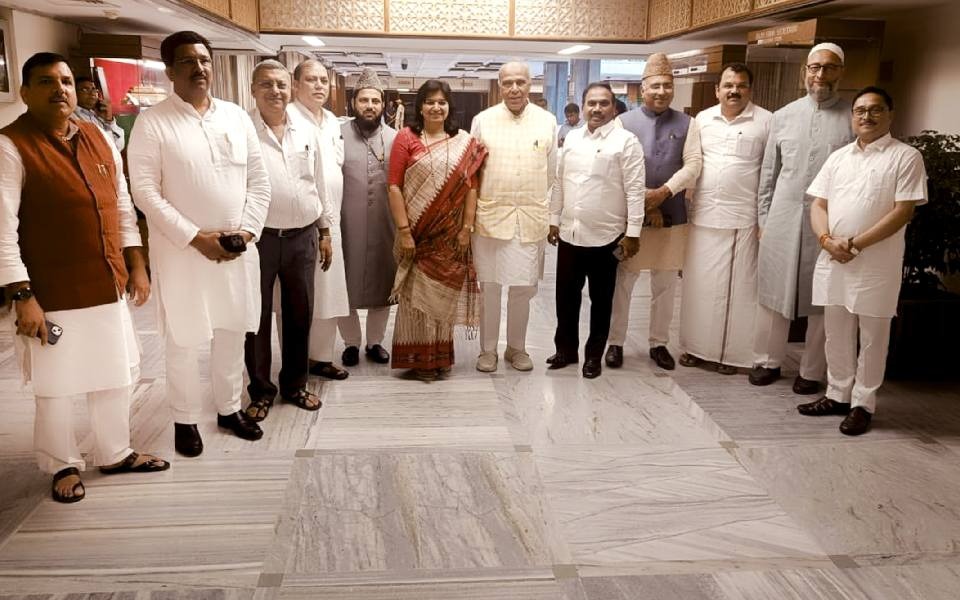
New Delhi, Nov 4: Opposition MPs in the parliamentary committee scrutinising the Waqf (Amendment) Bill are scheduled to meet Lok Sabha Speaker Om Birla on Tuesday to protest its chairperson Jagdambika Pal's alleged "unilateral" decisions and attempts to "bulldoze" proceedings, indicating that they may disassociate themselves from the panel.
Claiming that they have been "stonewalled" during the committee's proceedings, opposition MPs have listed their grievances, including objections against the proposed law, in the letter addressed to Birla.
Senior counsel Harish Salve is likely to appear before the parliamentary panel on Tuesday on behalf of the Dawoodi Bohra community.
Opposition sources said they have prepared a joint letter – signed by a number of MPs, including Congress's Mohammad Jawed and Imran Masood, DMK's Raja, AIMIM's Asaduddin Owaisi, AAP's Sanjay Singh and TMC's Kalyan Banerjee – that will be submitted it to the Speaker on Tuesday.
They accused Pal, a four-term MP representing the BJP, of taking "unilateral decisions" on fixing the dates of sittings -- which were at times for three consecutive days -- and whom to call as witnesses.
They said it is not practically possible for MPs to interact with deposers with adequate preparation.
The committee's proceedings have been marred by frequent protests from opposition members over a host of issues, while the BJP members have accused them of deliberately trying to scuttle its work.
With the Bill taking on distinct political hues and both the ruling BJP and the opposition INDIA bloc firm on their stand in favour and against it respectively, the panel's meetings have often resembled a political battleground as it works in overdrive to meet its deadline of the first week of Parliament's winter session.
In their joint letter, opposition MPs will urge Birla to direct Pal to have a formal consultation with members of the committee before taking any decision to assure the country that the committee is functioning in a free and fair manner, without any bias and departure from the established parliamentary procedures.
"Otherwise, we humbly submit that we may be forced to disassociate with the committee once for all as we have been stonewalled," it said.
Asserting that the joint committee of Parliament examining the Bill is like a mini Parliament, they said the panel should not be treated as a mere "ventilating chamber" to get the proposed legislation passed as "desired" by the government, ignoring the due process.
Not giving reasonable time against the will of the committee's members is nothing but an act of "atrocious onslaught on the Constitutional religion and Parliament".
Opposition MPs have also recorded their strong reservations against the Bill, claiming that the government's step is nothing but a surreptitious attempt to mitigate the earlier legislations of 1995 and 2013, enacted by Parliament with due care ensuring the secular credentials of the Constitution.
They alleged that the bill proposes over 100 amendments to the existing Act against the government's claim of only 44 changes.
They alleged, "Out of these amendments, we are reasonably confined to express our fear that the religious, spiritual and moral fabrics of a legal institution i.e. Waqf Board are going to be erased which will tarnish our country's image in the eye of the world community on minority rights guaranteed in our Constitution," they said.
For these reasons, the committee's sittings must be decided in such a manner to allow adequate time to discuss and deliberate every clause of the Bill, including Parliament's legislative competency.
Pal has rejected the charge that he has not allowed opposition members to air their views, asserting that he has ensured everybody's heard.
Opposition members had written to the Speaker last month as well to highlight the alleged "gross violation of rules" in the committee's functioning.
The BJP-led NDA members had also gone to Birla once after TMC MP Kalyan Banerjee smashed a glass bottle during the panel's meeting and allegedly threw it towards Pal, who was unharmed. Banerjee, though, ended up injuring his two fingers.
A number of Muslim groups, including Jamaat-e-Islami Hind, appeared before the committee on Monday to register views on the Bill.
While Jamaat-e-Islami Hind opposed the amendments, several other groups, including the Muslim Women Intellectual Group led by Shalini Ali and Vishwa Shanti Parishad led by Faiz Ahmad Faiz supported the changes.
Ali wanted the Waqf boards to spell out the steps it had taken to help in the education of orphans and pensions for divorced women, and wanted them to set targets in this regard.
She also wanted the Waqf boards to give up claims on lands that had temples and mosques for several years and cited the example of Gyanvapi in Varanasi.
Maulana Kaukab Mujtaba of the Ulema Foundation wanted the government to set up a separate Central Waqf Board for the Shia sect of Muslims.
He also wanted the Centre to take action against the misuse of Waqf properties by passing the Waqf Amendment Bill in Parliament.
Mujtaba also wanted the government to register FIR against Muttawalli of Waqf properties who failed to pay the required taxes after the audit.
Faiz of the Vishwa Shanti Parishad objected to the appointment of the Collector as the surveyor of Waqf properties and the authority to decide on their ownership.
He said such roles should be delegated to the Additional District Magistrates from the Muslim community.
Let the Truth be known. If you read VB and like VB, please be a VB Supporter and Help us deliver the Truth to one and all.
Sujit Nair raises concerns over speculation of DMK-AIADMK understanding to block TVK
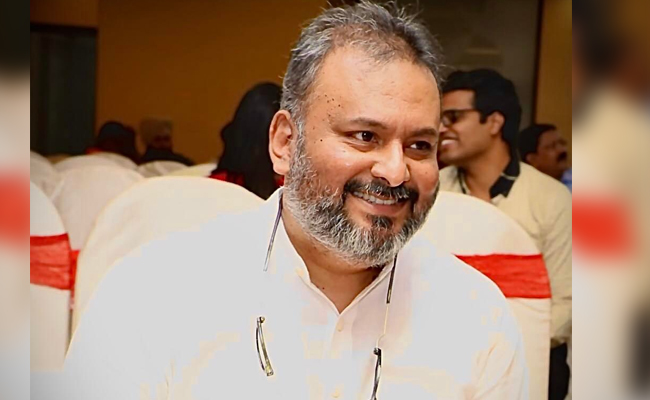
Chennai: Journalist and political commentator Sujit Nair has expressed concern over speculation that the Dravida Munnetra Kazhagam and the All India Anna Dravida Munnetra Kazhagam could explore a post-poll understanding to prevent Vijay-led Tamilaga Vettri Kazhagam from forming the government in Tamil Nadu.
In a social media post, Sujit Nair said the election verdict in Tamil Nadu reflected a clear public demand for political change and argued that the mandate should be respected irrespective of political preferences.
Referring to reports and political discussions surrounding a possible understanding between the DMK and AIADMK, he said he hoped such developments remained only speculative conversations and did not turn into reality.
Nair stated that if such an alliance were to take shape, it would raise serious questions about ideological politics in the country. He said TVK had emerged through a democratic electoral process and that the legitimacy to govern in a parliamentary democracy comes from the people’s verdict.
According to him, attempts to prevent an electoral winner from forming the government through unexpected political arrangements may be constitutionally valid, but many people could view them as politically opportunistic.
He further said that such a move could particularly affect the political image of the DMK, which has historically projected itself around ideology, social justice and opposition politics. Nair said that in ideological terms, the DMK appeared closer to TVK than to the AIADMK, and joining hands with its long-time political rival only to remain in power could weaken its broader political narrative.
He added that the same questions would apply to the AIADMK as well, as the party had spent decades positioning itself against the DMK and such an arrangement could create discomfort among its cadre and supporters.
Drawing a comparison with Maharashtra politics in 2019, Nair said he had expressed similar views when the Shiv Sena formed an alliance with the Indian National Congress and the Nationalist Congress Party after the Assembly elections.
He said post-poll alliances between long-standing political rivals often create a public perception that ideology and electoral mandates become secondary when political power equations come into play.
Nair also said such developments increase public cynicism towards politics and reinforce the belief among voters that ideology is often sidelined after elections.
He maintained that the Tamil Nadu verdict was emphatic and said respecting both the spirit and substance of the mandate was important for the credibility of democratic politics.