Orders to freeze bank accounts of varsities in Bihar revoked
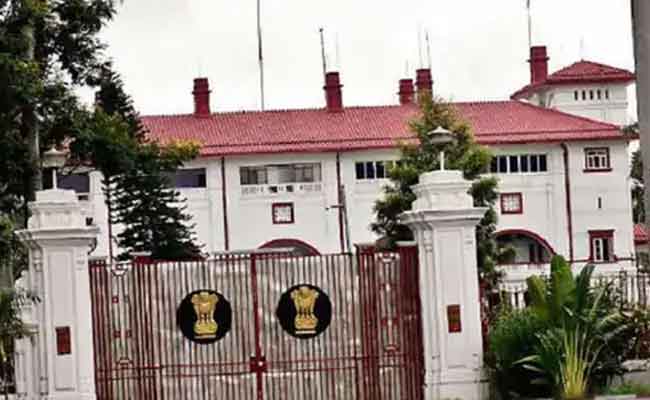
Patna (PTI): The Bihar Education Department withdrew its controversial orders freezing bank accounts of most of the state universities and withholding salaries of vice-chancellors and other officials for failure to comply with its directions.
The department’s move came in the backdrop of recent Patna High Court orders in this regard.
In a missive to VCs of all state-run universities on Wednesday, Baidya Nath Yadav, Secretary (Education department), said, "The department has decided to withdraw its earlier orders of freezing accounts of various state-run universities... following the recent orders of the Patna High Court."
The high court last month directed the department to take "no coercive action" against state universities and its officials till further order while directing that withholding salary of officials and freezing accounts of varsities "be kept in abeyance".
The education department in March had ordered freezing of the bank accounts of all the state-run universities, barring one, and withheld salaries of their vice-chancellors for allegedly remaining absent in a review meeting convened by the department in the last week of February this year.
The department had issued letters to all VCs barring Kameshwar Singh of Darbhanga Sanskrit University, asking them to clarify why they did not attend the meeting to discuss the status of pending examinations and other issues.
In a related development, Bihar Governor Rajendra V Arlekar on Wednesday reminded the state education department that it was duty-bound to provide "adequate funds" to state universities.
The governor, who is also chancellor of state-run varsities, said this at a meeting in presence of Education Minister Sunil Kumar, who expressed hope that "team spirit" would bring about the much-needed improvement in higher learning.
According to a statement issued by the Raj Bhavan on Wednesday, the governor also directed VCs to prepare a road map for the academic development in the respective universities and the latter should also work hard to develop their institutions as centres of excellence.
The governor said that there should be separate deans in all universities, one for academics and another for research, said the statement.
Let the Truth be known. If you read VB and like VB, please be a VB Supporter and Help us deliver the Truth to one and all.
Mamata visits Bhabanipur EVM strong room, warns against counting irregularities
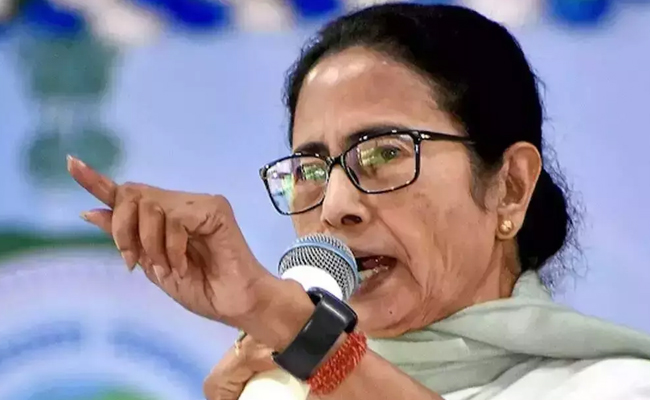
Kolkata (PTI): West Bengal Chief Minister and TMC supremo Mamata Banerjee early Friday warned against any attempt to tamper with the counting process, hours after she visited an EVM strong room in Bhabanipur, alleging possible malpractice.
Banerjee, who emerged around 12:07 am after spending nearly four hours at the counting centre for her Bhabanipur constituency housed in Sakhawat Memorial School in south Kolkata, said only one person would be allowed inside the designated counting area.
"Either the candidate or one agent can stay upstairs. I have also suggested installation of a CCTV camera for the media," she told reporters.
Stressing the need for transparency, she said, "It is essential to maintain transparency. People’s votes must be protected. I rushed here after receiving complaints. The central forces initially did not allow me to enter."
Sounding a stern note ahead of the May 4 counting, she added, "If there is any plan to tamper with the counting process, it will not be tolerated."
On Thursday evening, Banerjee had reached the Bhabanipur Assembly segment counting centre, which houses the strong room for EVMs used in the April 29 polling, citing suspicion of tampering with the machines.
She entered the premises along with her election agent and remained inside for hours, even as Kolkata Mayor and TMC candidate from the Kolkata Port segment Firhad Hakim reached the spot but could not meet her.
"I reached here upon learning that the chief minister has arrived. But I couldn’t meet her since she was already inside the premises, exercising her right as a candidate to visit strong rooms. I wasn’t allowed there. I will not be able to confirm what exactly is transpiring inside," Hakim said.
The development coincided with protests by TMC candidates Kunal Ghosh and Shashi Panja outside the Khudiram Anushilan Kendra in north Kolkata, where they staged a sit-in alleging irregularities and possible tampering of EVMs stored in strong rooms, leading to face-offs between TMC and BJP supporters.
Earlier in a video message, Banerjee had urged party leaders, workers and polling agents to maintain a 24-hour vigil on EVM strong rooms, alleging that the BJP could attempt to tamper with the machines before counting begins.
Her remarks come amid heightened political tension in the state following a fiercely contested Assembly election, with parties closely monitoring arrangements and raising concerns over transparency.