Original petitioner unhappy with "flawed" NRC, doubts capability of software used
Guwahati: The Assam Public Works (APW), the original petitioner in the Supreme Court which led to the updation of the National Register of Citizens six years ago, called the final NRC a "flawed document" as its prayer for re-verification of draft NRC was rejected by the apex court.
The NGO also wondered whether the software used in the updation exercise was capable to handle so much data and if it was examined by any third party Information Technology expert, APW president Aabhijeet Sharma said.
"The Final NRC has made it obvious that the problem of illegal immigration will never be resolved in Assam. Had it been completed flawlessly, it would have been a golden chapter in Assam's history," Sharma told reporters after the final NRC was released, excluding names of over 19 lakh applicants.
The APW, as the primary petitioner, had submitted five memoranda in the Supreme Court requesting re-verification of the draft NRC but they were rejected, he said.
"The 27 per cent re-verification done by him (NRC State Coordinator Prateek Hajela) is a mystery. No one knows whether or not it was 100 per cent flawless," Sharma said. He also expressed "strong doubt" on the software used as names of many doubtful voters had entered the draft NRC.
"Was it due to the flaws of the software that members of 39 families of 'D' (doubtful) voters of Morigaon district are included in the draft NRC as mentioned by the then district commissioner?" the APW president asked.
In 2009, the APW filed a petition in the Supreme Court praying that names of 41 lakh foreigners be deleted from the electoral rolls of Assam and the NRC updated.
In response to the petition, the Centre told the apex court that the 1951 NRC was being updated.
The Supreme Court in 2013 took up the APW petition and directed both the Central and state governments to begin the process for updating the NRC and the actual work began two years later.
Let the Truth be known. If you read VB and like VB, please be a VB Supporter and Help us deliver the Truth to one and all.
Anbumani asks PM Modi to ban sale of cigarettes for those born after 2009
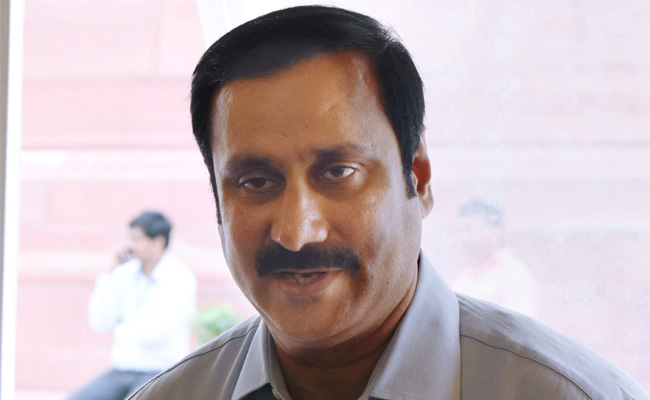
Chennai (PTI): PMK leader Anbumani Ramadoss on Saturday urged Prime Minister Narendra Modi to take legislative measures to prohibit smoking and the sale of cigarettes to individuals born on or after January 1, 2009, thereby creating a smoke-free generation.
Anbumani, former Union minister for health and family welfare, said, "Once implemented, it (ban on cigarettes) will ensure that future generations are legally prevented from ever accessing tobacco products", he said in a letter to Modi.
"I write to you with a deep sense of urgency and responsibility, drawing your kind attention to a critical public health issue that continues to endanger the lives of millions of Indians, particularly among the younger generation who are affected by cigarette smoking", he claimed.
Stating that India unfortunately bears a disproportionately high burden of tobacco-related morbidity and mortality, he said, adding that, according to global health estimates, nearly 267 million Indians, approximately one in five citizens, use tobacco.
"Each year, tobacco consumption directly accounts for over 1.35 million deaths, while exposure to second-hand smoke contributes to a total of approximately 2.3 million deaths annually", he said, adding, "these figures are alarming and reflect a public health crisis of immense magnitude".
He pointed out that Scientific evidence unequivocally establishes tobacco use as a leading cause of cancer and numerous non-communicable diseases, including cardiovascular ailments, chronic respiratory diseases such as COPD, and multiple forms of malignancies. "In India alone, tobacco is responsible for nearly 40–50 per cent of all cancer cases, with over 4.7 lakh deaths annually attributed to tobacco-induced cancers", he added.
"In this context, I strongly urge the Union government to consider enacting a transformative law similar to that of the United Kingdom, that permanently prohibits the sale and consumption of tobacco products for individuals born on or after a specified year (such as 2009). Such a generational ban would mark a decisive step towards eliminating tobacco use in India over time", he said.