Over 160 rape cases reported on railway premises, on board trains from 2017-2019: RTI

New Delhi: Over 160 rape cases have been reported on railway premises and on board running trains between 2017 and 2019, an RTI query has found.
While the number of rapes have gone down from 51 in 2017 to 44 in 2019, there was a spike in 2018 when the number of such cases rose to 70.
According to the reply to the query filed by Neemuch-based activist Chandra Shekhar Gaur, there have been 136 rapes on railway premises and 29 on running trains during 2017-2019, totalling 165.
Of the 44 rapes reported last year, 36 were committed on railway premises and eight on trains. Of the 70 rapes reported in 2018, 59 were reported on railway premises and 11 on trains. Of the 51 rapes reported in 2017, 41 were on railway premises and 10 on running trains.
There have been 1,672 cases of crimes against women other than rapes 802 on railway premises and 870 on trains.
There were 771 cases of kidnapping and abduction in these three years, 4,718 cases of robbery, 213 cases of attempt to murder and 542 murders on railway premises and on board trains.
Policing on railways is a state subject, prevention of crime, registration of cases, their investigation and maintenance of law and order on railway premises as well as on running trains are the responsibility of state governments, which they discharge through Government Railway Police (GRP)/District Police.
However, the railways has taken a slew of measures to ensure security of women.
In a reply to a question on security of women in railways, the ministry had informed Rajya Sabha last month that on vulnerable and identified routes or sections, 2,200 trains on an average are escorted by the Railway Protection Force daily in addition to 2,200 trains escorted by GRP of different states daily.
Security helpline 182 is made operational (24X7) over Indian Railways for security-related assistance to passengers in distress.
Drives are conducted against entry of male passengers into compartments reserved for women passengers and persons apprehended are prosecuted under section 162 of The Railways Act, 1989.
During 2018 and 2019, a total of 1,39,422 and 1,14,170 male passengers respectively have been prosecuted for unauthorised entry or travel in compartments reserved for women passengers.
Ladies Special trains running in metropolitan cities are being escorted by lady RPF personnel.
Fixed CCTV cameras have been provided in 2019 coaches (up to November 2019) and 511 railway stations (up to December 2019) for enhancing security of passengers.
These measures seem to have borne fruit with a dip in crimes across railways. While in 2019, there were 55,826 total reported crimes in railway premises and on board trains, in 2017, the number was 71,055.
Let the Truth be known. If you read VB and like VB, please be a VB Supporter and Help us deliver the Truth to one and all.
Karnataka tanks hold strong water storage: Minister Boseraju
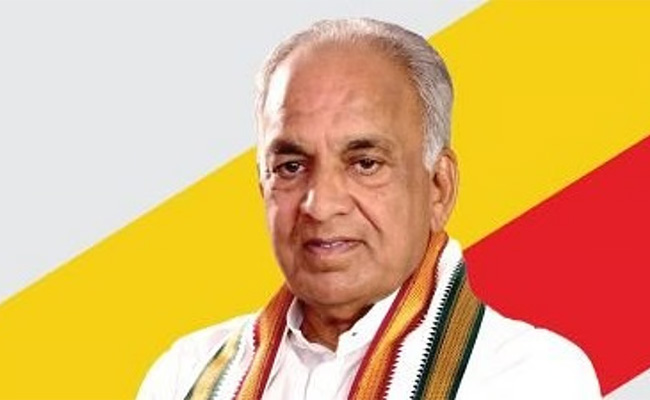
Bengaluru (PTI): Karnataka Minister N S Boseraju on Tuesday said that minor irrigation tanks across the state are holding good water storage levels, with the 3,788 tanks under the department’s jurisdiction providing life-sustaining water to a large agricultural command area of approximately 4,45,009 hectares.
In a statement, the Minister for Minor Irrigation, Boseraju, said that according to the latest data released by the department, a vast majority of the 3,788 minor irrigation tanks in the state have maintained good water levels.
Detailing the storage status, the report said that even in peak summer, 165 tanks are full.
Additionally, 1,355 tanks have retained more than 51 per cent capacity, 1,143 tanks have water levels up to 50 per cent, and 959 tanks are at roughly 30 per cent storage capacity.
District-wise, Davanagere leads the state in water storage, with 27 tanks remaining full even during summer. Chikkamagaluru follows closely with 46 full tanks, indicating strong water retention.
Other top-performing districts include Hassan, Tumakuru, and Kolar.
Boseraju, who also holds the portfolio of Science and Technology, said 1,184 tanks are being actively filled through 145 tank-filling lift irrigation projects under the Minor Irrigation Department.
He attributed the strong water retention to good monsoon rainfall and effective water management strategies of the government.
“It is encouraging to see such a substantial volume of water stored across our minor irrigation tanks by the end of March, remaining largely intact even as summer progresses. The fact that 1,355 tanks are nearly full and 165 tanks are brimming is a testament to the success of our tank-filling programmes and rejuvenation initiatives,” he said.
“By ensuring a continuous flow of water to these tanks through lift irrigation projects across departments, as well as supplying treated and surface water to the Bayaluseeme districts, we have taken proactive measures to prevent them from drying out during the summer,” the minister said.
According to him, these data points confirm that efforts to build a water-secure Karnataka are yielding strong results at the grassroots level.
“This water wealth preserved in our tanks will bring direct benefits to lakhs of farmers across the 4,45,009-hectare command area,” he added.