Over 21.08 crore PAN-Aadhaar linkages till now: Data
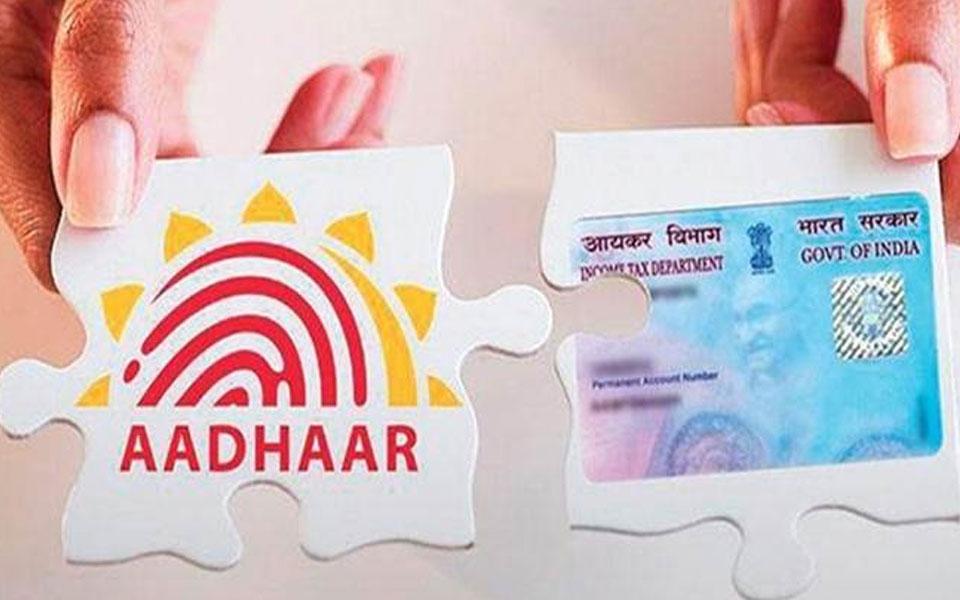
New Delhi, Sep 26 : Over 21.08 crore permanent account numbers (PANs) have been linked with Aadhaar till now, a latest data revealed as the Supreme Court upheld the validity of the linkage between the two databases Wednesday.
As per official figures accessed by PTI, a total of 21,08,16,676 PANs issued by the Income Tax Department have been linked with Aadhaar till Monday.
The total operational or issued PANs are over 41.02 crore (41,02,66,969) as per the same time line, the data said.
"The deadline for the PAN-Aadhaar linking has already been extended by the CBDT to March 31 next year, as per an order issued on June 30 this year," a senior official said.
As per the latest data, out of the over 41.02 crore PANs issued, an overwhelming number of more than 40.01 crore PANs are held by individuals.
The rest are in the name of companies and other categories of tax payers, the official said, adding the figure reflects that about 50 per cent of the PANs have been linked with Aadhaar till now.
The deadline to link the two databases has been extended five times in the past in view of the apex court order to keep it open till a five-judge constitution bench delivers its judgment on petitions challenging the validity of the biometric scheme and the enabling law.
That judgement came on Wednesday and the court has upheld the linking of the two databases.
The government, sometime back, had made quoting of Aadhaar mandatory for filing income tax returns (ITRs) as well as obtaining a new PAN.
Section 139 AA (2) of the Income Tax Act says that every person having PAN as on July 1, 2017, and eligible to obtain Aadhaar, must intimate his Aadhaar number to the tax authorities.
While Aadhaar is issued by the Unique Identification Authority of India (UIDAI) to a resident of India, PAN is a 10-digit alphanumeric number allotted by the IT Department to a person, firm or entity.
Let the Truth be known. If you read VB and like VB, please be a VB Supporter and Help us deliver the Truth to one and all.
'Last rites' of INDIA bloc: BJP on Cong-DMK fallout in Tamil Nadu
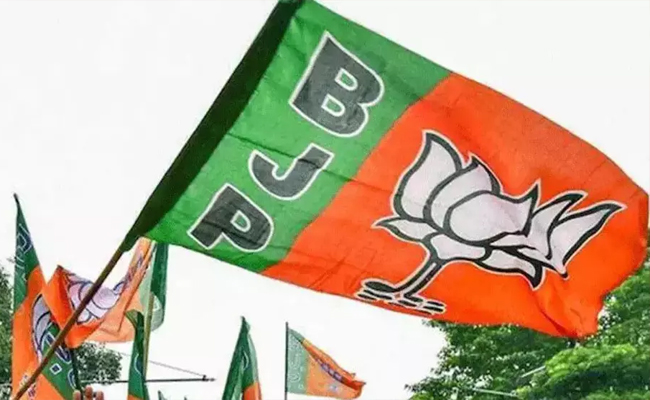
New Delhi (PTI): The BJP on Wednesday took a swipe at the Congress for extending support to Vijay's TVK in forming the government in Tamil Nadu and breaking away from its long term ally DMK, saying the party has a history of "betraying" its allies.
The saffron party also attacked the opposition INDIA bloc, claiming the alliance is "falling apart like a pack of cards" and lacks any common ideology or vision.
The Tamil Nadu Congress has decided to support TVK leader Vijay in forming a secular government in the state, sources said.
The decision to support the TVK was taken at an urgent meeting of the Political Affairs Committee (PAC) of Tamil Nadu Congress late on Tuesday night.
Reacting to the development, BJP national spokesperson Shehzad Poonawalla claimed the INDIA alliance had effectively come to an end after the declaration of assembly election results on May 4.
"There is nobody whom the Congress has not deceived. Imagine what they will do to the Samajwadi Party if they have done this to the DMK," he wrote in a post on X.
Calling it the "last rites" of the INDIA bloc, Poonawalla, in a video post, said, "It has become a Bharat free of the DMK, TMC and the Left, and now Congress has dumped the DMK for the TVK."
The BJP spokesperson alleged that the opposition bloc was formed solely out of political compulsions and personal ambitions.
"The INDI alliance never had any mission or vision. It was only about ambition for position, corruption, commission and obsession against Modi ji that they came together. But now it is all falling apart like a pack of cards," he said.
Questioning the unity of the opposition parties, Poonawalla said the alliance was absent in several states during the election.
"Where was the INDI alliance in Bengal, in Kerala, in Gujarat, in Punjab, in Delhi, in Haryana, in Karnataka? There is no INDI alliance," he said.
The DMK on Wednesday described the Congress move to extend support to TVK as a "backstab" by its long-time national ally.
Speaking to PTI videos, DMK spokesperson Saravanan Anadurai said, "The Congress party has decided to ally with the TVK, pledging their support to the party. I think they have backstabbed... They have backstabbed the people of Tamil Nadu. They've backstabbed the mandate given by the people of Tamil Nadu."
He said that the decision came even before the electoral process had fully concluded.
"Even before the ink on the returning officer's signature on the victory certificate dried up, they've chosen to go ahead with an alliance," he said.
Vijay's TVK won 108 seats in the 234-member Tamil Nadu Assembly, falling short of the halfway mark. He needs the support of 10 MLAs to form a government with a simple majority. The results were declared only on Monday.
The Congress has won five seats, while the Pattali Makkal Katchi (PMK) has bagged four seats. The CPI and CPI-M have two seats each. The outgoing ruling party, Dravida Munnetra Kazhagam (DMK), has won 59 seats while the All India Anna Dravida Munnetra Kazhagam (AIADMK) has won 47 seats.
The Bharatiya Janata Party (BJP) has won only one seat, and so have the Desiya Murpokku Dravida Kazhagam (DMDK) and the Amma Makkal Munnettra Kazagam (AMMK), while the VCK has won two seats.
The Congress had fought the assembly polls in a pre-poll alliance with the DMK, while the BJP had a tie-up with the AIADMK.