Over 35% of 3,885 doctors, mostly women, feel unsafe during night shifts: IMA study
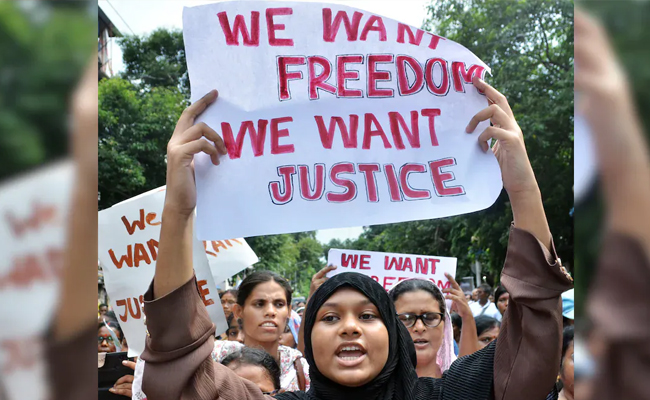
New Delhi (PTI): An IMA study has revealed that one-third of its respondent doctors, majority of them being women, felt "unsafe" or "very unsafe" during their night shifts, so much so that some even felt the need to start carrying weapons for self-defence.
A duty room was not available to 45 per cent of respondents during night shifts, found the online survey undertaken by the Indian Medical Association (IMA) to evaluate safety concerns during night shifts among doctors in the backdrop of recent alleged rape and murder of a trainee woman doctor at the state-run RG Kar Medical College and Hospital in Kolkata.
With 3,885 individual responses, it is the largest study from India on this topic, the IMA claimed.
The survey findings, compiled by Dr Rajeev Jayadevan, Chairman, Research Cell, Kerala State IMA, and his team, have been accepted for publication in IMA's Kerala Medical Journal October 2024 issue.
The respondents were from over 22 states with 85 per cent of them being under 35 years while 61 per cent were interns or postgraduate trainees.
Women constituted 63 per cent, aligning with the gender ratio in some MBBS courses.
"Several doctors reported feeling unsafe (24.1 per cent) or very unsafe (11.4 per cent), totalling one-third of the respondents. The proportion of those feeling unsafe was higher among women," the survey findings showed.
Doctors of age 20-30 years had the lowest sense of safety and this group largely consists of interns and postgraduates.
A duty room was not available to 45 per cent of respondents during night shifts. Those with access to a duty room had a greater sense of safety.
The survey found that duty rooms were often inadequate due to overcrowding, lack of privacy and missing locks, forcing doctors to find alternative rest areas and one-third of available duty rooms did not have an attached bathroom.
"In more than half the instances (53 per cent), duty room was located far from the ward/casualty area," the findings stated.
"Nearly one-thirds of the available duty rooms did not have an attached bathroom, which means that the doctors needed to step outside during late hours to access these facilities," it said.
Suggestions to enhance safety included increasing the number of trained security personnel, installing CCTV cameras, ensuring proper lighting, implementing the Central Protection Act (CPA), restricting bystander numbers, installing alarm systems and providing basic amenities such as secure duty rooms with locks were given by the doctors.
"The online survey was sent to doctors, both government and private, across India through a Google form. There were 3,885 responses within 24 hours," said Dr Jayadevan.
Doctors across the country, particularly women, report feeling unsafe during night shifts, the study said, highlighting there is substantial scope for improving security personnel and equipment in healthcare settings.
Modifications to infrastructure are essential to ensure safe, clean and accessible duty rooms, bathrooms, food and drinking water.
Adequate staffing, effective triaging and crowd control in patient care areas are also necessary to ensure that doctors can provide the required attention to each patient without feeling threatened by their work environment, it stated.
Several additional factors were highlighted by doctors who participated in the survey.
The lack of sufficient numbers of trained security personnel, inadequate lighting of the corridors, absence of CCTV cameras and unrestricted entry of unauthorised individuals into the patient care areas were among the most frequent remarks, the study said.
Some doctors indicated the need to start carrying weapons for self-defence.
One doctor admitted that she always carried a foldable knife and pepper spray in her handbag because the duty room was located at the far end of a dark and deserted corridor.
Doctors who worked in casualty reported verbal and physical threats from people who were drunk or under the influence of drugs. Another doctor reported that she repeatedly experienced bad touch or inappropriate contact in a crowded emergency room.
The situation is worse in some smaller hospitals where there is limited staff and no security.
Several doctors reported apathy from the administrators when security concerns were raised, a common excuse being that the seniors also had endured similar working conditions.
Violence is predominantly experienced by junior doctors, who, being on the frontline, are particularly vulnerable but have limited involvement in administration or policy-making.
Senior faculty members bear the responsibility of implementing policies to improve patient care delivery as well as enhancing security measures, thereby creating a safer work environment for the junior doctors.
Doctors across the country have called for a Central Protection Law to prohibit violence in all healthcare settings and enforce airport-like security measures, ensuring a safer working environment and better patient care.
Such a law would standardise security arrangements across the sector, ultimately benefiting patients as well as doctors, the study stated.
"The survey findings have significant implications for broad policy changes, some of which have already been addressed by the Government of India in response to the Kolkata incident," the IMA said.
The Supreme Court of India took suo motu cognisance, assuring that "doctors and medical professionals shall stand assured that their concerns are receiving the highest attention from the highest court, with input from a diverse range of experts".
Let the Truth be known. If you read VB and like VB, please be a VB Supporter and Help us deliver the Truth to one and all.
India describes attack on Fujairah 'unacceptable'
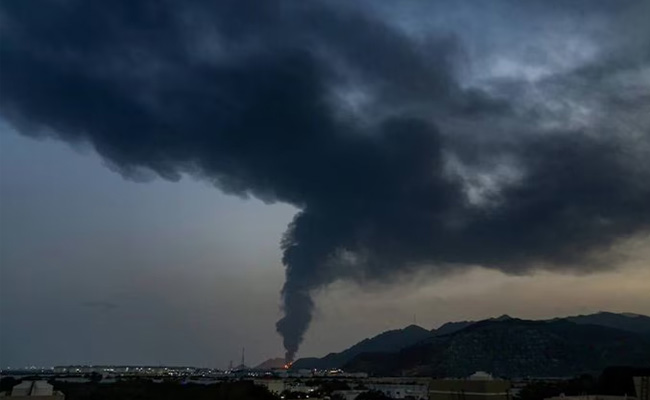
New Delhi (PTI): India on Tuesday described the wounding of three Indians in an attack on the United Arab Emirates' port city of Fujairah as "unacceptable" and pressed for an immediate cessation of hostilities targeting innocent civilians.
New Delhi's reaction came a day after the Indians were injured after a drone attack caused a fire at a major oil industry zone in Fujairah. The UAE had accused Iran of carrying out the strike.
"The attack on Fujairah that resulted in injury to three Indian nationals is unacceptable," External Affairs Ministry spokesperson Randhir Jaiswal said.
"We call for immediate cessation of these hostilities and the targeting of civilian infrastructure and innocent civilians," the spokesperson said.
Jaiswal said India continued to stand for dialogue and diplomacy to deal with the situation so that peace and stability could be restored across West Asia.
"We also call for free and unimpeded navigation and commerce through the Strait of Hormuz in keeping with international law. India stands ready to support all efforts for a peaceful resolution of issues," he said.
The attack on Fujairah city came as the ceasefire between the US and Iran came under strain in the Strait of Hormuz.
The Strait of Hormuz, through which roughly one-fifth of the world's oil and gas pass, remains a major sticking point in the talks. Shipping through the narrow Gulf waterway has been severely disrupted by the conflict, triggering a sharp increase in oil prices and energy shortages in several countries.
The UAE's defence ministry on Monday said its air defence systems engaged 12 ballistic missiles, three cruise missiles and four drones launched from Iran.
The ministry affirmed that it "remains fully prepared and ready to deal with any threats and will firmly confront anything that aims to undermine the security of the country."