Over 350 illegal religious structures removed along Nepal border
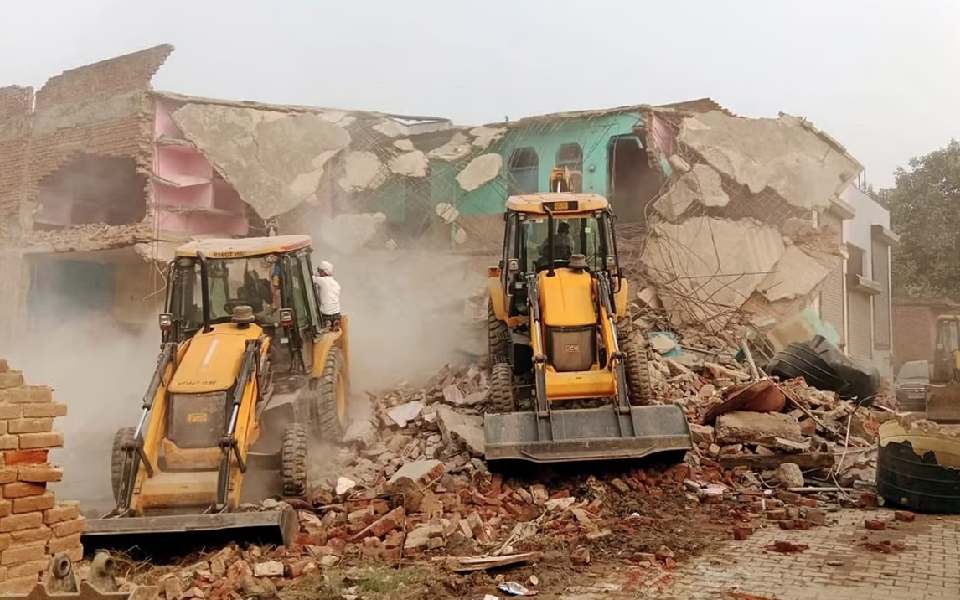
Lucknow, May 11 (PTI): The Uttar Pradesh government on Sunday said that more than 350 unauthorised religious sites, including madrasas, mosques, mazars and Eidgahs, have been identified and subjected to sealing or demolition in recent days, an official statement issued here said.
Acting on Chief Minister Yogi Adityanath's clear directive that no religious encroachment will be tolerated, the administration in districts such as Pilibhit, Shravasti, Balrampur, Bahraich, Siddharthnagar and Maharajganj has launched a sweeping campaign, it said.
The authorities have systematically identified illegal structures and taken strict action, continuing operations even on Sunday.
The chief minister has made it clear that encroachment in the name of any religion will not be allowed and all violators, especially those running unrecognised religious institutions, will face legal consequences, the statement said.
On May 10 and 11, 104 madrasas, one mosque, five mazars and two Eidgahs built illegally on public and private land were identified in Shravasti. All were issued notices and sealed, it said.
One illegal madrasa on public land was demolished and two unrecognized madrasas on private land were sealed, the statement added.
In Bahraich, officials identified 13 madrasas, eight mosques, two mazars and one Eidgah illegally constructed on government land.
After issuing notices, five were sealed and 11 were demolished, including eight madrasas, two mosques and one mazar, the statement said.
In Siddharthnagar, the authorities identified four mosques and 18 madrasas and one more madrasa for illegal construction. Notices were issued to these structures. Five madrasas were sealed and nine were demolished. In total, action was taken against 23 illegal structures in the district, it said.
In Maharajganj’s Nautanwa tehsil, Parsamalik village, an unrecognized madrasa operating on Maktab land was shut down based on a report submitted by the District Minority Welfare Officer.
The building’s keys were handed over to the local police station in-charge. So far, 29 madrasas and five mazars constructed through encroachment on public and private land have been demolished in the district.
In past two days in Lakhimpur Kheri, two mosques, one Eidgah on public land along with eight madrasas on private land were found to be illegally constructed.
Of the 13 structures identified, one was served a notice, nine were sealed and three have been demolished so far, the statement said.
The district authorities in Pilibhit have identified an illegal mosque built on public land in Bharatpur village, covering an area of 0.0310 hectares.
According to the district magistrate, a notice has been issued to the parties involved, seeking a response within 15 days. Action against the illegal construction will be taken after the notice period ends, it said.
On Sunday, an under-construction madrasa on public land in Virpur Semra village, Tulsipur tehsil, was demolished in Balrampur. So far, 30 madrasas, 10 mazars and one Eidgah have been demolished in the district.
Ten of them were built illegally on public land, while 20 were constructed without authorization on private land, the statement said.
Let the Truth be known. If you read VB and like VB, please be a VB Supporter and Help us deliver the Truth to one and all.
CJI calls for 'unified judicial policy', use of technology to converge practices across courts
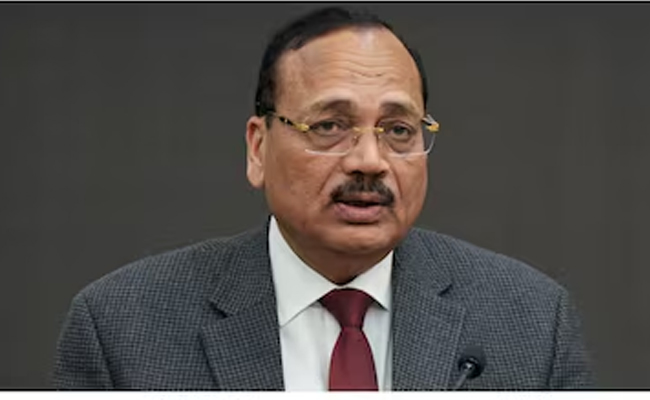
Jaisalmer (PTI): Pushing for a "unified judicial policy", Chief Justice of India Surya Kant on Saturday said technology can help align standards and practices across courts, creating a "seamless experience" for citizens, regardless of their location.
He said high courts -- due to the federal structure -- have had their own practices and technological capacities, and "regional barriers" can be broken down with technology to create a more unified judicial ecosystem.
Delivering the keynote address at the West Zone Regional Conference in Jaisalmer, Kant proposed the idea of a "national judicial ecosystem" and called for an overhaul of India's judicial system with the integration of technology.
"Today, as technology reduces geographical barriers and enables convergence, it invites us to think of justice not as regional systems operating in parallel, but as one national ecosystem with shared standards, seamless interfaces, and coordinated goals," he said.
He emphasised how the role of technology in the judiciary has evolved over time.
"Technology is no longer merely an administrative convenience. It has evolved into a constitutional instrument that strengthens equality before the law, expands access to justice, and enhances institutional efficiency," he said, highlighting how digital tools can bridge gaps in the judicial system.
Kant pointed out that technology enables the judiciary to overcome the limitations of physical distance and bureaucratic hurdles.
"It allows the judiciary to transcend physical barriers and bureaucratic rigidities to deliver outcomes that are timely, transparent and principled," he said, adding that the effective use of technology can modernise the delivery of justice and make it more accessible to citizens across the country.
The CJI called for implementing a "unified judicial policy".
He said India's judicial system has long been shaped by its federal structure, and different high courts have their own practices and technological capacities.
"India's vast diversity has led to different high courts evolving their own practices, administrative priorities and technological capacities. This variation, though natural in a federal democracy, has resulted in uneven experiences for litigants across the country," he said.
Kant underscored that predictability is crucial for building trust in the judicial system.
"A core expectation citizens place upon the courts is predictability," he said, adding that citizens should not only expect fair treatment but also consistency in how cases are handled across the country.
He pointed to the potential of technology in improving predictability.
"Technology enables us to track systemic delays and make problems visible rather than concealed," he said.
By identifying areas where delays occur, such as in bail matters or cases involving certain types of disputes, courts can take targeted action to address these issues and improve efficiency, Kant said.
The CJI explained that data-driven tools could identify the reasons behind delays or bottlenecks, allowing for faster, more focused solutions.
"Technology enables prioritisation by flagging sensitive case categories, monitoring pendency in real time and ensuring transparent listing protocols," he said.
Justice Surya Kant also discussed the importance of prioritising urgent cases where delays could result in significant harm. He highlighted his recent administrative order that ensures urgent cases, such as bail petitions or habeas corpus cases, are listed within two days of curing defects.
"Where delay causes deep harm, the system must respond with urgency," he stated, explaining that technology can help courts identify and expedite such cases.
Kant also raised the issue of the clarity of judicial decisions.
He noted that many litigants, despite winning cases, often struggle to understand the terms of their judgment due to complex legal language.
"Although the orders had gone in their favour, they remained unsure of what relief they had actually secured because the language was too technical, vague or evasive to understand," he said.
He advocated for more uniformity in how judgments are written.
"A unified judicial approach must therefore extend to how we communicate outcomes," he said.
The CJI also discussed the role of AI and digital tools in improving case management. He pointed to the potential of AI-based research assistants and digital case management systems to streamline judicial processes.
"Emerging technological tools are now capable of performing once-unthinkable functions. They can highlight missing precedent references, cluster similar legal questions, and simplify factual narration," he said, explaining how these technologies can help judges make more consistent decisions.
He also highlighted tools like the National Judicial Data Grid and e-courts, which are already helping to standardise processes like case filings and tracking.
Kant reiterated that the integration of technology into the judicial process is not just about improving efficiency but about upholding the integrity of the system and strengthening public trust.
"The measure of innovation is not the complexity of the software we deploy, but the simplicity with which a citizen understands the outcome of their case and believes that justice has been served," he said.