Over 40 bodies of suspected COVID-19 victims found floating on banks of Ganga in Bihar

Patna, May 10: Several bodies, decomposed, bloated and suspected to be of people who succumbed to COVID 19, were on Monday found floating in the river Ganga in a Bihar district.
Officials in Chausa block of Buxar, which borders Uttar Pradesh, rushed to the spot of the unseemly sight upon hearing the news.
"We were alerted by the local chowkidar that many bodies have been spotted floating from upstream. Some 40-45 bodies were seen floating, we have so far recovered 15 of these. None of the deceased happens to be a resident of the district," Chausa BDO Ashok Kumar said.
He said "many Uttar Pradesh districts are situated right across the river and the bodies may have been dumped in the Ganges for reasons not known to us. We cannot confirm whether the deceased were indeed COVID 19 positive. The bodies have started decomposing. But we are taking all precautions while ensuring that these are disposed of in a decent manner".
Some news channels claimed the number of bodies to be as high as 100, which the BDO dismissed as "highly exaggerated".
Many local residents, who spoke before cameras with their faces masked, claimed that the district administration was "in denial over many such unfortunate incidents involving residents of Buxar".
They alleged that those manning cremation ghats were charging a fortune whenever people reached there with the body of a near and dear one who died of the coronavirus.
"There is also a shortage of wood and other material required for cremation. Availability of these has taken a hit because of the lockdown. So many bereaved family members are impelled to immerse the bodies of their departed relatives in the river," one of the residents said.
Often family members of a COVID victim are not handed over the body by the administration which claims it would perform the last rites observing the protocol in place for the deadly virus, another local stated.
"What indeed happens is that the officials develop cold feet later and fearing that they might catch the infection themselves, they dump the bodies in the river and flee. Little do they realize that they are also polluting the river," he added.
Let the Truth be known. If you read VB and like VB, please be a VB Supporter and Help us deliver the Truth to one and all.
Oath-taking ceremony of first BJP govt in Bengal on May 9; Modi, Shah likely to attend
Kolkata (PTI): The oath-taking ceremony of the first BJP government in West Bengal will be held at Brigade Parade Ground here on May 9, marking the saffron camp’s arrival in power in a state after decades on the political fringes.
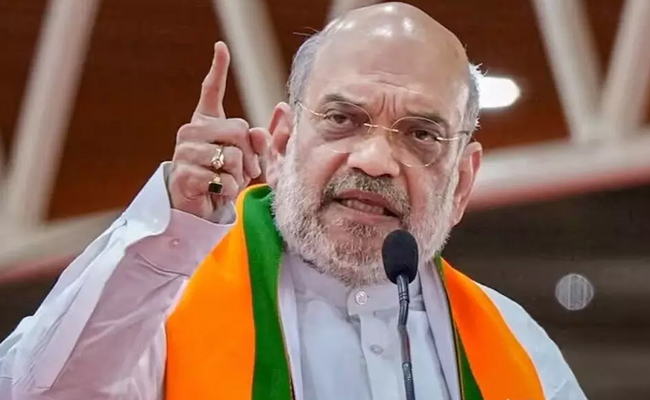
The ceremony, scheduled to begin at 10 am, is expected to witness the presence of Prime Minister Narendra Modi, Union Home Minister Amit Shah, BJP president Nitin Nabin, several Union ministers and chief ministers of BJP- and NDA-ruled states, party sources said.
“The new BJP government will take oath on May 9 at 10 am at Brigade Parade Ground,” state BJP president Samik Bhattacharya announced on Wednesday.
Even as the BJP leadership kept its cards close to the chest on the chief ministerial face, Leader of the Opposition Suvendu Adhikari has emerged as a frontrunner in internal discussions after cementing his position as the party’s principal mass leader in Bengal politics.
Adhikari, once among Mamata Banerjee’s closest lieutenants and a key architect of the TMC’s rural expansion in districts such as Purba Medinipur, crossed over to the BJP ahead of the 2021 assembly elections and went on to defeat Banerjee in Nandigram in one of Bengal’s fiercest political battles.
Five years later, he again found himself at the centre of Bengal’s political churn by beating Banerjee in her own turf at Bhabanipur by over 15,000 votes.
Other names for the CM post doing the rounds include Bhattacharya, Union minister Sukanta Majumdar and former Rajya Sabha MP Swapan Dasgupta, though party insiders indicated that the leadership was inclined towards projecting a “bhumiputra” face rooted in Bengal’s linguistic and cultural ethos.
During the campaign, Shah repeatedly asserted that the BJP’s chief minister in Bengal would be a “son of the soil”, born and educated in the state, in an attempt to blunt the TMC’s sustained attack that the BJP represented an “outsider” political culture alien to Bengal’s social and intellectual traditions.
The BJP bagged 207 of the 294 assembly seats in the recently concluded elections, ending the Trinamool Congress’s uninterrupted 15-year rule and scripting the saffron party’s biggest breakthrough in a state where it once struggled to open its electoral account.
Significantly, the swearing-in ceremony will be held on the 25th day of Baisakh in the Bengali calendar — observed across the state as Rabindra Jayanti, the birth anniversary of Rabindranath Tagore — lending the event a deeper cultural symbolism.
According to BJP leaders, the choice of the date is aimed at embedding the party’s historic rise within Bengal’s cultural imagination and countering the long-standing perception battle over identity and belonging.
Over the last decade, the BJP has steadily attempted to appropriate and reinterpret icons of Bengal’s cultural nationalism — from Tagore and Swami Vivekananda to Netaji Subhas Chandra Bose and Syama Prasad Mookerjee — as part of a broader ideological effort to expand its emotional and political footprint in the state.
Party insiders said the leadership was also conscious of the need to balance Bengal’s competing regional aspirations while choosing the chief ministerial face, with discussions also taking place around whether greater representation should be accorded to north Bengal, a region where the BJP has made substantial electoral gains over successive elections.
A meeting of the newly elected BJP MLAs has been convened on May 8 evening, party sources said, though the leadership remained tight-lipped over the final choice.
The Brigade Parade Ground ceremony is expected to mark not merely a transfer of power, but a defining moment in Bengal’s political history, the culmination of the BJP’s long ideological and organisational march from the margins to the centre of power in a state that had for decades resisted the saffron surge seen elsewhere in India.