Over 40% of India's IT, gig workforce uses AI tools; employability soars to 56%: Report

New Delhi.(PTI): Over 40 per cent of India's IT and gig workforce uses AI tools for automation, analytics, and creative production, according to an India Skills Report.
The employability in India has improved to 56.35 per cent, up from 54.81 per cent in 2025, showing consistent progress in job readiness and skill adaptability, it said.
The 13th edition of the India Skills Report 2026 was released by Educational Testing Service (ETS), in association with Confederation of Indian Industry (CII), All India Council for Technical Education (AICTE) and Association of Indian Universities (AIU).
The report is based on data from over 1 lakh candidates and 1,000 employers across seven sectors.
The document noted that India's demographic advantage, a workforce with an average age of 28.4, presents both urgency and opportunity, and women have surpassed men in job readiness for the first time.
"To sustain its rise as the world's skills capital, the nation must scale AI-ready learning ecosystems that empower every learner, from schoolchildren to senior professionals," the report said.
It lauded such moves as NEP 2020, SOAR (Skilling for AI Readiness), and Skill India Digital as foundational for the country's growth, yet claimed that "true transformation" will need deeper alignment across academia, industry, and government.
"Employability in India has improved to 56.35 pc, up from 54.81 pc in 2025, showing consistent progress in job readiness and skill adaptability. Tier-2 and Tier-3 cities such as Lucknow, Kochi and Chandigarh are emerging as strong employability hubs, narrowing the urban–rural skill gap," it added.
The report found female employability at 54 per cent surpassed male employability at 51.5 per cent, driven by hybrid work and digital skilling initiatives.
It said India now accounts for 16 per cent of the world's AI talent, which is projected to reach 1.25 million professionals by 2027.
More than 90 per cent of employees across sectors use Generative AI tools, while 70 per cent of IT and half of those working in banking, financial services, and insurance (BFSI) organisations have adopted AI-based recruitment systems, it said.
In 2025, over 40 per cent of India's IT and gig workforce uses AI tools for automation, analytics, and creative production, it said.
With 71 per cent of Gen Z freelancers receiving AI training, India is "pioneering a new hybrid model of human-AI collaboration, balancing technical precision with creative problem-solving," the report added.
Hiring intent for FY 2026–27 stands at 40 per cent, up from 29 per cent in the previous year, driven by sustained demand in technology, BFSI, manufacturing, renewable energy, and healthcare, it said.
The BFSI and fintech sectors alone are expected to generate 2.5 lakh new jobs by 2030, with an annual growth rate of 8.7 per cent.
"By 2030, global labor shortages are projected to reach 85 million, while India is forecast to supply a surplus of 45 million skilled professionals, positioning it as the world's primary talent hub," the report said.
Let the Truth be known. If you read VB and like VB, please be a VB Supporter and Help us deliver the Truth to one and all.
Lebanon appoints new representative for talks with Israel, rejects linkage to Iran
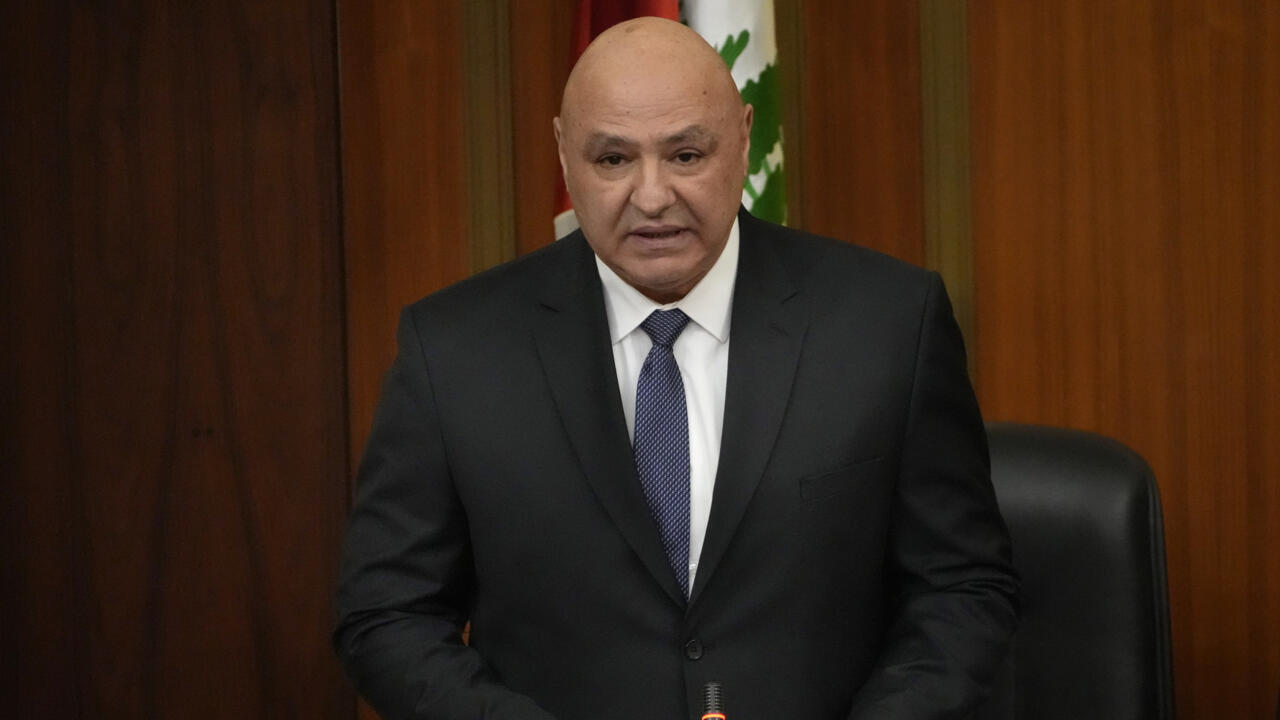
Beirut: Lebanon’s has moved to underline its independent position in ongoing regional developments, amid attempts to link the country to the broader conflict involving Iran, the United States and Israel.
President Joseph Aoun, while announcing the appointment of former US ambassador Simon Karam as Lebanon’s representative in talks with Israel, made it clear that Karam would be the sole representative for Lebanon and that there would be no substitute.
The move comes in response to what the Lebanese officials see as efforts by Iran to tie Lebanon’s situation to the wider regional conflict. Iran had indicated that there would be no ceasefire involving the US, Israel and Iran unless it also included a ceasefire in Lebanon.
Some groups, including Hezbollah and its supporters, had expressed support for linking the situations, citing concerns that the Lebanese government has limited leverage in negotiations with Israel. Lebanon is not formally a party to the conflict, and its army is considered weak.
However, others, including Prime Minister Nawaf Salam, have opposed this approach. They view Iran’s stance as an attempt to influence Lebanon’s internal affairs and see it as undermining the country’s sovereignty.
Officials backing the government’s position say the move is aimed at reaffirming Lebanon’s sovereignty and ensuring that decisions about peace and ceasefire within the country are not dictated externally.
They also see it as a safeguard, so that any breakdown in talks between the US, Israel and Iran does not automatically lead to renewed conflict in Lebanon.