Over 7 pc of daily deaths in 10 Indian cities linked to PM2.5 pollution: Lancet study
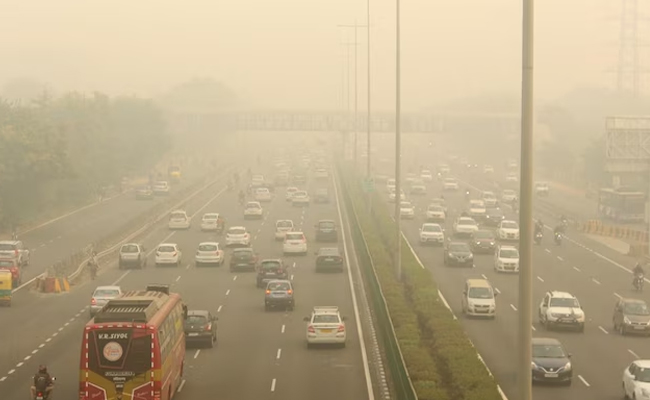
New Delhi (PTI): On average, 7.2 per cent of all daily deaths in 10 of the largest and most polluted cities in India, including Delhi, Bengaluru and Mumbai, were linked to PM2.5 levels higher than World Health Organization (WHO) guidelines for safe exposure, according to a study published in The Lancet Planetary Health journal.
Delhi was found to have the largest fraction of daily and yearly deaths attributable to PM2.5 air pollution, caused by particles sized 2.5 micrometres or less in diameter.
Sources of such pollution include vehicular and industrial emissions.
Researchers said that daily exposure to PM2.5 pollution in Indian cities is linked with a higher risk of death, and locally created pollution could be possibly causing these deaths.
The international team included researchers from Varanasi’s Banaras Hindu University and the Centre for Chronic Disease Control, New Delhi.
They found that an increase of 10 micrograms per cubic metre in the average of fine particulate matter (PM2.5) pollution measured over two days (short-term exposure) was related to 1.4 per cent higher daily mortality.
The death risk was found to be doubled (2.7 per cent) per a 10 microgram per cubic metre increase, when the researchers restricted their analysis to observations below Indian standards of air quality, less stringent than WHO guidelines for safe exposure, which prescribe 15 micrograms per cubic metre of PM2.5 over a 24-hour period.
Indian air quality standards prescribe 60 micrograms per cubic metre of PM2.5 over a 24-hour period.
City-wise, the authors found a 0.31 per cent rise in daily mortality per a 10 micrograms per cubic metre increase in PM2.5 in Delhi, while in Bengaluru, the rise was 3.06 per cent.
The links between daily exposure to PM2.5 pollution and locally created pollutants were found to be stronger in models which the researchers used to explore cause-and-effect relationships.
Therefore, it was possible that the locally generated pollutants were causing these excess deaths, the authors said.
"The causal effects were especially strong in cities with lower concentrations of air pollution, such as (Bengaluru), Chennai, and Shimla," the authors wrote.
The study, "the first multi-city, time series analysis of short-term exposure to PM2.5 and daily mortality in India," looked at roughly 36 lakh daily deaths across ten Indian cities between 2008 and 2019. Other cities included in the analysis were Ahmedabad, Hyderabad, Kolkata, Pune, Shimla and Varanasi.
Let the Truth be known. If you read VB and like VB, please be a VB Supporter and Help us deliver the Truth to one and all.
Health Minister Dinesh Gundu Rao criticizes Centre for steep hike in commercial LPG price
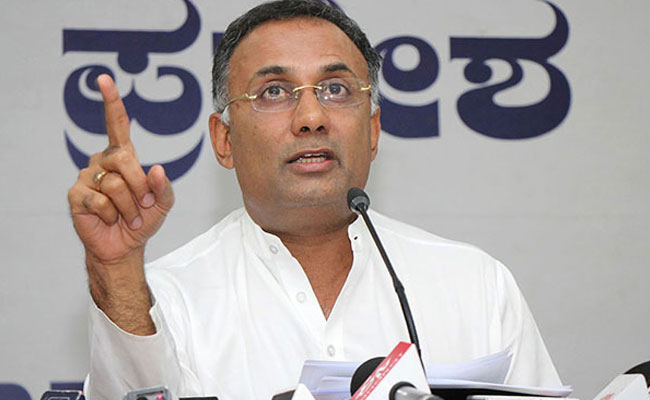
Bengaluru: Karnataka Health Minister Dinesh Gundu Rao has slammed the BJP government in the Centre for the hike in the price of commercial LPG, saying the sudden rise of the fuel rate by Rs 993 a cylinder has hit the common man hard.
Critically commenting that this was expected of the Centre after elections to five states, Rao posted in Kannada on his ‘X’ account on Saturday that the people have been shown only the trailer and, the real struggle is yet to begin.
“Since there is no election in any state, there will certainly be major hikes in the rates of petrol, diesel and domestic LPG in barely a few days,” he has predicted.
The minister has further tweeted, “The rate of commercial LPG has gone up to Rs 3,152 per cylinder, which will hit the hotel industry greatly. Ironically, the direct impact of the hike will be on customers of hotel.”
He pointed out that, earlier, the price used to be hiked by approximately Rs 50 and Rs 100 a cylinder. “This time, the rate has been shot up by Rs 993. What do we call this except daylight robbery? Can this be the ‘Acche Din’ that the BJP has been promising?” Rao asked mockingly.
He also questioned the cause for BJP members’ silence for the rate hike, reminding that the party always ‘threw a tantrum’ when a non-BJP government does so even at a minor level. “Does this reflect their fear of ‘Vishwaguru’ Modi? Is it the party’s sheer disregard for the welfare of the people?” he has questioned.
ಊಹಿಸಿದಂತೆಯೇ ಪಂಚರಾಜ್ಯ ಚುನಾವಣೆ ಬಳಿಕ ಕೇಂದ್ರ ಸರ್ಕಾರ ಬೆಲೆಯೇರಿಕೆಯ ಛಾಟಿ ಬೀಸಲು ಪ್ರಾರಂಭಿಸಿದೆ. ಕಮರ್ಷಿಯಲ್ ಸಿಲಿಂಡರ್ ಬೆಲೆಯನ್ನು ಏಕಾಏಕಿ ₹993 ಏರಿಸುವ ಮೂಲಕ ಮರ್ಮಘಾತ ನೀಡಿದೆ. ಚುನಾವಣೆ ಮುಗಿದ ಕೂಡಲೇ ಬೆಲೆಯೇರಿಕೆ ನಿರೀಕ್ಷಿತವಾಗಿತ್ತು. ಆದರೆ ಒಂದೇ ಭಾರಿ ₹993 ಹೆಚ್ಚಳ ಮಾಡಿರುವುದು ಅನಿರೀಕ್ಷಿತದ ಜೊತೆಗೆ ಆಘಾತ ತಂದಿದೆ.…
— Dinesh Gundu Rao/ದಿನೇಶ್ ಗುಂಡೂರಾವ್ (@dineshgrao) May 2, 2026