Over 87,000 Indians gave up citizenship till June this year: EAM Jaishankar
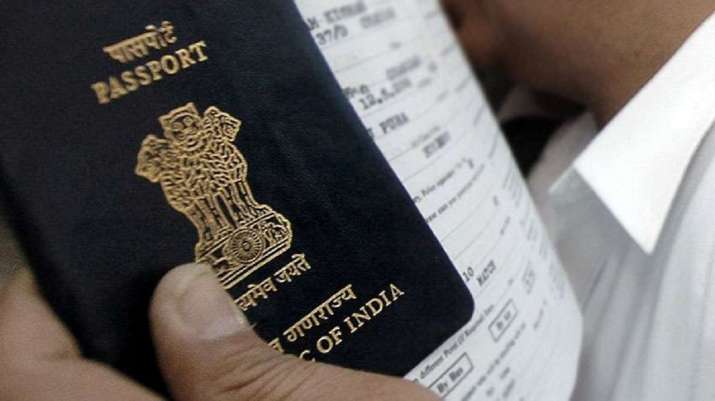
New Delhi, Jul 21: As many as 87,026 Indians renounced their citizenship till June this year, External Affairs Minister S Jaishankar told Lok Sabha on Friday.
With this, more than 17.50 lakh people have given up their Indian citizenship since 2011, the minister said in a written reply.
Jaishankar said 2,25,620 Indians renounced their citizenship in 2022, 1,63,370 in 2021, 85,256 in 2020, 1,44,017 in 2019, 1,34,561 in 2018, 1,33,049 in 2017, 1,41,603 in 2016, 1,31,489 in 2015, 1,29,328 in 2014, 1,31,405 in 2013, 1,20,923 in 2012 and 1,22,819 in 2011.
"The number of Indian nationals exploring the global workplace has been significant in the last two decades. Many of them have chosen to take up foreign citizenship for reasons of personal convenience," the minister said.
Recognising that the Indian community abroad is an asset to the nation, Jaishankar said, the government has brought about a transformational change in its engagement with the diaspora.
"A successful, prosperous and influential diaspora is an advantage for India and our approach is to tap diaspora networks and utilise its reputation for national gain," he said.
Let the Truth be known. If you read VB and like VB, please be a VB Supporter and Help us deliver the Truth to one and all.
Advocate found dead in car on Nainital court premises
Nainital (PTI): A 55-year-old advocate allegedly died by suicide after shooting himself inside his car at the Nainital district court parking lot here on Monday, police said.
According to the police, Puran Singh Bhakuni, a resident of Mallital, was found in the rear seat of his vehicle with a gunshot wound to his temple.
Police recovered a licensed pistol from his hand and a suicide note from the car’s dashboard. The note stated that Bhakuni was unwell and suffering from depression.
"We received information through lawyers around noon. The deceased was lying in the back seat with a pistol in his hand and blood near his ear," Circle Officer Anjana Negi said.
Forensic teams and ballistic experts reached the spot to collect evidence, as no witness reported hearing the gunshot.
Government counsel Sushil Sharma stated that Bhakuni left home at 9 am and was found dead at 9.30 am.
Sharma raised concerns over the circumstances, noting that the body was in the rear seat, and demanded a thorough probe to rule out foul play. Bhakuni, who worked as a notary, had married six months ago, he said.
Police took the body into custody and sent it for a postmortem to confirm the cause of death.
The forensic laboratory will examine the suicide note and the ballistics of the weapon, the police said, adding that the investigation is ongoing.