Over half of voters missing from Bihar’s draft electoral roll are women, data reveals

More than half of the voters excluded from Bihar’s draft electoral roll following the Special Intensive Revision are women, according to an analysis of Election Commission of India data published on August 1. The figures show that 55% of those left out are women, with the highest exclusion rates seen in several districts that also have a significant Muslim population.
The draft list was compiled from enumeration forms submitted between June 24 and July 26. Individuals whose names do not appear will now be required to present proof of citizenship to be reinstated in the final list, scheduled for release on September 30. The Election Commission has said that nearly 65.6 lakh names were removed, citing reasons that include death (22.3 lakh), permanent relocation or prolonged absence (36.3 lakh), and duplication across multiple rolls (7 lakh) according to a data analysis report by The Hindu and Scroll.
Gopalganj district in western Bihar recorded the highest overall exclusion rate at 15.1%, with the Gopalganj assembly constituency alone registering an 18.25% reduction in its electoral roll, the steepest in the state. Across 43 of Bihar’s 243 assembly constituencies, women account for 60% or more of those removed. In January 2025, women made up 47.7% of the state’s electorate; in the draft roll following the revision, this proportion has dropped to 47.2%.
Kaimur district recorded the largest percentage of women excluded from the draft roll at 64%, followed by Buxar at 63%. In Rajpur, a Scheduled Caste-reserved constituency in Kaimur, women represent 69% of those removed, while in Brahampur the figure stands at 63%. By contrast, in Barhara constituency in Bhojpur district, nearly three-quarters of those excluded are men.
Five of the ten districts with the highest percentage of excluded voters , Purnia, Kishanganj, Madhubani, Bhagalpur, and Sitamarhi, also have the largest share of Muslim residents in the state. Election Commission data indicates a correlation: the greater the Muslim population in a district, the higher the exclusion rate, whereas districts with larger Scheduled Caste populations tend to see lower exclusion rates.
Six constituencies in Gopalganj, Gopalganj, Kuchaikote, Barauli, Hathua, Baikunthpur and Bhorey , rank among the top 20 in the state for voter exclusions. Purnia district’s Purnia, Amour and Dhamdaha constituencies also feature prominently in the list of areas most affected.
Let the Truth be known. If you read VB and like VB, please be a VB Supporter and Help us deliver the Truth to one and all.
Allahabad HC orders probe into 'reinstatement' of teacher in UP's Barabanki
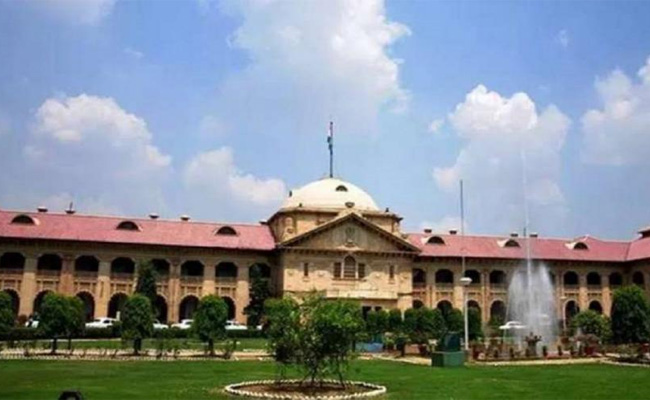
Lucknow (PTI): The Lucknow Bench of the Allahabad High Court on Friday ordered a probe by the special task force (STF) into alleged irregularities in the rejoining of a teacher at City Intermediate College in Barabanki, observing that the reinstatement appeared to be prima facie illegal.
The court also directed the recovery of the salary paid to the teacher during the disputed period.
A bench of Justice Rajeev Singh passed the order on a petition filed by the college management committee. The court expressed doubts over the roles of the District Inspector of Schools (DIOS), Barabanki, the college principal and the teacher concerned and hence, directed a detailed inquiry into the matter.
Taking note of alleged manipulation of records and misleading submissions, the court ordered the immediate transfer of the Barabanki DIOS to ensure a fair probe. It also directed the initiation of disciplinary proceedings against the then joint director of education of the Ayodhya division.
In its order, the court found that the teacher, Abhay Kumar, was initially appointed as an assistant teacher in 2018 but joined an Eklavya Model Residential School in Chhattisgarh as a lecturer in June 2024 without obtaining permission from the management. His subsequent request to retain the lien was rejected.
Despite this, he was allowed to rejoin the Barabanki College in September 2025 on the directions of the joint director of education and the DIOS, and was even paid the salary for October 2025. The court termed the rejoining "wholly illegal" and lacking any legal basis.
The bench also expressed concern over lapses in communication within the education department and directed the Uttar Pradesh chief secretary to ensure that official orders are communicated through email and WhatsApp as well, to prevent disputes.
The matter is next listed for hearing on May 28 when a compliance report is sought.