Over my dead body: Kapil Sibal says he can never think of joining BJP, slams Jitin Prasada
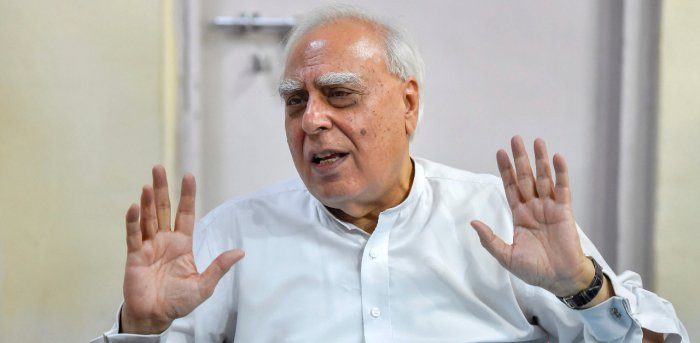
New Delhi, Jun 10: Senior Congress leader Kapil Sibal on Thursday said Jitin Prasada's crossing over to the BJP represented politics of "prasada" or personal gains and asserted that for him a switch to the saffron party could only happen over his dead body.
Sibal, along with Jitin Prasada, was among the Congress' group of 23 leaders who wrote to party chief Sonia Gandhi seeking an organisational overhaul last year.
The veteran Congress leader said hypothetically if his party thinks of him as "deadwood" or of no utility, he may think of leaving, but would never join the BJP, asserting that such a switch could only happen "over my dead body".
In an interview with PTI, Sibal said if Jitin Prasada would have left the party unhappy over the response of the leadership on the concerns raised by the letter writers that would have been his personal choice and he was entitled to leave, but wondered why he decided to join the BJP.
"What is the rational basis for that except for 'prasada (personal gain) politics...We see this happening around the country," Sibal asserted.
Asked about the reforms not being implemented which he along with 22 other leaders had sought in the party, Sibal said that is for the top political leaders to decide and that he has no comments to offerat this stage.
"As long as we are in the Congress and we continue to embrace its ideology, I think all 22 of us, now that we are 22, and many more who were not part of the signed document will continue to raise our issues to strengthen the Congress and where we want the party to go and be the grand old party it was," he said.
"And if they tell me at any point in time that they don't need me, I will decide what to do, but as I said I will not join the BJP...over my dead body," the senior Congress leader asserted.
In a tweet earlier, Sibal had said the question is will Jitin Prasada get "prasada" from the BJP, or is he just a 'catch' for UP elections.
In such deals if 'ideology' doesn't matter changeover is easy, he tweeted.
Slamming Jitin Prasada's switch to the BJP and his hailing the saffron party, Sibal told PTI that the norm in politics now is "Prasada will go for prasada".
"From 'Aaya Ram Gaya Ram' we are into 'prasada (personal gain) politics. We saw this happening recently in West Bengal where en-masse people left TMC and joined the BJP with hopes of contesting on a BJP ticket and win because Amit Shah was claiming 200-plus seats for the BJP. When they faced defeat, they all want to go back to the TMC," Sibal said.
'Aaya Ram Gaya Ram' was an expression used widely in politics in the 1990s referring to the frequent floor-crossing and switching of parties.
Hitting out at switchovers by leaders to the BJP in various states, Sibal said all this shows that there is no concept of principled politics in this country as witnessed in West Bengal, Madhya Pradesh and Karnataka, among other places.
"It is all about prasada. How much prasada you are going to get, no regard for ideology. My criticism of what he (Jitin) has done is not that he has left the party; I cannot criticise him for that, that is his personal decision... but how does he justify to himself joining the BJP," he said.
"This is a party he (Jitin) abused for decades. He himself said that his association with the Congress and its ideology was for several decades. How then does he justify joining an ideology which he has opposed for three decades," Sibal asked.
The former Union minister said what concerns him is the way ideology is being put aside across the country. He cited the example of Haryana and the absence of any rationale in the coalition of the Chautalas and the BJP. It is just lust for power, he alleged.
Pressing his point, Sibal cited the example of the US and the UK, saying the Republicans may be in trouble at this moment but they are not joining the Democrats in America and the same was true of the Labour party and the Conservatives in the UK.
"Members of Parliaments in Europe do not indulge in such acrobatic switches for personal gain. Those too are functional democracies. Democracy in this country has become dysfunctional because it is not based on ideology," Sibal said.
The fight for power should be based on the clash of ideologies and not on personal "prasadas," he asserted.
Asked if he could ever think of leaving the party he has been with for decades, Sibal said "If the party considers that I have no value for it I might think of leaving it, but I would never join the BJP. This is because I am wedded to a particular ideology".
"Politics is not for personal gain, embracing ideologies which members of a party do not believe just for a Rajya Sabha seat or a position in the party or some other position. That is not my idea of politics," he asserted.
Expressing concern over the increasing trend of leaders switching between diametrically opposite ideologies, Sibal said the other real problem is that when people look at politicians behaving in this fashion they believe that these politicians are untrustworthy, unprincipled and have no ideology.
This has nothing to do with value-based politics. If workers see their leaders jettisoning value-based politics they too will do the same, Sibal argued.
"That weakens the foundations of democracy, the trust of the people in democratic principles and if the foundations of democracy get weakened, the structure one day will collapse. My worry is that my worry is not Jitin Prasada moving away from the Congress," he said.
Sibal also slammed the BJP for welcoming 'prasada politics'. Its actions are equally unprincipled, he added.
Apart from Sibal, G-23 leaders Shashi Tharoor and M Veerappa Moily have also slammed Prasada for switching to the BJP.
Let the Truth be known. If you read VB and like VB, please be a VB Supporter and Help us deliver the Truth to one and all.
Sujit Nair raises concerns over speculation of DMK-AIADMK understanding to block TVK
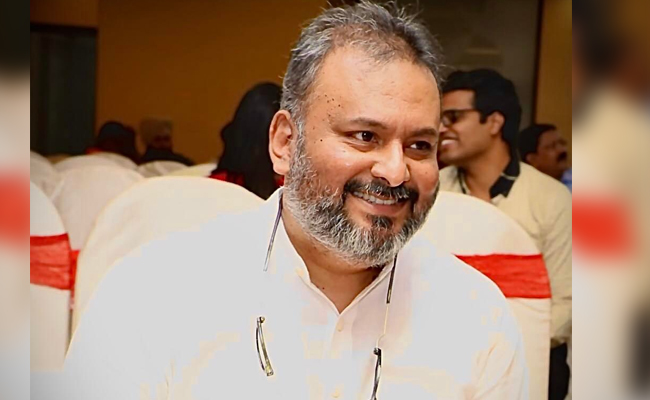
Chennai: Journalist and political commentator Sujit Nair has expressed concern over speculation that the Dravida Munnetra Kazhagam and the All India Anna Dravida Munnetra Kazhagam could explore a post-poll understanding to prevent Vijay-led Tamilaga Vettri Kazhagam from forming the government in Tamil Nadu.
In a social media post, Sujit Nair said the election verdict in Tamil Nadu reflected a clear public demand for political change and argued that the mandate should be respected irrespective of political preferences.
Referring to reports and political discussions surrounding a possible understanding between the DMK and AIADMK, he said he hoped such developments remained only speculative conversations and did not turn into reality.
Nair stated that if such an alliance were to take shape, it would raise serious questions about ideological politics in the country. He said TVK had emerged through a democratic electoral process and that the legitimacy to govern in a parliamentary democracy comes from the people’s verdict.
According to him, attempts to prevent an electoral winner from forming the government through unexpected political arrangements may be constitutionally valid, but many people could view them as politically opportunistic.
He further said that such a move could particularly affect the political image of the DMK, which has historically projected itself around ideology, social justice and opposition politics. Nair said that in ideological terms, the DMK appeared closer to TVK than to the AIADMK, and joining hands with its long-time political rival only to remain in power could weaken its broader political narrative.
He added that the same questions would apply to the AIADMK as well, as the party had spent decades positioning itself against the DMK and such an arrangement could create discomfort among its cadre and supporters.
Drawing a comparison with Maharashtra politics in 2019, Nair said he had expressed similar views when the Shiv Sena formed an alliance with the Indian National Congress and the Nationalist Congress Party after the Assembly elections.
He said post-poll alliances between long-standing political rivals often create a public perception that ideology and electoral mandates become secondary when political power equations come into play.
Nair also said such developments increase public cynicism towards politics and reinforce the belief among voters that ideology is often sidelined after elections.
He maintained that the Tamil Nadu verdict was emphatic and said respecting both the spirit and substance of the mandate was important for the credibility of democratic politics.