Owaisi slams acquittal in 2008 Malegaon blast case, calls out NIA, Modi govt
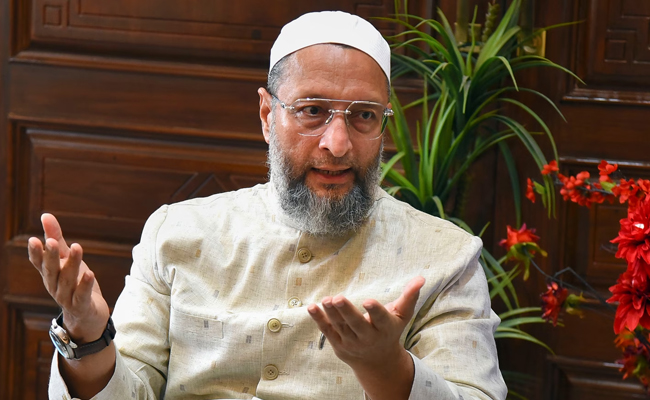
New Delhi: AIMIM chief and Hyderabad MP Asaduddin Owaisi has strongly criticised the acquittal of all accused in the 2008 Malegaon blast case, calling it a "shameful failure of justice" and accusing the NIA and BJP governments of deliberately weakening the case.
Reacting to today’s verdict by a special NIA court in Mumbai, Owaisi wrote on X: “The Malegaon blast case verdict is disappointing. Six namazis were killed in the blast and nearly 100 were injured. They were targeted for their religion. A deliberately shoddy investigation/prosecution is responsible for the acquittal.”
He further asked whether the Modi and Fadnavis governments would appeal the judgment with the same urgency they showed in the 2006 Mumbai train blasts acquittals, and questioned the silence of Maharashtra’s so-called secular parties. “Who killed the 6 people?” Owaisi asked pointedly.
The MP also reminded the public that in 2016, then special public prosecutor Rohini Salian had revealed that the NIA had asked her to “go soft” on the accused. He pointed out that in 2017, the agency had tried to get Sadhvi Pragya Singh Thakur acquitted. She later became a BJP Member of Parliament.
Owaisi also referred to the late Hemant Karkare, the ATS chief who had initially uncovered the Malegaon conspiracy and was killed in the 26/11 attacks. “The BJP MP [Pragya Thakur] said she had cursed him, and his death was a result of that curse,” he wrote.
Ending his statement, Owaisi questioned whether NIA and ATS officers would be held accountable for the botched investigation.
“This is the ‘tough on terror’ Modi government. The world will remember that it made a terror accused a Member of Parliament,” he concluded.
Earlier in the day, the court acquitted all seven accused, including BJP MP Pragya Singh Thakur and Lt Col Prasad Shrikant Purohit, citing lack of evidence. The blast had occurred on September 29, 2008, in Malegaon, Maharashtra, killing six and injuring over 100 people.
Let the Truth be known. If you read VB and like VB, please be a VB Supporter and Help us deliver the Truth to one and all.
AIITA welcomes Karnataka’s ban on obscene songs in school events
Bhatkal: The Karnataka unit of the All India Ideal Teachers Association (AIITA) has welcomed the Karnataka government’s decision to strictly ban school children from dancing to obscene songs during educational and cultural programmes in government, aided, and private schools across the state.
AIITA Karnataka State President M. R. Manvi congratulated the government for taking what he termed an important step to preserve the sanctity of education.
“Such decisions to safeguard the dignity of school children and uphold the values of education are the need of the hour. This rule should not be limited to government schools alone but must be strictly implemented in all private educational institutions as well,” he said.
He further urged the government to address other concerns within school programmes.
“The government should not only prohibit obscene dances in the name of school anniversaries, but also ensure that plays and dialogues that incite religious hatred are avoided. Schools should be centres of harmony, not platforms for spreading hatred,” he added.
According to a recent circular issued by the Department of School Education and Literacy, obscene dances are adversely affecting the mental health and moral values of students.
In this regard, schools have been advised to use songs that promote nationalism, positive thinking, the greatness of Kannada culture, and value-based traditions instead of inappropriate content during programmes.
The circular also emphasises that students should be dressed in decent attire.
AIITA also backed the department’s warning that disciplinary action would be taken against head teachers if such guidelines are violated. The association has further demanded that district Deputy Directors of Public Instruction strictly monitor the implementation of these rules.