Pak to wait for India's decision to lift airspace ban before taking final call: Official
Lahore: Pakistan said on Sunday that there was no official communication with India about the opening of the airspace and Islamabad will wait for New Delhi's decision to lift the air restriction on its flights before taking a final call on lifting its airspace ban.
Pakistan has already indicated that it may lift the airspace ban along its eastern border with India, imposed on February 27 after the Balakot airstrike, to reciprocate India's decision to remove all restrictions on all air routes in the Indian airspace.
"We have already opened this point, Telem (near Ahmedabad), about two months ago, for India. It was India that has to open it now, enabling the flights to use this airspace," the Pakistani government official told PTI.
He said since there is no official communication between the two countries in this respect taken place yet "we will see what Notam (notice to airmen) it (India) issues today."
When asked about opening of other around 10 routes (points), the official said: "Once the Indian government lifts the air restriction on Pakistani flights on these routes, Pakistan will certainly follow suit."
It is expected that these points will gradually be opened this month.
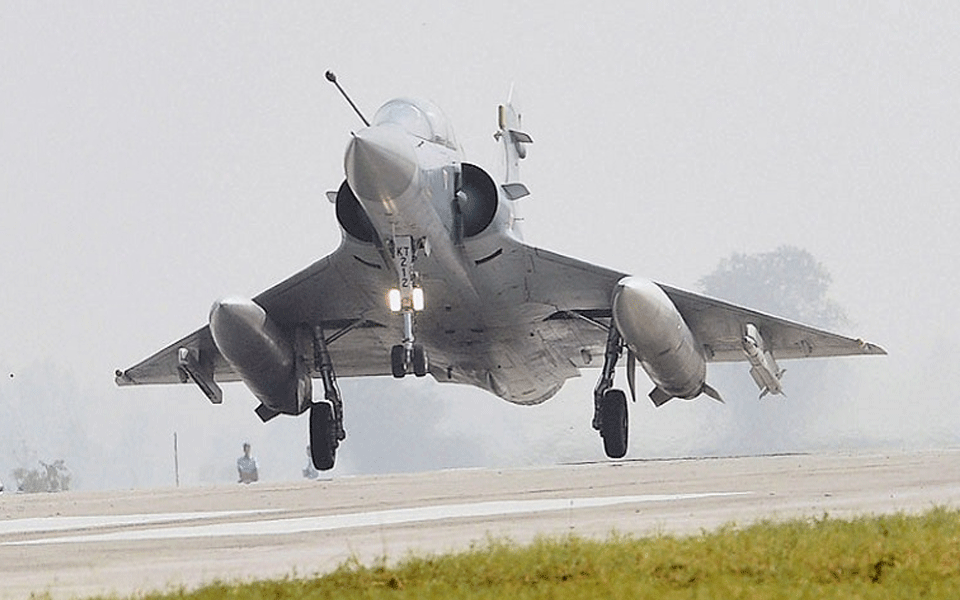
The Indian Air Force (IAF) Friday said that temporary restrictions on all air routes in the Indian airspace, imposed by it on February 27, have been removed.
The IAF said it had removed restrictions that were imposed on all routes a day after its 12 Mirage 2000s crossed over to Pakistan and conducted air strikes in Balakot. Pakistan fully closed its airspace on February 27.
On March 27, Pakistan opened its airspace for all flights except for New Delhi, Bangkok and Kuala Lumpur. On May 30, Pakistan extended its airspace ban for flights to India till June 15.
As a result of the ban, foreign carriers using Indian airspace have been forced to take costly detours because they cannot fly over Pakistan. The closure mainly affects flights from Europe to Southeast Asia. The flights from Europe and the US flying in and out of New Delhi have been the worst hit.
Since Pakistan's airspace closure, the airfare on many routes have gone up significantly, including Delhi-Kabul, Delhi-Moscow, Delhi-Tehran and Delhi-Astana.
Two Indian airline companies, Air India and SpiceJet, have already stopped their Delhi-Kabul flights due to Pakistan airspace closure.
Pakistan had given a special permission to India for then External Affairs Minister Sushma Swaraj to fly directly through Pakistani airspace to attend the SCO meet in Bishkek, Kyrgyzstan, on May 21. However, the airspace for other commercial airliners remains closed.
Let the Truth be known. If you read VB and like VB, please be a VB Supporter and Help us deliver the Truth to one and all.
Trump says EU has until July 4 to approve last year's trade deal or it will face higher tariffs
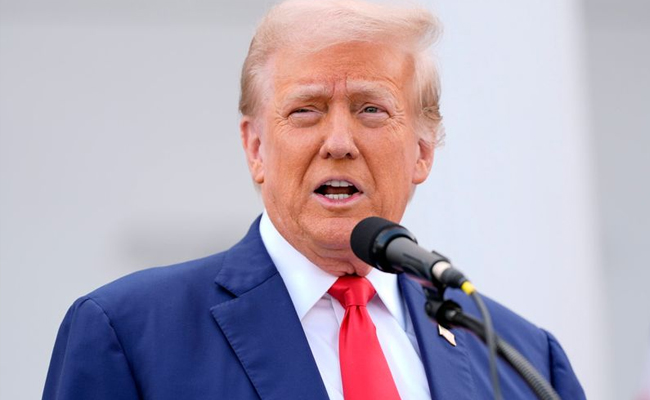
Washington (AP): President Donald Trump has said in a social media post that goods from the European Union would face higher tariff rates if the 27-member bloc fails to approve last year's trade framework by July 4.
The announcement on Thursday appeared to be a deadline extension after the president said last Friday that EU autos would face a higher 25 per cent tariff starting this week. Trump made the updated announcement after what he described as a "great call" with European Commission President Ursula von der Leyen.
Still, the US president was displeased that the European Parliament had yet to finalize the trade arrangement reached last year, which was further complicated in February by the US Supreme Court ruling that Trump lacked the legal authority to declare an economic emergency to impose the initial tariffs used to pressure the EU into talks.
"A promise was made that the EU would deliver their side of the Deal and, as per Agreement, cut their Tariffs to ZERO!" Trump posted. "I agreed to give her until our Country's 250th Birthday or, unfortunately, their Tariffs would immediately jump to much higher levels."
It was unclear from the post whether Trump was implying that the tariff rates would jump on all EU goods or the increase would only apply to autos.
His latest statement indicates he might be backing away from his earlier threat on EU autos by giving the European Parliament several more weeks to approve the agreement.
Under the original terms of the framework, the US would charge a 15 per cent tax on most goods imported from the EU.
But since the Supreme Court ruling, the administration has levied a 10 per cent tariff while investigating trade imbalances and national security issues, aiming to put in new tariffs to make up for lost revenues.