Pakistan blocks Wikipedia for not removing blasphemous content: Reports
Islamabad (PTI): Pakistan has blocked Wikipedia, the online encyclopedia, after it refused to remove offensive or blasphemous material, according to media reports on Saturday.
The blacklisting of Wikipedia comes days after the Pakistan Telecom Authority (PTA) degraded Wikipedia services for 48 hours, threatening to block it if the content deemed blasphemous' was not deleted, The News newspaper reported.
When a PTA spokesperson was contacted late on Friday night and inquired about the blocking of Wikipedia, the official confirmed that "yes" it had been blocked, it said.
On the instruction of the high court, the PTA on Wednesday degraded disrupting and slowing access to the encyclopedia website for 48 hours because there was blasphemous content on it.
Wikipedia is a free online encyclopedia, created and edited by volunteers around the world and hosted by the Wikimedia Foundation.
PTA spokesperson Malahat Obaid said the ban had primarily been imposed for non-compliance with the orders, the Dawn newspaper reported.
"The decision can be reviewed once Wikipedia removes sacrilegious content that has been identified by the regulatory authority," the spokesperson added.
The PTA spokesperson stated that Wikipedia was approached for blocking/removal of the said content by issuing a notice.
An opportunity for a hearing was also provided; however, the platform neither complied by removing the blasphemous content nor appeared before the authority.
Given the intentional failure on part of the platform to comply with the directions of PTA, the services of Wikipedia were degraded for 48 hours with the direction to block/remove the reported contents.
On Saturday, the Wikimedia Foundation said "it does not make decisions around what content is included on Wikipedia or how that content is maintained".
It added that this is "by design to ensure that articles are the result of many people coming together to determine what information should be presented on the site, resulting in richer, more neutral articles".
"We hope that the Pakistan government joins with the Wikimedia Foundation in a commitment to knowledge as a human right and restores access to Wikipedia and Wikimedia projects promptly so that the people of Pakistan can continue to receive and share knowledge with the world," it said.
Social media giants Facebook and YouTube have been blocked in the past over content deemed blasphemous.
Let the Truth be known. If you read VB and like VB, please be a VB Supporter and Help us deliver the Truth to one and all.
2019 mud attack on engineer: Maharashtra court sentences BJP minister Nitesh Rane to one-month jail
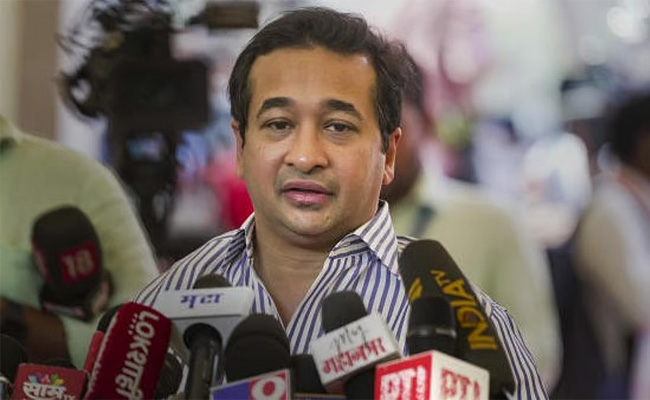
Mumbai (PTI): A court in Sindhudurg on Monday convicted Maharashtra minister Nitesh Rane in a 2019 case of pouring mud on an NHAI engineer when he was in opposition, and sentenced him to one-month imprisonment, noting that lawmakers are not supposed to take the law into their hands.
Later, the court suspended Rane's sentence, allowing him time to appeal before a higher court, while acquitting 29 other accused in the case.
"Even though Rane's intention was to raise a voice against the poor quality of work and inconvenience faced by the people, he was not supposed to humiliate or insult a public servant in public," additional sessions court judge V S Deshmukh stated.
"If such incidents continue to occur, public servants would not be able to discharge their duties with dignity," the judge noted.
ALSO READ: 19-yr-old woman found hanging from tree in UP village; juvenile held
Calling the act "abuse of power", the court held that "it is the demand of time to curb such tendency".
Rane, a son of former Union minister Narayan Rane, was among 30 people charged under various offences, including rioting, assault to deter a public servant, and criminal conspiracy. He was in Congress when the incident occurred.
All the accused, including Nitesh Rane, were acquitted of these offences, as the court found insufficient evidence to support most of these claims.
However, the court found Nitesh Rane guilty of an offence under section 504 (intentional insult meant to provoke a breach of public peace) and sentenced him to one month's jail.
Rane, then a Congress MLA, had called the Sub-Divisional Engineer of the National Highway Authority, Prakash Shedekar, to a bridge over the Gad river in Kankavli on July 4, 2019, for inspecting the work to widen the Mumbai-Goa Highway.
According to the prosecution, Nitesh Rane and his followers, frustrated by the poor quality of the roadwork and waterlogging, confronted the engineer. They poured muddy water on Shedekar and forced him to walk through slush in public.
The court, after perusing the evidence on record, noted that the informant (victim) was holding a high post in the National Highway Authority.
"Despite that, he was made to walk through the muddy water in public. It would have certainly humiliated and insulted him," the court remarked.
The judge held that Rane compelling Shedekar to walk through the muddy water "was nothing but an intentional insult to the informant," and provocation which will cause him to break the public peace.