Pakistan troops slit BSF jawan's throat; high alert sounded along border
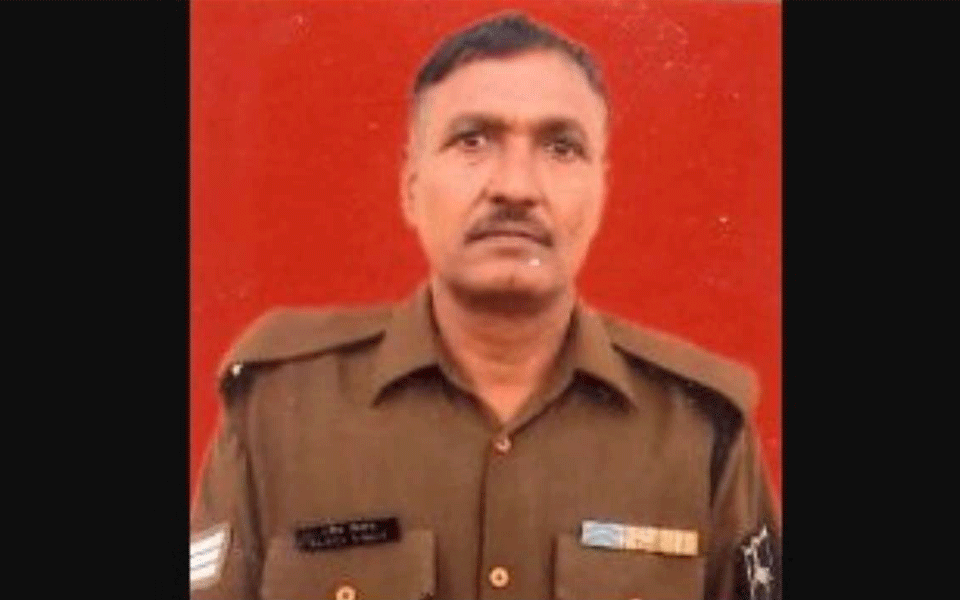
JAMMU/NEW DELHI: Pakistani troops have slit the throat of a BSF jawan along the international border (IB) near Jammu, an incident that may further escalate the tension between the two countries.
The brutal and "unprecedented" incident that took place in the Ramgarh sector on Tuesday has prompted the security forces to issue a "high alert" across the entire IB and the Line of Control (LoC) even as the Border Security Force has lodged a strong complaint with its counterparts -- the Pakistan Rangers.
DG #BSF and all ranks salute the supreme sacrifice of Head Constable Narender Kumar & offer condolence to the family of the braveheart.
— BSF (@BSF_India) September 19, 2018
HC Narender attained martyrdom on 18 Sep,2018 in an unprovoked Pak firing across #Jammu #IB#अमरप्रहरी#BharatKeVeer pic.twitter.com/zQx7N3f4HU
Official sources said the body of Head Constable Narender Kumar also bore three bullet wounds and it could only be retrieved from a spot ahead of the India-Pakistan fence after over six hours as the Pakistani side "did not respond" to the calls to maintain the sanctity of the frontier and ensure that the BSF search parties were not fired upon.
The Pakistan Rangers, the sources said, was asked to take part in a joint patrolling to trace the missing jawan, but they only came up to a point and cited water logging issues in the area that prevented them from undertaking a coordinated action. The BSF then waited for the sun to set and launched a "risky operation" to bring the jawan's body back to the post.
Officials in the security establishment said the incident of brutality with the jawan, probably a first at the IB, was taken "very seriously" by the government and the Ministry of External Affairs and the Director General of Military Operations (DGMO) were also expected to take up the issue with their Pakistani counterparts.
Border Securty Force (BSF) has raised the issue of killing of its jawan with the Pakistan Rangers at the sector level. BSF has also sought Director General of Military Operations (DGMO) to raise the issue with Pakistan at its level.
— ANI (@ANI) September 19, 2018
They said since the BSF patrol party that went ahead of the fence to cut the tall "sarkanda" grass to clear the field was first fired upon at 10.40 am on Tuesday, hectic phone calls and communication exchanges went on throughout the day from the Indian side to across the border in order to locate the body of the jawan, who was first declared missing.
Courtesy: timesofindia
Let the Truth be known. If you read VB and like VB, please be a VB Supporter and Help us deliver the Truth to one and all.
Bhojshala case: Disputed structure built from remains of pre-existing temples, claims ASI
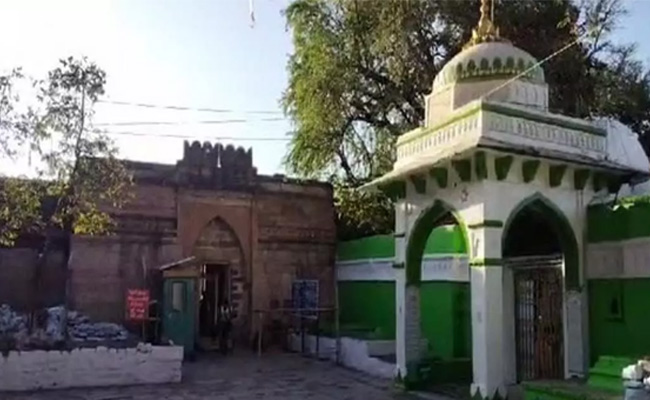
Indore (PTI): The ASI has told the Madhya Pradesh High Court that a massive structure dating back to the Paramara kings' rule existed at the disputed Bhojshala temple-Kamal Maula mosque complex, and the current structure was built from the remains of temples.
The Archaeological Survey of India (ASI) made the claim on Tuesday based on its 98-day scientific survey and over 2,000-page report.
The Hindu community considers Bhojshala a temple dedicated to Vagdevi (Goddess Saraswati), while the Muslim side claims the monument as the Kamal Maula Mosque. The disputed complex is protected by the ASI.
During the hearing before Justices Vijay Kumar Shukla and Alok Awasthi of the HC's Indore bench, Additional Solicitor General Sunil Kumar Jain, representing the ASI, presented a detailed account of the scientific survey conducted two years ago at the complex.
Referring to the ASI's survey report, he said, "Retrieved architectural remains, sculptural fragments, large slabs of inscriptions with literary texts, Nagakarnika inscriptions on pillars, etc, suggest that a large structure associated with literary and educational activities existed at the site. Based on scientific investigations and archaeological remains recovered during the investigations, this pre-existing structure can be dated to the Paramara period."
It can be said that the existing structure was made from the parts of earlier temples, based on scientific investigations, survey and archaeological excavations conducted, study and analysis of retrieved finds, study of architectural remains, sculptures, and inscriptions, art and sculptures, Jain said quoting the report.
Summarising the report, he also drew the court's attention to the fact that the archaeological study identifies that many architectural components, such as pillars and beams, were originally part of temple structures before being repurposed for a mosque.
"The evidence of this transition includes Sanskrit and Prakrit inscriptions that were damaged or hidden, alongside sculptures of deities and animals that were often mutilated or defaced," Jain contended.
The report also states that "all Sanskrit and Prakrit inscriptions are older than the Arabic and Persian inscriptions, indicating that users or engravers of the Sanskrit and Prakrit inscriptions occupied the place earlier".
In light of the Muslim side's earlier objections, the bench wanted to know why there were some discrepancies in the ASI's responses regarding the status of the disputed complex in the cases filed over the years.
The Additional Solicitor General argued that earlier studies of the complex involved only officials, while the current survey involved scientists and the use of advanced technologies such as Ground Penetrating Radar (GPR).
The hearing in the Bhojshala case will continue on Wednesday.
The high court has been regularly hearing four petitions and one writ appeal regarding the religious nature of the Bhojshala temple-Kamal Maula mosque complex since April 6.