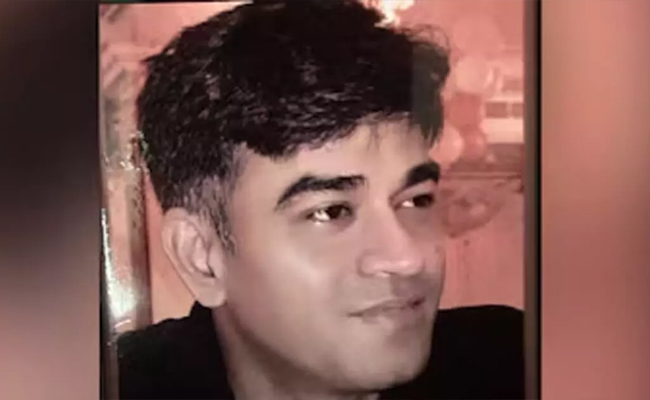
Pakistan's National Assembly passes bill to give right of appeal to Kulbhushan Jadhav
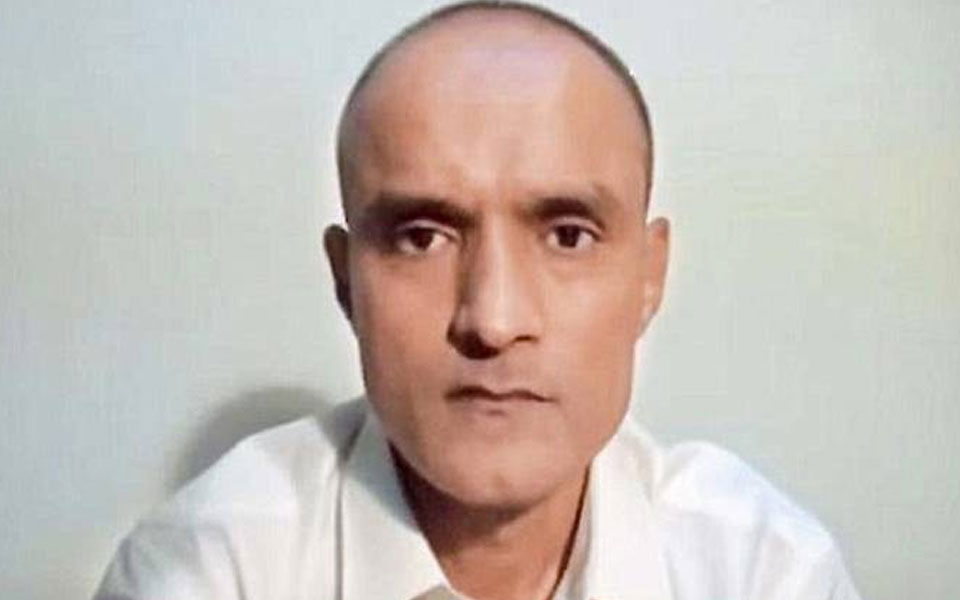
Islamabad: Pakistan's National Assembly has passed a government-backed bill that will provide the right of appeal to Indian death-row prisoner Kulbhushan Jadhav, according to a media report.
The National Assembly passed the ICJ (Review and Re-consideration) Bill, 2020 on Thursday aimed at allowing alleged Indian spy Jadhav to have consular access in line with the International Court of Justice (ICJ) verdict, the Dawn newspaper reported.
Jadhav, the 51-year-old retired Indian Navy officer, was sentenced to death by a Pakistani military court on charges of espionage and terrorism in April 2017.
India approached the ICJ against Pakistan for denial of consular access to Jadhav and challenging the death sentence.
The Hague-based ICJ ruled in July 2019 that Pakistan must undertake an "effective review and reconsideration" of the conviction and sentence of Jadhav and also to grant consular access to India without further delay.
The ICJ, in its 2019 verdict, had asked Pakistan to provide a proper forum for appeal against the sentence given to Jadhav.
Speaking after the passage of the bill, Law Minister Farogh Nasim said had they not passed the bill, India would have gone to the UN Security Council and could have moved contempt proceedings against Pakistan in the ICJ.
Nasim said the bill was being passed in light of the verdict of the ICJ.
He said by passing the law, they had proved to the world that Pakistan was a "responsible state".
The National Assembly also passed 20 other bills, including the Elections (Amendment) Bill.
The Opposition members staged a walkout and pointed out the lack of quorum three times, but each time the chair declared the house in order and continued the business, forcing the Opposition to resort to noisy protest.
The Opposition members gathered in front of the Speaker's dais and raised slogans.
Criticising the government's move, Pakistan Muslim League-Nawaz (PML-N) lawmaker Ahsan Iqbal pointed out that it had included the bill in the heavy legislative agenda to provide relief to Jadhav.
Iqbal said it was a person-specific bill and the name of Jadhav was mentioned in the Statement of Objects and Reasons of the bill.
He said when the country's law allowed high courts to review the sentences awarded by military courts then what was the need for bringing the law.
The government had already enforced the law through the promulgation of an ordinance in May last year soon after the ICJ verdict in Jadhav's case.
Amid stiff resistance offered by Opposition parties, the National Assembly's Standing Committee on Law and Justice on October 21 last year had approved the bill that seeks a review of the conviction of Jadhav.
The house also witnessed a rumpus when Pakistan Peoples Party's Raja Pervez Ashraf protested over remarks of Foreign Minister Shah Mahmood Qureshi, who had stated that by opposing the bill to provide relief to Jadhav, the Opposition members were toeing the Indian narrative, the paper said.
Pakistan Peoples Party (PPP) Chairman Bilawal Bhutto-Zardari asked the speaker to provide some time to the members to see the bills.
He criticised the government for first bringing the bill to provide relief to Jadhav through an ordinance and then getting it passed through bulldozing the legislation.
Law minister Nasim said he was shocked to see the Opposition's behaviour and it seemed that the opposition had not read the ICJ verdict. He said the ICJ had clearly asked Pakistan to make effective legislation to provide the right of review to Jadhav.
Let the Truth be known. If you read VB and like VB, please be a VB Supporter and Help us deliver the Truth to one and all.
Sujit Nair raises concerns over speculation of DMK-AIADMK understanding to block TVK
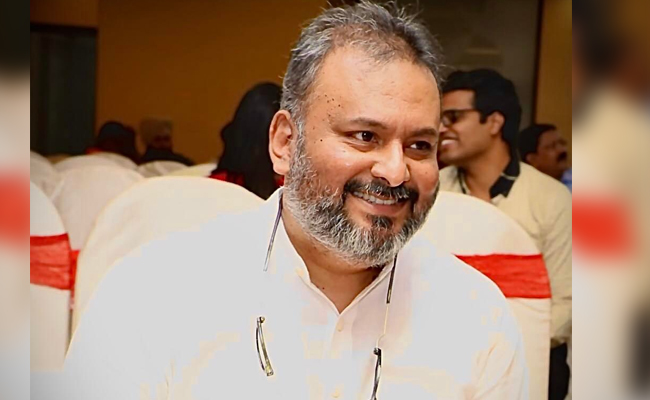
Chennai: Journalist and political commentator Sujit Nair has expressed concern over speculation that the Dravida Munnetra Kazhagam and the All India Anna Dravida Munnetra Kazhagam could explore a post-poll understanding to prevent Vijay-led Tamilaga Vettri Kazhagam from forming the government in Tamil Nadu.
In a social media post, Sujit Nair said the election verdict in Tamil Nadu reflected a clear public demand for political change and argued that the mandate should be respected irrespective of political preferences.
Referring to reports and political discussions surrounding a possible understanding between the DMK and AIADMK, he said he hoped such developments remained only speculative conversations and did not turn into reality.
Nair stated that if such an alliance were to take shape, it would raise serious questions about ideological politics in the country. He said TVK had emerged through a democratic electoral process and that the legitimacy to govern in a parliamentary democracy comes from the people’s verdict.
According to him, attempts to prevent an electoral winner from forming the government through unexpected political arrangements may be constitutionally valid, but many people could view them as politically opportunistic.
He further said that such a move could particularly affect the political image of the DMK, which has historically projected itself around ideology, social justice and opposition politics. Nair said that in ideological terms, the DMK appeared closer to TVK than to the AIADMK, and joining hands with its long-time political rival only to remain in power could weaken its broader political narrative.
He added that the same questions would apply to the AIADMK as well, as the party had spent decades positioning itself against the DMK and such an arrangement could create discomfort among its cadre and supporters.
Drawing a comparison with Maharashtra politics in 2019, Nair said he had expressed similar views when the Shiv Sena formed an alliance with the Indian National Congress and the Nationalist Congress Party after the Assembly elections.
He said post-poll alliances between long-standing political rivals often create a public perception that ideology and electoral mandates become secondary when political power equations come into play.
Nair also said such developments increase public cynicism towards politics and reinforce the belief among voters that ideology is often sidelined after elections.
He maintained that the Tamil Nadu verdict was emphatic and said respecting both the spirit and substance of the mandate was important for the credibility of democratic politics.