Parliamentary panel discusses MGNREGA shortcomings, ways to adopt VB-G RAM G Act smoothly
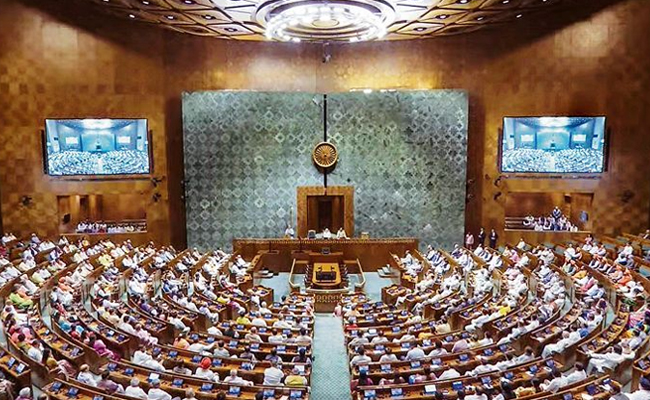
New Delhi (PTI): A parliamentary panel on Monday examined various aspects of the UPA-era rural job guarantee law MGNREGA, which has now been replaced by the Narendra Modi government's VB-G RAM G Act, and how to go about with it in the next six months for a smooth transition to the new legislation.
Sources said most members of the Parliamentary Standing Committee on Rural Development and Panchayati Raj were concerned about how the transition would take place in the next six months when the government shifts work policies from MGNREGA to the VB-G RAM G Act, how the payments would be made to beneficiaries during this period and how additional budgetary support would be arranged.
No member opposed the VB-G RAM G Act during the meeting, and several of them expressed concern that the enrolment under the old law was only around 50 per cent in many states, sources said.
Members also said it would take at least six months to implement the VB-G RAM G Act, as it will be implemented only after the rules are framed.
The Mahatma Gandhi National Rural Employment Guarantee Act (MGNREGA) was passed by the Congress-led UPA in 2005. The VB-G RAM G Bill was passed in Parliament during the recently concluded Winter Session amid vociferous protests by the opposition. The new act has a provision for 125 days of wage employment for rural workers.
The parliamentary panel meeting on Monday also discussed what the new system and framework would look like.
According to sources, some opposition members admitted that there were certain shortcomings in the MGNREGA for which the committee had earlier made certain recommendations.
Some opposition members said they had earlier suggested extending the number of working days from 100 to 150. They also demanded that whatever recommendations were made by the committee earlier should be considered while preparing the rules for the VB-G RAM G Act, according to sources.
BJP MPs said the new legislation was needed since the existing law could not address the current problems of villages and basic infrastructure development in rural areas.
Sources said that during the meeting, some MPs spoke about the reasons for bringing the VB-G RAM G Act and opined that MGNREGA was brought with the twin objectives of providing rural jobs and developing the rural infrastructure.
But those objectives were not achieved, and that is why the VB-G RAM G Act was brought by the government, sources said.
BJP members also said there were examples from several states where even 50 per cent of the MGNREGA funds could not be utilised by the governments there.
Chairman of the committee and Congress leader Saptagiri Ulaka said the members discussed various aspects of MGNREGA threadbare and how to go about in the next six months, as the new law will be implemented only when the rules are framed.
He said that the members intend to discuss MGNERGA in the budget session too, and for all these, there was a briefing session from the Ministry of Rural Development.
"We had a good discussion. The new law has been passed, but new rules have to be issued. All states will also have to come on board. Today's meeting was on how to go about a smooth transition to the VBG RAM G Act. Some members have given some suggestions too. We will give a report, then everything will be clear before you," he told reporters after the meeting.
During the meeting, the secretary of the Ministry of Rural Development gave a presentation on the MGNREGA.
According to the presentation, sources said, except for Delhi and Chandigarh, MGNREGA is implemented in 741 districts, covering 2.69 lakh gram panchayats with 12.15 crore active workers.
Of these, women constitute 57 per cent, SC/ST workers 36 per cent, and 4.81 lakh persons with disabilities have also been provided employment. At present, more than 15 crore families with 26 crore beneficiaries are covered under the scheme, sources said.
Let the Truth be known. If you read VB and like VB, please be a VB Supporter and Help us deliver the Truth to one and all.
Two injuries, one DNF, a DQ as India end messy World Relays campaign
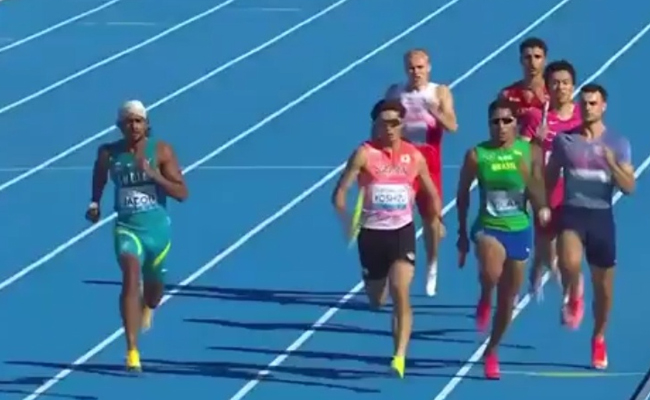
Gaborone (Botswana) (PTI): Amoj Jacob and Ragul Kumar got injured during the men's 4x400m and 4x100 races respectively as India ended their World Athletics Relays campaign in disappointment on the second day of competitions here on Sunday.
The Indian camp had high hopes of making the 2027 World Championships in the men's 4x400m relay but the team did not finish (DNF) the race as Jacob suffered cramps and pulled out of the race after taking the baton from the first leg runner Dharamveer Choudhary. Rajesh Ramesh and Vishal TK were to run in the third and fourth legs.
Those teams which could not qualify for the 2027 Beijing World Championships by reaching the final round of each of the six relay events on Saturday were given another chance in the second qualification round on Sunday.
The top two teams in each of the two heats (in all six relay events) booked the Beijing ticket on Sunday.
India will now have to try and qualify for the World Championships through the Top Lists of the World Athletics, which is a long and tedious process.
In the men's 4x100m race, third leg runner Ragul Kumar fell down the track after failing to hand over the baton inside the exchange zone to fourth leg runner Gurindervir Singh, which clearly showed the lack of coordination among the runners.
Harsh Santosh Raut and Animesh Kujur ran the first two legs.
The Indian quartet was disqualified and Kumar was seen being taken away from the Field of Play with the help of the volunteers.
It was a comedy of errors in the case of the women's 4x100m race, which saw the baton being dropped during an exchange between first leg runner Tamanna and second runner Nithya Gandhe, though the Indians finished the race in 53.09 seconds.
Gandhe started running quite a distance, but after realising that the baton was not in her hand, she turned and ran back to pick it up.
The only silver-lining for the Indian contingent was the national record time in the mixed 4x100m relay race, though the quartet of Ragul Kumar, Nithya Gandhe, Animesh Kujur and Sneha SS finished sixth in heat number two with a time of 41.35 seconds, bettering the previous national mark of 42.30 seconds set in March in Chandigarh.
The mixed 4x400m relay quartet of Theerthesh P Shetty, Kumari Saloni, Nihal William and Rashdeep Kaur ended at fifth in heat number one with a time of 3 minutes and 19.40 seconds.
On Saturday, all the five Indian relay teams had failed to make it to the respective final rounds and thus missed out on the 2027 World Championships berths.