Parliamentary panel gives stamp of approval to Hindi names for proposed criminal laws
_vb_08.jpeg)
New Delhi (PTI): A parliamentary panel has held that the Hindi names given to the three proposed criminal laws is not unconstitutional, dismissing criticism against the move by some political parties and their leaders.
The Parliamentary Standing Committee on Home Affairs headed by BJP MP Brijlal has taken note of the wording of Article 348 of the Constitution, which says that the language to be used in the Supreme Court and in the high courts, as well as for Acts, Bills and other legal documents shall be in English language.
"The committee finds that as the text of the Sanhita is in English, it does not violate the provisions of Article 348 of the Constitution. The committee is satisfied with the response of the Ministry of Home Affairs and holds that the name given to the proposed legislation is not in violation of Article 348 of the Constitution of India," the panel said in its report submitted to Rajya Sabha.
The Bharatiya Nyaya Sanhita (BNS-2023), Bharatiya Nagarik Suraksha Sanhita (BNSS-2023) and the Bharatiya Sakshya Adhiniyam (BSA-2023) were introduced in the Lok Sabha on August 11.
The proposed laws will replace the Indian Penal Code, 1860, Criminal Procedure Act, 1898, and the Indian Evidence Act, 1872 respectively.
Senior Congress leader P Chidambaram had questioned the rationale behind the central government giving Hindi names to the bills.
"I am not saying Hindi names must not be given (to bills). When English is used, it can be given an English name. If Hindi is used, it can be given a Hindi name. When laws are drafted, it is done in English and later it is translated to Hindi. But they have drafted the laws and provisions of the bill in English and given it a Hindi name. It is difficult to even pronounce," he had said.
Tamil Nadu's ruling Dravida Munnetra Kazhagam (DMK) had also voiced strong objections against the use of Hindi names for the proposed criminal laws.
Tamil Nadu Chief Minister MK Stalin had said the Centre's move "reeks of linguistic imperialism" and that it was an attempt to carry out "recolonisation in the name of decolonisation".
The Madras Bar Association has dubbed the Centre's move to name the three bills in Hindi as against the Constitution. The association has also passed a resolution in this connection.
DMK MP Dayanidhi Maran had sent a letter to the panel chairman Brijlal, objecting to the Hindi titles of the bills, saying they violate the unitary nature of the country where the citizens speak a variety of languages other than Hindi.
However, Union Education Minister Dharmendra Pradhan had termed Stalin's statement as "petty politics".
Pradhan said such "petty politics" may serve the Tamil Nadu chief minister's political ambitions well but "it weakens the spirit of India".
During the course of the panel's deliberations, Union Home Secretary Ajay Bhalla had also tried to address the objections of some Opposition MPs, including DMK's N R Elango, Dayanidhi Maran and Congress's Digvijaya Singh, against the Hindi titles of the bills.
Bhalla had reportedly maintained there is no violation of any constitutional provision since the bills and their texts are written in English.
He conveyed to the MPs that as Article 348 provided for the use of English language in the texts of all bills, acts and ordinances, there was no breach if the bills were written in English.
Let the Truth be known. If you read VB and like VB, please be a VB Supporter and Help us deliver the Truth to one and all.
Man kills 12-year-old nephew over property dispute in Karnataka’s Sindhanur
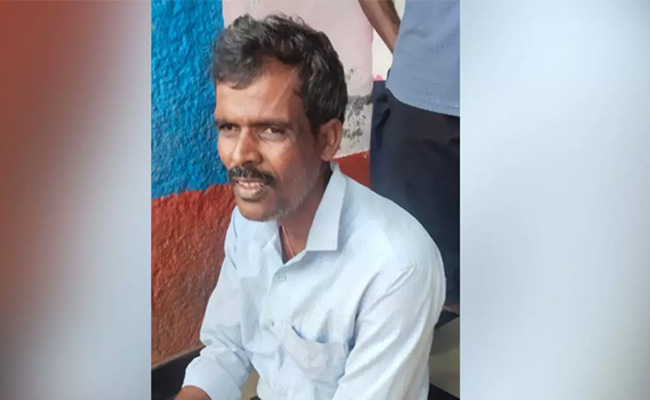
Sindhanur: A 12-year-old boy was killed and his mother seriously injured after a man allegedly attacked his elder brother’s family with a knife over a property dispute in Alabanur village of Sindhanur taluk on Wednesday morning.
The deceased has been identified as Nagaraj Siddappa Alvi (12). Amrutha Siddappa (42) sustained serious injuries in the attack. Police said the accused is Basavaraj Rudrappa Alvi, the younger brother of the victim boy’s father.
According to preliminary information, Basavaraj had arrived in Alabanur village on Tuesday and was staying at his mother’s house.
On Wednesday morning, he allegedly went to the house of his brother Siddappa carrying a knife. At the time, Siddappa’s wife Amrutha and children Nagaraj and Dhanush were present in the house.
Police said the accused allegedly attacked them with the knife. Nagaraj died in the incident, while Amrutha and Dhanush suffered serious injuries.
The injured were shifted to the government hospital in the city for treatment.
Deputy Superintendent of Police G. Chandrashekhar visited the spot and gathered information.
Sources said Chinnamma Rudrappa of Alabanur village has two sons Siddappa, who lives in Alabanur, and Basavaraj, who resides in Alliganur village of Siruguppa taluk.
Police suspect the long-standing property dispute between the two brothers led to the fatal attack.