Passenger falls sick onboard Chennai-Kolkata flight, later dies

Bhubaneswar/New Delhi: A SpiceJet flight on way from Chennai to Kolkata had to be diverted to Bhubaneswar on Sunday after a 48-year-old passenger fell sick, officials said, adding that he later died.
Ashok Kumar Sharma complained of breathing problem soon after SpiceJet flight SG-623, a Boeing 737-800 aircraft, took off from Chennai and a medical emergency was declared, the officials said.
The pilot requested for an ambulance and a doctor on arrival which was made available, a SpiceJet spokesperson said. He was taken to a medical room at the airport soon after the plane landed, Bhubaneswar Airport Director S C Hota said.
Sharma was then rushed to a private hospital where doctors declared him brought dead, he said. The body has been sent to the Capital Hospital for postmortem.
Let the Truth be known. If you read VB and like VB, please be a VB Supporter and Help us deliver the Truth to one and all.
Bridge portion collapses on Jammu outskirts; 3-4 labourers feared trapped, 1 rescued
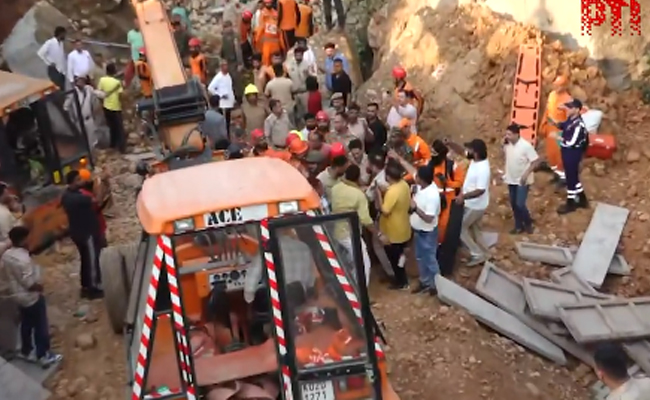
Jammu (PTI): A portion of a small bridge collapsed in the Bantalab area on the outskirts of Jammu city on Friday, trapping at least three to four labourers under the debris, while one injured worker was rescued, official sources said.
Authorities have closed the road link following the collapse of the portion of the bridge.
The incident occurred when labourers were carrying out repair work on a retaining wall near the bridge that was damaged in last year's flash floods, the sources said.
According to the sources, a section of the bridge suddenly gave way, burying workers engaged at the site under the rubble.
Police, Army and State Disaster Response Force (SDRF) teams launched rescue operations to extricate those buried under the debris. They pulled out one injured labourer and shifted him to a hospital, the sources said.
Family members of the labourers present at the site said around six workers engaged at the site at the time of the incident came under the debris when the structure collapsed. The family members said while two of the labourers managed to escape, four got trapped.
The sources said those trapped included the husband of a woman labourer, a mason, an unmarried labourer and a relative of the contractor.
There was no official confirmation on the exact number of persons trapped under the debris till the filing of this report.
The rescue operations are ongoing.