Passengers experience long waiting period at Delhi airport
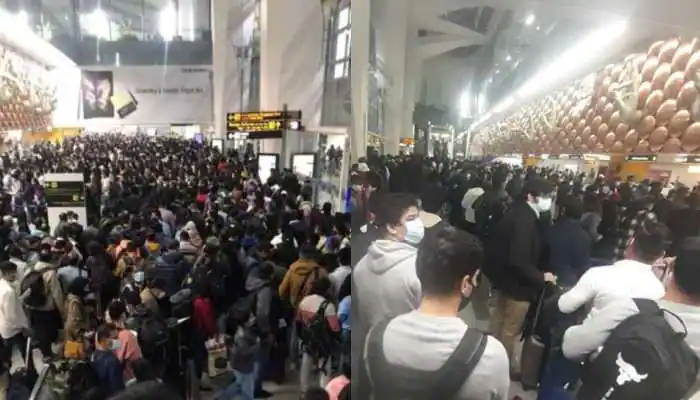
New Delhi: Many passengers continued to experience long waiting hours at the Delhi airport on Sunday. Some passengers took to social media and also shared pictures of crowd at Terminal 3 (T3) of the Indira Gandhi International Airport (IGIA) here.
In response to a tweet by a passenger, Delhi airport said that it has deployed officials on the ground to assist the passengers and minimise any inconvenience.
While complaining about the long queues, the passenger said there is need for new terminals. ''Please be assured that passenger experience is paramount for us and we always strive to enhance our flyers experience.
''Also, we have duly noted the remarks and have shared it with the concerned agency. Further, you may also share your direct feedback with CISF headquarters...,'' Delhi airport said in the tweet.
In another tweet, it said the team ensures efficient coordination with other stakeholders for smooth travelling experience at the airport. Amid long queues and waiting period for passengers at the airport, civil aviation ministry officials on Saturday said an action plan was being implemented to address the congestion, including reducing the number of peak hour departures to 14.
IGIA, also the country's largest airport, has three terminals -- T1, T2 and T3. All international flights as well as some domestic services operate from T3. On an average, it handles around 1.90 lakh passengers and about 1,200 flights daily.
Dear Spiti,
— Delhi Airport (@DelhiAirport) December 11, 2022
Please note, due to operational reasons the services at Plaza Premium Lounge is temporarily unavailable.
Further, we would like to inform you that we have Amex & airline lounges available at terminal-3.
Dear Amit,
— Delhi Airport (@DelhiAirport) December 11, 2022
We certainly do not wish to provide such an experience to our flyers. Kindly DM us your flight details and contact number for us to look into it.
Doing a security check in @DelhiAirport right now. If you are going to Delhi airport perhaps go a day early. Even then you have to be street-smart and loud-mouthed to get your chance. pic.twitter.com/GsI6RSamnk
— Vignesh Ravichandran (@viggy28) December 11, 2022
Let the Truth be known. If you read VB and like VB, please be a VB Supporter and Help us deliver the Truth to one and all.
Bengal: Hundreds stage protest over 'threats' by TMC workers
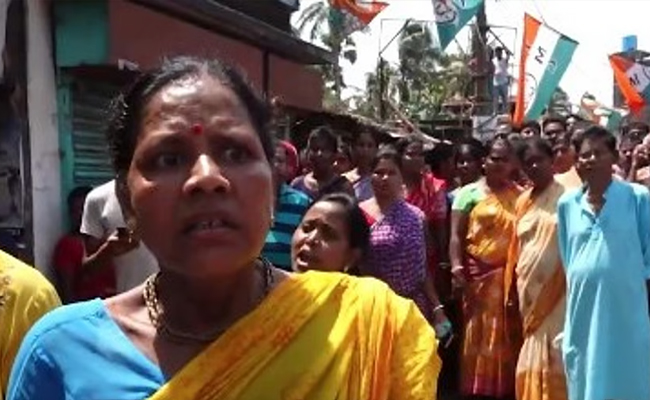
Kolkata (PTI): Demanding safety after counting of votes, hundreds of villagers staged a protest in Falta in West Bengal's South 24 Parganas district on Saturday, alleging they were receiving life threats from TMC workers in the area.
The protesters, many of them women and holding BJP flags, blocked the road in Hasimnagar village, alleging that local panchayat pradhan Israfil, a close associate of TMC candidate Jehangir Khan, issued them threats of attacks after poll results are announced.
The CRPF deputy commandant visited the area with a large force and assured the demonstrators of ensuring their safety.
Khan dismissed the allegations and said the women were "deployed" by the BJP to stage the demonstration and engineer the arrest of TMC functionaries in the area before the counting to "harm the morale of the TMC supporters".
"If the charges are proved, I am ready to face the law," he said.
Fatima Bibi, one of the protesters belonging to the BJP's Mahila Morcha, claimed Israfil and his men "have been visiting the area since April 30 and threatening us that there would be bloodshed from May 5. We demand CRPF remain in the area".
The CRPF official said, "We are here to instill confidence among the people with support of the local police, We have assured them of full security."
An Election Commission official said a report has been sought about the protests from the district administration.