Patna doctor charges just Rs 10 for consultation for over three decades
"I get satisfaction from serving society"
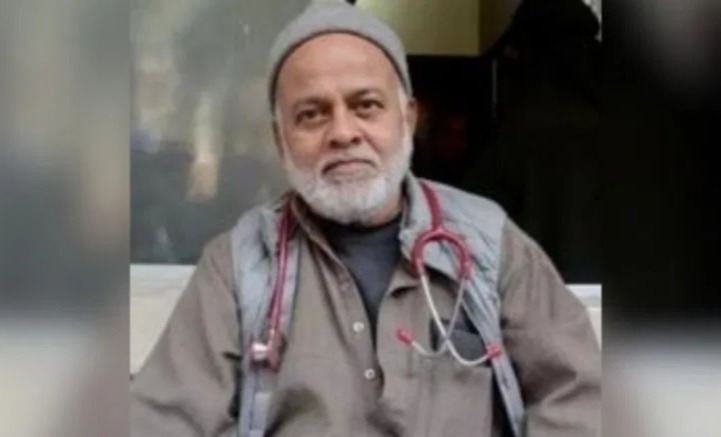
Patna: In a time when hospitals, by and large, are driven by profits and seen as money-minting businesses, a doctor in Patna charges just Rs 10 as a consultation fee.
Dr Ejaz Ali, known as the messiah of the poor, charges minimal consultation fees, in stark contrast to the Rs 800-1,200 range set by most doctors, according to a report by the Times of India.
Surgeries at his hospital are also priced significantly lower; an appendix operation, which includes post-surgery medicines, costs around Rs 17,000, while gallbladder stone removal is priced at just Rs 11,000, including medicines. In several instances, even these charges are waived off, or attendants are given the option to pay in installments.
Dr Ali began practicing in 1984 in Patna's Bikhna Pahari locality. His consultation fee has remained unchanged at Rs 10 for over three decades. Dressed in a simple kurta-pyjama and skull cap, he can be seen daily sitting on a plastic chair in the open courtyard of his hospital on Ashiana-Digha Road, where hundreds of patients wait for their turn. On an average day, the renowned general surgeon treats over 100 patients and performs seven to eight surgeries, the report added.
When asked about his low fees, Dr Ali explained, "I saw poverty around me, and there were certain instructions from my mother too." He emphasised that, aside from the nominal consultation fee, he ensures all patients are seen on the same day to avoid extra costs for accommodation, food, and travel. "I get satisfaction from such service to society," he was quoted as saying by TOI.
When asked for advice for other doctors, he emphasised the importance of considering the patient's financial situation before treatment, advising against unnecessary tests and expensive medicines, and encouraging doctors to rise above greed.
Dr Ali’s late wife, also a doctor, shared the same philosophy, charging just Rs 10 for her services. Now, his three children, all doctors, continue his legacy. His son, a graduate of a prestigious American institute, charges Rs 100, while his daughter, a gynaecologist, charges Rs 50.
Beyond medicine, Dr Ali has dedicated himself to social causes, working tirelessly for the upliftment of the underprivileged, particularly Dalit Muslims. He has long been an advocate for their reservation rights.
Let the Truth be known. If you read VB and like VB, please be a VB Supporter and Help us deliver the Truth to one and all.
Trump says EU has until July 4 to approve last year's trade deal or it will face higher tariffs
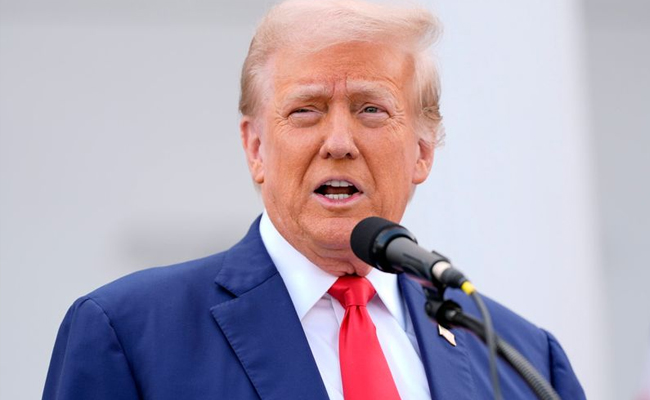
Washington (AP): President Donald Trump has said in a social media post that goods from the European Union would face higher tariff rates if the 27-member bloc fails to approve last year's trade framework by July 4.
The announcement on Thursday appeared to be a deadline extension after the president said last Friday that EU autos would face a higher 25 per cent tariff starting this week. Trump made the updated announcement after what he described as a "great call" with European Commission President Ursula von der Leyen.
Still, the US president was displeased that the European Parliament had yet to finalize the trade arrangement reached last year, which was further complicated in February by the US Supreme Court ruling that Trump lacked the legal authority to declare an economic emergency to impose the initial tariffs used to pressure the EU into talks.
"A promise was made that the EU would deliver their side of the Deal and, as per Agreement, cut their Tariffs to ZERO!" Trump posted. "I agreed to give her until our Country's 250th Birthday or, unfortunately, their Tariffs would immediately jump to much higher levels."
It was unclear from the post whether Trump was implying that the tariff rates would jump on all EU goods or the increase would only apply to autos.
His latest statement indicates he might be backing away from his earlier threat on EU autos by giving the European Parliament several more weeks to approve the agreement.
Under the original terms of the framework, the US would charge a 15 per cent tax on most goods imported from the EU.
But since the Supreme Court ruling, the administration has levied a 10 per cent tariff while investigating trade imbalances and national security issues, aiming to put in new tariffs to make up for lost revenues.