Patrol Vessel Deal: Reliance Naval’s Bank Guarantees Have Been Encashed, Says Navy Chief
New Delhi, Dec 3: In a punitive action, the Navy has encashed a bank guarantee of the Reliance Naval Engineering Ltd in the Rs 3,000-crore contract for five offshore patrol vessels due to long delays in their supply, and said Monday that the deal is being examined.
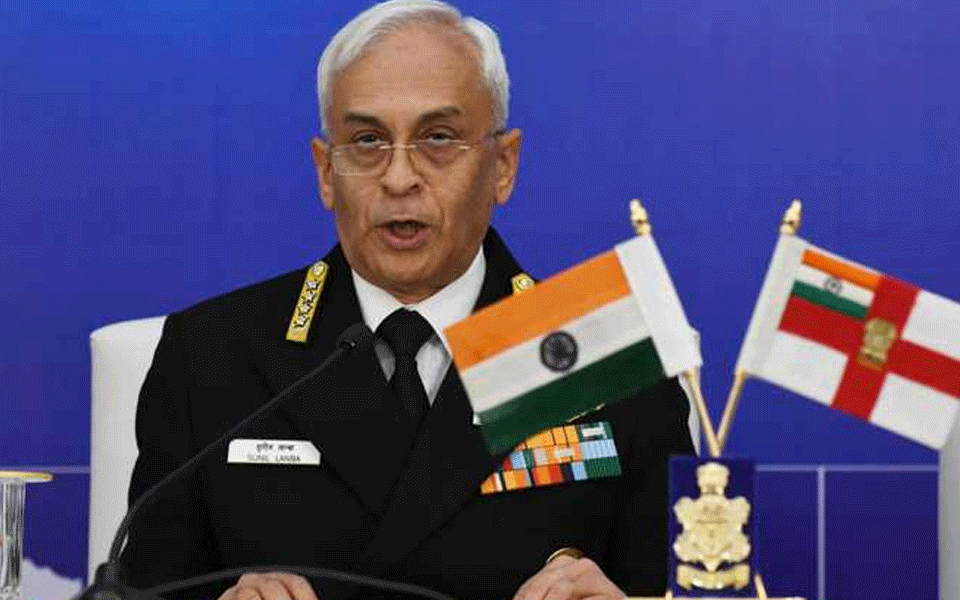
"There is no preferential treatment being given to RNEL. Its bank guarantee has been encashed. Punitive action has been taken against it. The process is being taken forward," Navy Chief Admiral Sunil Lanba said at a press conference.
The Navy Chief was asked about the huge delay in delivery of the vessels by RNEL and whether Navy is under any pressure to not initiate any action against the company.
Admiral Lanba said the deal is not being cancelled at the moment, but added that it is being looked into, indicating that government may take a call on the issue.
"It has not been cancelled at the moment but the contract is being looked at and is being examined and what we need to do with it," said the Navy chief.
The Navy chief also said that the company is undergoing corporate debt restructuring.
There was no immediate reaction from RNEL about the Navy chief's comments.
Anil Ambani's Reliance Defence has been at the centre of a controversy over the Rs 58,000-crore Rafale jet fighter deal. The Congress has accused the government of favouring the company.
The company as well as the government have rejected the charges.
The original contract for the five naval offshore patrol vessels (NOPVs) was won by Pipavav Defence and Offshore Engineering in 2011. The company was bought over by Anil Ambani group in 2016.
Sources said the bank guarantee was 10 per cent of the size of the contract.
According to the original contract, the first vessel was to be delivered by early 2015. However, the deadline was pushed several times.
Two patrol vessels -- 'Shachi' and 'Shruti', were launched at the Reliance shipyard in Pipavav, Gujarat, last year.
RNEL was the first private sector company to obtain the licence and contract to build the patrol vessels.
The vessels were to be armed with 76mm Super Rapid Gun Mount (SRGM) system.
The primary role of NOPVs is to undertake surveillance of the country's vast Exclusive Economic Zone (EEZ) besides operational tasks such as anti-piracy patrols, fleet support operations, maritime security of offshore assets and coastal security operations.
Let the Truth be known. If you read VB and like VB, please be a VB Supporter and Help us deliver the Truth to one and all.
SC to hear on May 4 PIL seeking stringent guidelines for issuing Aadhaar to adolescents, adults
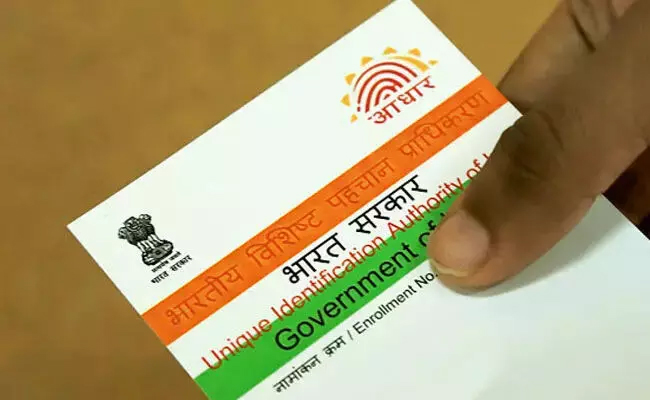
New Delhi (PTI): The Supreme Court is scheduled to hear on Monday a plea seeking a direction to the Unique Identification Authority of India to issue new Aadhaar cards only to citizens up to the age of six years, and frame stringent guidelines for its issuance to adolescents and adults to stop infiltrators from masquerading as Indian citizens.
As per the apex court's causelist of May 4, the plea would come up for hearing before a bench of Chief Justice Surya Kant and Justice Joymalya Bagchi.
The Public Interest Litigation (PIL) filed by lawyer Ashwini Upadhyay has also sought a direction to the authorities to install display boards at common service centres stating that the 12-digit unique identification number is only a "proof of identity" and not a proof of citizenship, address or date of birth.
Besides all the states and Union Territories, the plea has made the UIDAI -- which is the authority that issues Aadhaar -- and the Union ministries of home, law and justice, and electronics and information technology as parties.
The plea, filed through advocate Ashwani Dubey, said Aadhaar, originally intended as a proof of identity, has increasingly become a "foundational document" enabling individuals to obtain other identification documents, such as ration cards, domicile certificates and voter identity cards.
"The UIDAI has issued 144 crore Aadhaar and 99 percent Indians have been enrolled. Therefore, the petitioner is filing this writ petition as a PIL under Article 32, seeking a direction to UIDAI to issue new Aadhaar to children only and frame new stringent guidelines for adolescents and adults, so as to stop infiltrators from getting it and masquerading as Indian citizens," the plea said.
It said the need to file the plea arose when the petitioner came to know the manner in which infiltrators are able to procure Aadhaar through a verification process that is weak and can be easily manipulated.
"Foreigners apply for Aadhaar under the 'foreign' category. But infiltrators apply for Aadhaar under the 'Indian citizen' category and get it easily made. Thereafter, they obtain a ration card, birth and domicile certificate, driving licence, et cetera, essentially becoming indistinguishable from Indian citizens…," it said.
Besides seeking other directions, the plea has raised legal questions, including whether the Aadhaar Act 2016 has become "temporally unreasonable" for failing to keep up with the legislative intent of distinguishing foreigners from Indian citizens.
It said the alleged misuse of Aadhaar undermines targeted welfare delivery and leads to diversion of public resources.