Pegasus row: SC to hear pleas for probe on April 22
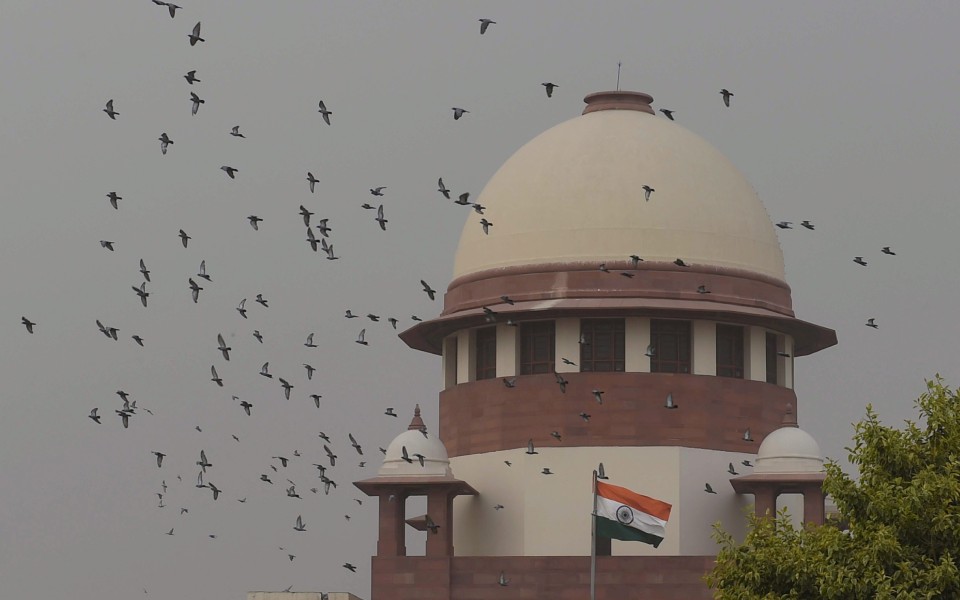
New Delhi, Mar 7 (PTI): The Supreme Court on Friday said it would hear on April 22 pleas seeking a probe into the alleged unauthorised use of Pegasus spyware for surveillance of journalists among others.
A bench of Justices Surya Kant and N Kotiswar Singh deferred the hearing after solicitor general Tushar Mehta, seeking an adjournment, said the matter had come up after a long time.
Senior advocate Kapil Sibal, appearing for the petitioners, said only two petitions were listed on Friday and there were other connected petitions, which required a hearing.
The bench directed the registry to fix all the matters on the issue on April 22.
On August 25, 2022, the top court said the technical panel appointed by it to probe the unauthorised use of Pegasus found some malware in five of 29 examined cellphones but it could not be held that the Israeli spyware was used.
After perusing the report submitted by former apex court Justice R V Raveendran, the top court said the Central government did not cooperate with the Pegasus probe.
The top court in 2021 ordered a probe into the allegations of the use of Israeli spyware by government agencies for targeted surveillance of politicians, journalists, and activists and appointed technical and supervisory committees to examine the matter.
The overseeing panel has submitted a "lengthy" three-part report, one of which suggested amending the law to protect citizens' right to privacy and ensure the nation's cyber security, it had said.
The technical panel, which included three experts on cyber security, digital forensics, networks, and hardware, was asked to "inquire, investigate and determine" whether Pegasus spyware was used for snooping on citizens and their probe would be monitored by Raveendran.
The panel members were Naveen Kumar Chaudhary, Prabaharan P, and Ashwin Anil Gumaste.
Justice Raveendran, who headed the monitoring panel, was assisted by former IPS officer Alok Joshi and cyber security expert Sundeep Oberoi in monitoring the inquiry of the technical panel.
The apex court, in its order, had said the probe panel would be empowered to enquire and investigate what steps or actions were taken by the Centre after reports were published in 2019 on the hacking of WhatsApp accounts of Indian citizens using the Pegasus suite of spyware.
Also whether any Pegasus suite was acquired by the Union of India, or any state government, or any central or state agency for use against the citizens of India, it added.
An international media consortium had reported that over 300 verified Indian cellphone numbers were on the list of potential targets for surveillance using the Pegasus spyware.
Let the Truth be known. If you read VB and like VB, please be a VB Supporter and Help us deliver the Truth to one and all.
Sujit Nair raises concerns over speculation of DMK-AIADMK understanding to block TVK
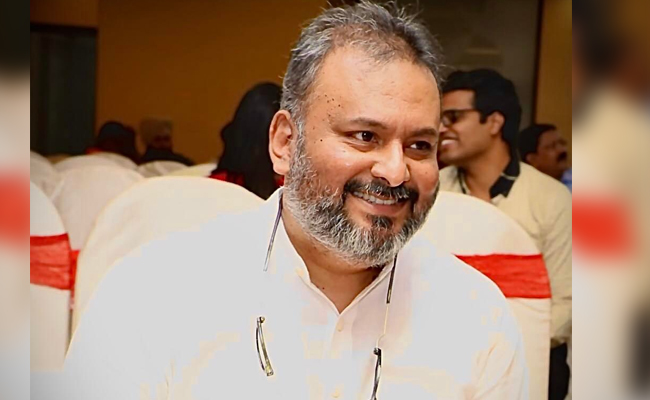
Chennai: Journalist and political commentator Sujit Nair has expressed concern over speculation that the Dravida Munnetra Kazhagam and the All India Anna Dravida Munnetra Kazhagam could explore a post-poll understanding to prevent Vijay-led Tamilaga Vettri Kazhagam from forming the government in Tamil Nadu.
In a social media post, Sujit Nair said the election verdict in Tamil Nadu reflected a clear public demand for political change and argued that the mandate should be respected irrespective of political preferences.
Referring to reports and political discussions surrounding a possible understanding between the DMK and AIADMK, he said he hoped such developments remained only speculative conversations and did not turn into reality.
Nair stated that if such an alliance were to take shape, it would raise serious questions about ideological politics in the country. He said TVK had emerged through a democratic electoral process and that the legitimacy to govern in a parliamentary democracy comes from the people’s verdict.
According to him, attempts to prevent an electoral winner from forming the government through unexpected political arrangements may be constitutionally valid, but many people could view them as politically opportunistic.
He further said that such a move could particularly affect the political image of the DMK, which has historically projected itself around ideology, social justice and opposition politics. Nair said that in ideological terms, the DMK appeared closer to TVK than to the AIADMK, and joining hands with its long-time political rival only to remain in power could weaken its broader political narrative.
He added that the same questions would apply to the AIADMK as well, as the party had spent decades positioning itself against the DMK and such an arrangement could create discomfort among its cadre and supporters.
Drawing a comparison with Maharashtra politics in 2019, Nair said he had expressed similar views when the Shiv Sena formed an alliance with the Indian National Congress and the Nationalist Congress Party after the Assembly elections.
He said post-poll alliances between long-standing political rivals often create a public perception that ideology and electoral mandates become secondary when political power equations come into play.
Nair also said such developments increase public cynicism towards politics and reinforce the belief among voters that ideology is often sidelined after elections.
He maintained that the Tamil Nadu verdict was emphatic and said respecting both the spirit and substance of the mandate was important for the credibility of democratic politics.